
What liposuction is
Liposuction removes fat cells from a defined area through a thin tube called a cannula, inserted under the skin through a small incision. The goal is a new contour. It is a body-shaping operation and does little to your weight on the scale.
At Dr. Meir’s clinic the incisions are about 5 mm on the body and about 3 mm on the neck. There is no long cut, no skin is removed, and no drains are left in. The small marks stay pink for the first months and then fade.
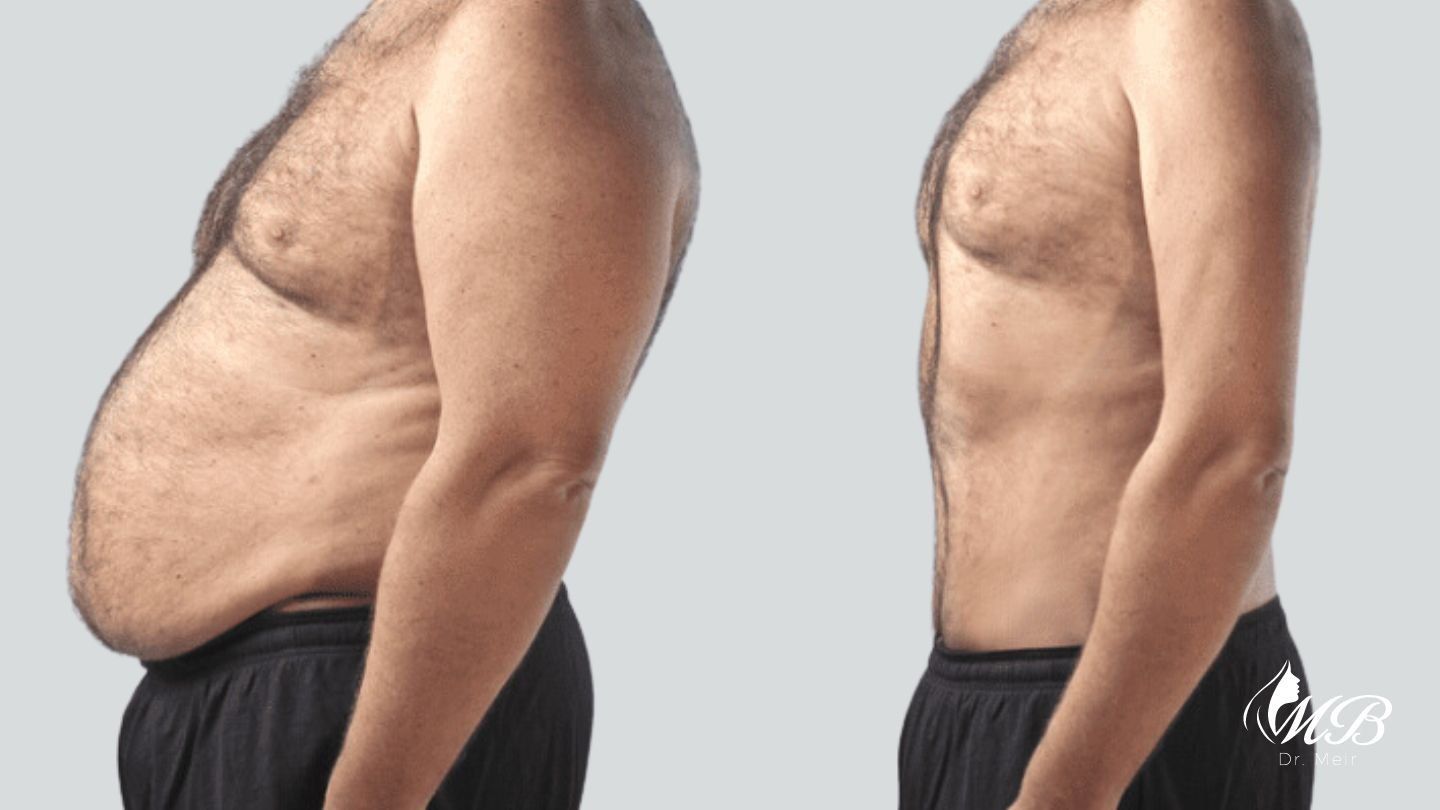
The common areas are the abdomen and flanks, the thighs, the back, the upper arms and the chin. In men the chest (gynecomastia) and the sides of the waist are frequent requests. Several areas can be combined in one operation, within the safety limit on volume.
Techniques: tumescent and RF-assisted liposuction
Every modern technique starts with tumescent fluid. Dr. Meir infiltrates the area with a solution of saline, a local anaesthetic and adrenaline. It numbs the tissue, shrinks the small blood vessels and cuts bleeding and bruising. Then the fat is suctioned in layers until both sides match.
What differs between techniques is the energy applied under the skin before or during suction:
- RF-assisted liposuction (Quantum RF). This is the clinic’s main technology. A bipolar electrode under the skin delivers pulsed radiofrequency energy. The fat softens and is suctioned, and the skin contracts over the new line in the same operation. It replaced the earlier BodyTite and FaceTite systems at the clinic.
- Ultrasound-assisted liposuction (for example VASER) breaks up fat with sound waves before suction.
- Laser-assisted liposuction uses a fibre under the skin to act on the fat.
The main factor in choosing a method is skin quality. When the skin is elastic and the fat is localised, tumescent suction alone gives a good line. When the skin is thin, loose or marked with stretch marks, Dr. Meir adds Quantum RF so the skin shrinks onto the new shape instead of hanging over it. This matters after pregnancy, after weight loss and on the upper arms.
Who is a good candidate
The right candidate is at a stable weight and has localised fat that does not respond to food and training. At the consultation Dr. Meir examines you standing and pinches the area to judge the thickness of the fat and how fast the skin springs back.
Fat that sits under the skin responds well. A bulging abdomen caused by deep visceral fat around the organs does not, and this becomes clear at the first visit. A few points decide timing:
- Age: up to about 70, when the examination and blood tests allow it.
- After childbirth: wait about six months so the abdomen and skin settle.
- Blood thinners: they must be stopped before surgery in coordination with your treating doctor. Patients who cannot stop them are not candidates.
- A cardiac history: patients with a heart condition, such as rhythm problems, need a cardiologist’s clearance before general anaesthesia. The clinic prepares a letter with the anaesthesia and treatment details. Without a cardiac history this is not required.
- Smoking: stopping before surgery improves healing. It does not rule surgery out.
- A large apron of skin: Dr. Meir checks whether a tummy tuck suits you better.
Anaesthesia and the day of surgery
There are three options: local anaesthesia, sedation or general anaesthesia. Under local anaesthesia you stay awake and feel mostly pressure and movement. General anaesthesia is given by an anaesthesiologist in the operating room. You choose together at the consultation according to the number of areas and the volume. With every option you go home the same day.
Before general anaesthesia you do blood tests and an ECG and bring the printouts. On the day you fast for 8 hours, drink only water and stop drinking 3 hours before. Come with a companion and ID, without jewellery, about an hour and a half before your slot. Antibiotics start right after the operation and continue for 5 days.
The operation takes between about one hour and an hour and a half, depending on the case. Both upper arms with tightening sit near the shorter end. A large volume close to the 5-litre limit with skin tightening sits near the longer end, because tightening adds time.
Recovery
- Days 1 to 3: swelling, bruising and tenderness. Ordinary painkillers control the pain, and light walking at home is advised from the first day.
- Days 3 to 7: most patients return to office work.
- Weeks 1 to 3: a compression garment almost around the clock, usually for about three weeks. Some need two, others more than three, depending on the swelling.
- Weeks 4 to 6: gradual return to full training.
- Months 3 to 6: the swelling resolves and the final line shows.
Note: the compression garment reduces swelling and helps the skin adhere to the new contour. Taking it off earlier than instructed can affect the result.
Risks and side effects
Most risks of liposuction are aesthetic: an irregular contour, rippled skin, asymmetry between sides and a more visible cellulite pattern. They usually come from uneven suction or skin that did not contract. Careful planning of each area and skin tightening reduce them.
As with any surgery there are medical risks too: infection, blood clots, fluid collection (seroma) and temporary changes in sensation. Antibiotics, stopping blood thinners, walking from the first day and the compression garment lower these risks.
When an irregularity remains after the swelling has gone, it can be corrected. Dr. Meir waits a few months for the tissue to settle, then removes residual fat or adds skin tightening. Where too much fat was removed, an injection of your own fat can restore volume.
How long results last
Removed fat cells do not return, so the treated area keeps its new line. A stable weight, balanced eating and regular activity keep the result for years. Significant weight gain can enlarge the remaining cells and add fat to areas that were never treated.
Choosing areas and planning
Combining several areas in one operation saves a second anaesthetic and a second recovery. The limit of about 5 litres per operation still applies, so a large plan is split into two stages. Patients with lipedema, for example, usually start with the thighs and treat the calves about six months later.
Liposuction is often compared with fat freezing (cryolipolysis) and external laser devices. In Dr. Meir’s experience these external methods are mostly ineffective in every body area, and the clinic does not use them. Liposuction removes the fat in one session and sculpts the line with precision. For small pockets in people who prefer to avoid an operating room, Dr. Meir also offers fat-dissolving injections.
Each area has its own page with details on candidacy, technique and recovery: the abdomen, the chin and neck, the thighs and the upper arms. The links are below.
How the process works at the clinic
- Consultation in Holon. Examination standing, skin assessment, a review of your medications and blood tests, the choice of anaesthesia and a written price.
- Preparation. Tests and instructions from a list you receive after the consultation.
- The operation. Dr. Meir performs it himself in an accredited medical centre’s operating room, with Quantum RF when the skin needs tightening.
- Follow-up. Check-ups at the clinic in Holon until the final result.
The clinic is private and patients pay privately. Consultations are held in Hebrew, English and Russian at Ha-Rokmim 26, Azrieli Holon Center, Building B, 4th floor. Call or message on WhatsApp: 053-566-2287.
Results from the clinic
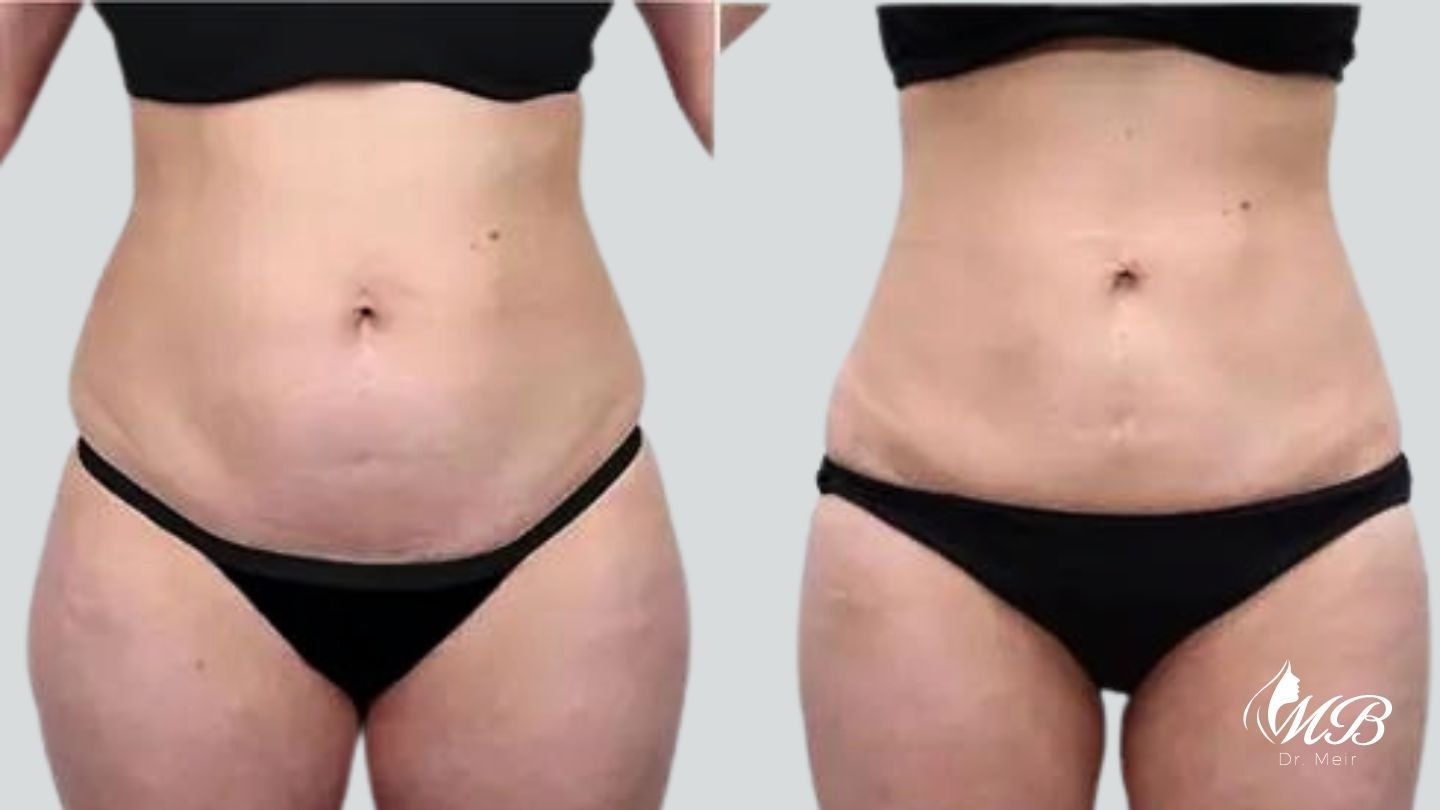
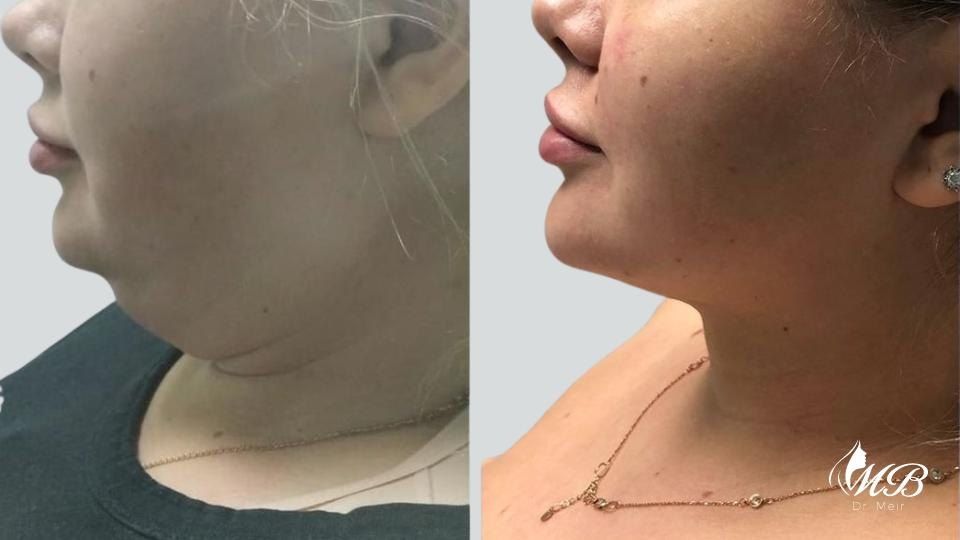
Individual results vary. Photos published with patient consent.
Price
| Liposuction, one area | ₪8,000–16,000 |
| Abdominal liposuction | ₪18,000–30,000 |
| Comprehensive liposuction | ₪15,000–50,000 |
The final price depends on the extent of treatment and is given at the consultation.
Questions
Is liposuction considered surgery?
Yes. It is a surgical procedure done in an operating room, through incisions of about 5 mm on the body and about 3 mm on the neck. There is no long scar, no skin removal and no drains, and you go home the same day with a companion.
Does the fat come back after liposuction?
Fat cells that were removed do not grow back. With significant weight gain the remaining cells can enlarge and fat can build up in untreated areas, so a stable weight protects the result.
Up to what age can I have liposuction?
Dr. Meir operates up to about age 70 when the consultation and blood tests confirm your health allows it. Older skin contracts less, so Quantum RF tightening is often added.
Can liposuction be done under local anaesthesia?
Yes. The options are local anaesthesia, sedation or general anaesthesia. The choice depends on the number of areas, the volume of fat and how anxious you feel, and you decide together at the consultation.
How much fat can be removed in one operation?
The safety limit is about 5 litres per operation. When a plan is larger than that, it is split into two operations a few months apart.
Can I have the consultation in English or Russian?
Yes. Dr. Meir consults in Hebrew, English and Russian at the clinic in Holon. You can write on WhatsApp in your language.
Related
Sources: NHS: Liposuction; U.S. Food and Drug Administration: Liposuction; American Society of Plastic Surgeons: Liposuction