What Endolift is
Endolift is a subdermal laser: the energy is delivered under the skin rather than through its surface. Dr. Meir numbs the area, makes a tiny entry point with a fine needle and passes an optical fibre about the width of a hair into the layer beneath the skin. The fibre emits laser light at 1470 nm.
Water and fat absorb that wavelength strongly, so the heat stays within a fraction of a millimetre of the fibre tip. Two things happen there. Collagen fibres in the connective tissue contract straight away, and small fat cells along the fibre’s path melt. Over the following months the heated tissue lays down new collagen, and the skin keeps tightening.
There is no incision, no stitches and no suction cannula. That separates Endolift from liposuction and from Quantum RF, which remove fat through a small opening.
Which areas it treats
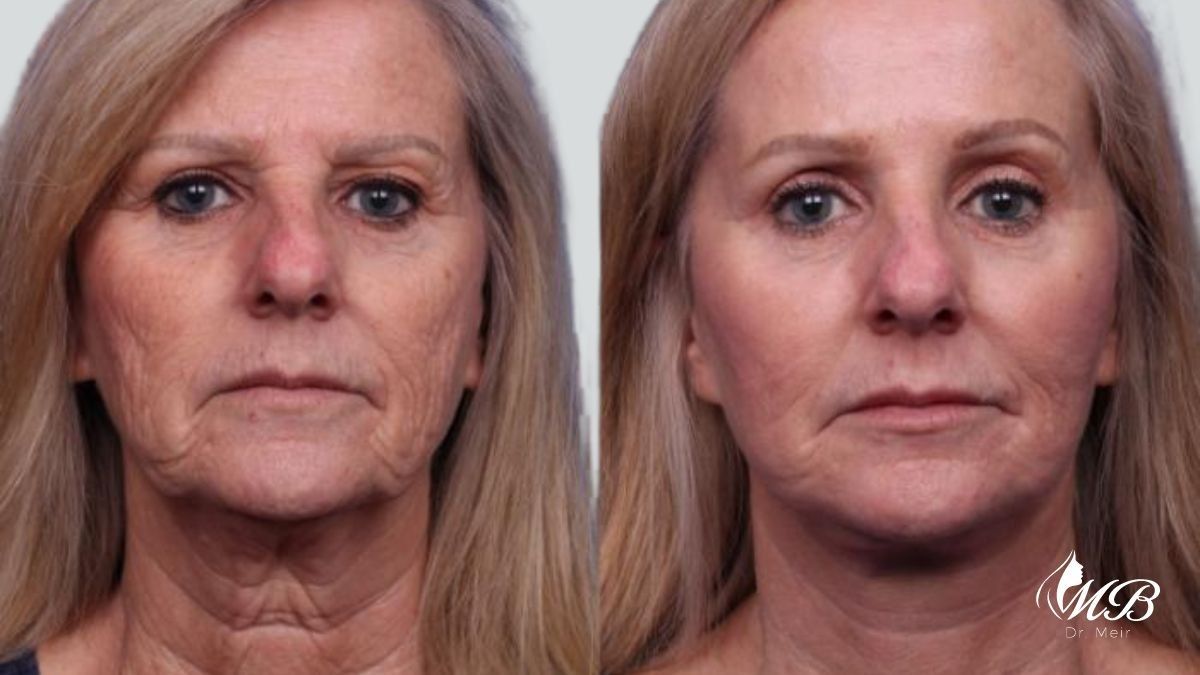
Endolift is often described as a face treatment. At the clinic it is used on both the face and the body.
Face and neck
- The jawline and jowls, where laxity first blurs the contour
- The area under the chin and the upper neck
- Loose, crepey skin under the eyes
- The lower cheeks
Body
- The lower abdomen, after pregnancy or weight loss when the skin is loose but the fat layer is thin
- The inner upper arms
- The inner thighs
- Skin above the knees
Who it suits
Endolift works most predictably on mild to moderate laxity with little fat underneath. A jawline that has started to soften, a neck that has lost its sharpness, or inner-arm skin that wrinkles when you lift the arm are typical examples.
Endolift has limits. When there is a lot of fat under the loose skin, the fibre cannot remove enough of it, and Dr. Meir will discuss gentle liposuction or Quantum RF instead. When the skin hangs in folds, after major weight loss for instance, surgery gives a result that no subdermal device can match, and Dr. Meir says so at the consultation.
Before recommending anything, Dr. Meir asks for photos from the front and the side. Profile views show how much of the problem is loose skin, how much is fat and how much is lost volume. Each of these has a different treatment.
People who had liposuction or another procedure in the same area can usually still have Endolift. It often suits the situation those procedures leave behind: skin that did not contract enough, or small pockets of leftover fat.
How the treatment is done at the clinic
- Consultation in Holon. Examination from the front and in profile, a plan for each area and an explanation of what Endolift can and cannot change.
- Local anaesthesia. The area is cleaned and numbed with local anaesthetic injections. Treatment starts once the skin is numb.
- The laser. The fibre is moved in fan-shaped passes under the skin. Power and total energy are set by area: lower on the face, higher on the body. A session takes 30 to 60 minutes depending on the size of the area.
- Dressings. On the jawline and neck, small adhesive dressings stay on for about three days.
Large body areas can be treated under sedation or general anaesthesia in an accredited medical centre’s operating room, when someone worries about discomfort or the plan covers several zones at once.
Combining Endolift with other treatments
Dr. Meir often adds a biostimulator injection right after the laser, under the same anaesthesia. The laser tightens from inside, and the biostimulator encourages the skin to build collagen and become firmer. Endolift works on its own, but in his experience the result is usually smaller without the injections.
Morpheus8 can be done in the same visit, since the area is already numb. Endolift works under the skin and Morpheus8 works inside it, so the two treat different layers. Soft hyaluronic acid filler waits about two weeks after Endolift so swelling settles first, and botox can be given the same day.
Recovery
Expect swelling for three to five days, sometimes up to a week. Small bruises are possible. The face can feel tight or “full” for a while after treatment of the jawline and neck, and this fades gradually.
After body treatment, the compression garment can push fluid towards the edges of the treated area. Lymphatic massage and non-invasive radiofrequency sessions at the clinic help the fluid clear faster. Most people return to work within a few days, and exercise can continue.
During the first weeks, protect the area from strong sun and use gentle skin care. Keep the entry points clean as instructed. If something worries you, send the clinic a photo on WhatsApp and Dr. Meir will check it.
Note: Swelling hides the change during the first weeks. Feeling that the skin is still loose at this stage is part of the process, so Dr. Meir assesses the result at the follow-up visit, not before.
Risks and side effects
Common and temporary:
- Swelling and a feeling of tightness
- Bruising around the entry points
- Tenderness or altered sensation for a few days
Less common: a firm area under the skin that softens over weeks, uneven contraction, or a small burn if too much heat builds in one spot. Careful energy settings and knowledge of facial nerve anatomy keep these rare.
Endolift is postponed or avoided in pregnancy and breastfeeding, with active infection or open wounds in the area, with bleeding disorders, uncontrolled diabetes or active autoimmune disease, and when a pacemaker or metal implant sits close to the area. Tell Dr. Meir about blood thinners before the appointment.
Results and timeline
Part of the tightening shows at the end of the session, as collagen contracts under the heat. Most of the result builds over about three months while new collagen forms. Dr. Meir reviews the area at three months. If a zone has responded less than the rest, a focused top-up can be done four to six months after the first session.
How much skin contracts varies from person to person, partly for genetic reasons, so no device can promise a set amount. Smoking, unprotected sun, a low-protein diet and large weight changes all reduce the result. In Dr. Meir’s experience the result usually lasts about two to three years.
How to choose between Endolift and other tightening methods
- Endolift suits moderate laxity with little fat, on the jawline, neck, under-eyes and body.
- Quantum RF suits loose skin with a fat layer that also needs removing, such as a double chin or a soft abdomen.
- Morpheus8 works inside the skin and adds texture, pore and scar improvement. It is often combined with Endolift.
- HIFU (Ultracel Q+) tightens from outside with no entry point and no downtime, for mild laxity.
- Surgery is the honest answer for large skin excess.
Dr. Meir chooses by area and by what the examination shows, and he will say when a method is not right for you.
Results from the clinic
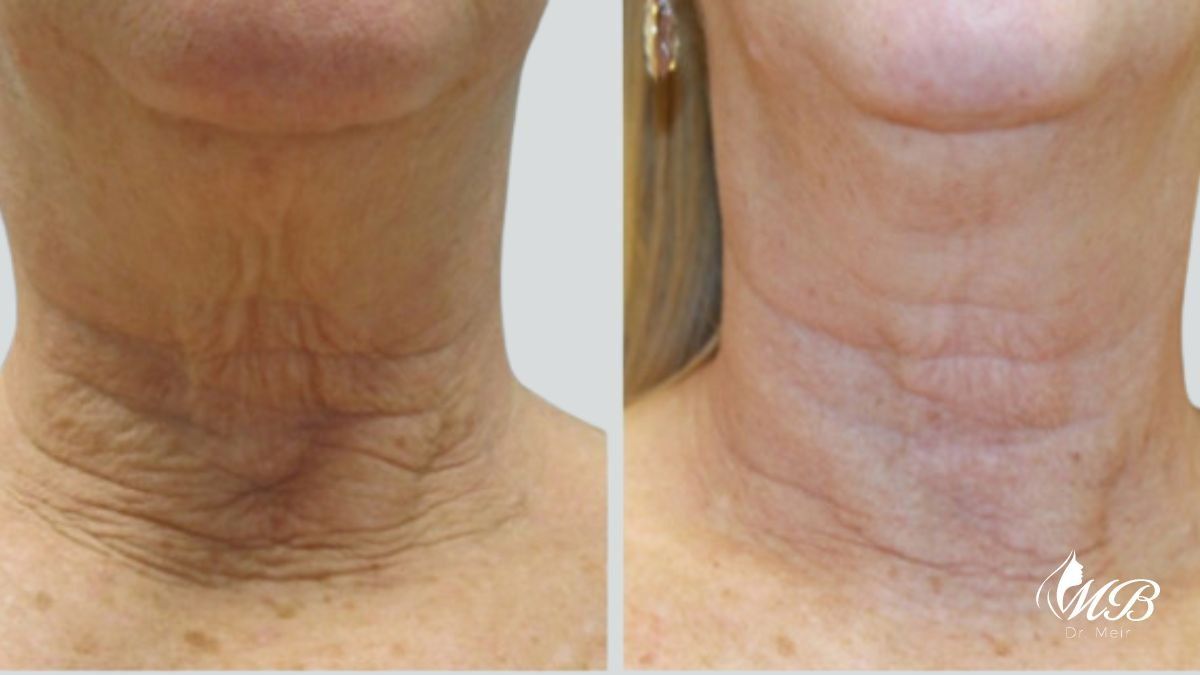
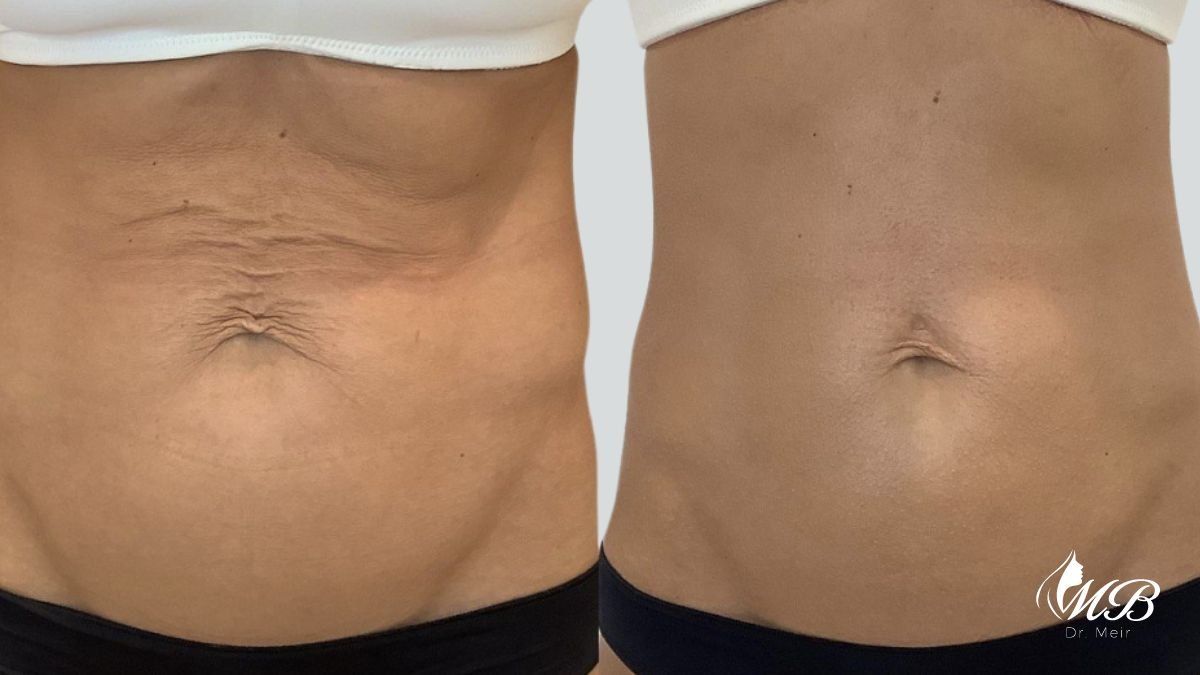
Individual results vary. Photos published with patient consent.
Questions
Does Endolift hurt?
The area is numbed with local anaesthetic injections first, so most people feel pressure and warmth during the treatment. Tenderness and swelling follow for a few days.
How long do Endolift results last?
In Dr. Meir's experience the result usually holds for about two to three years. Skin keeps ageing from its new starting point, and sun protection and not smoking help it last.
Is one Endolift session enough?
For most areas, yes. The result is reviewed at about three months. If one zone responded less, a focused top-up can be done four to six months after the first session.
Can Endolift treat the body as well as the face?
Yes. Besides the jawline, neck and under-eyes, it is used on the abdomen, inner arms, thighs and knees where the skin is loose and the fat layer is thin.
I had liposuction before. Can I have Endolift on the same area?
Yes. Endolift often suits skin that did not contract enough after liposuction, or small leftover fat. Dr. Meir asks for front and side photos first to see what remains.
Is Endolift FDA-approved?
The device carries a European CE mark. It has not been cleared by the US FDA, which matters if you are reading American sources. Dr. Meir discusses this during the consent process.
Related
Sources: The Endo-lift laser for dermatological aesthetic conditions: a systematic review (Aesthetic Plastic Surgery, 2024); Endolift laser for jowl fat reduction: clinical evaluation and biometric measurement