What Quantum RF is
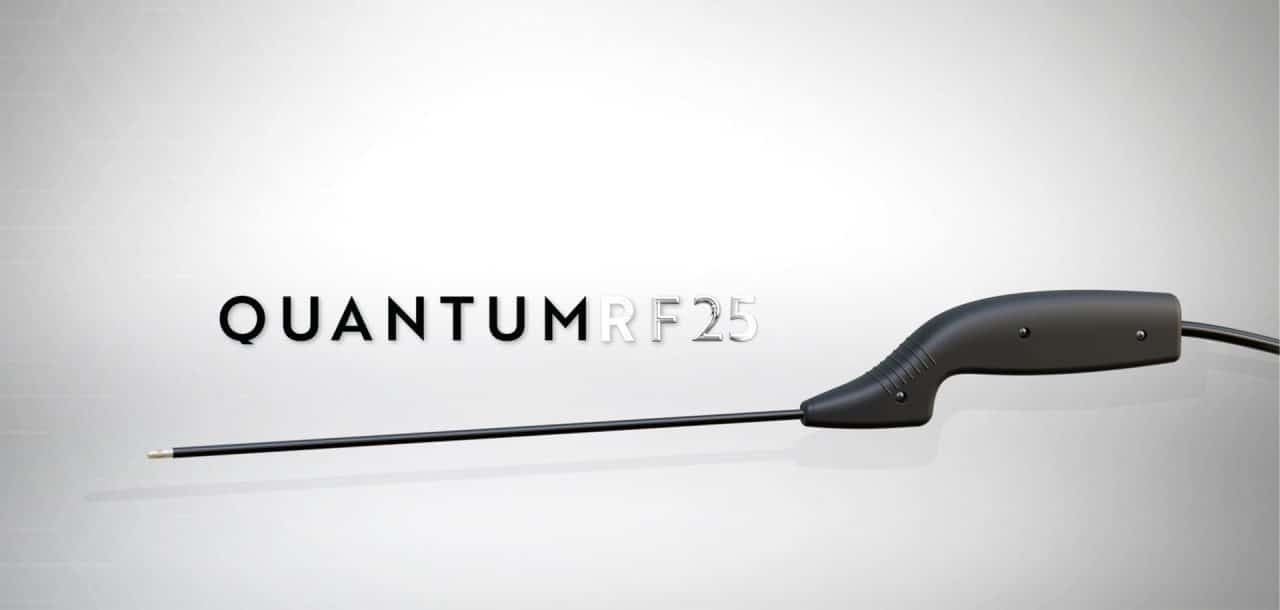
Quantum RF is a radiofrequency-assisted liposuction system made by InMode and run on its Ignite platform. A thin probe enters under the skin through an entry point a few millimetres long. It delivers bipolar radiofrequency energy in measured pulses to the fat and to the deep surface of the skin.
The heat has two jobs. It softens and breaks down fat so it can be removed, and it makes the collagen fibres in the skin contract. Over the following months the skin keeps producing new collagen, so tightening continues long after the day of treatment.
Classic liposuction removes fat and leaves the skin to shrink on its own. In young, elastic skin that works well. When the skin has lost some elasticity, after pregnancy, weight loss or with age, it can stay loose over the new contour. Quantum RF was designed for that gap.
Quantum RF, BodyTite and FaceTite
BodyTite and FaceTite are InMode’s earlier radiofrequency-assisted devices for the body and the face. Quantum RF is the next generation of the same family. It has two handpieces: a small one for the face, jawline and neck, and a larger one for body areas such as the abdomen, flanks, arms and thighs.
At Dr. Meir’s clinic, Quantum RF replaced BodyTite and FaceTite. If you read about BodyTite or FaceTite on older pages, the treatment you would receive today is Quantum RF.
Who it suits
Quantum RF suits people with local fat deposits and mild to moderate skin looseness who want both problems treated in one session. Typical cases:
- Jowls and a soft neck in people from their late thirties onward.
- The lower abdomen and flanks after pregnancy.
- Upper arms with fat and early skin laxity.
- The male chest in gynecomastia.
- Patients after earlier liposuction whose skin did not contract enough.
It is not a weight-loss treatment, and it does not replace surgery when skin hangs in heavy folds. Pregnancy, a pacemaker or other implanted electronic device, metal implants in the treatment area, active skin infection and significant bleeding disorders are reasons not to treat. A history of keloid scars calls for extra caution.
How it is done at the clinic
- Consultation in Holon. Dr. Meir examines the area, assesses how much fat there is and how the skin responds when pinched and released, and takes photographs. You receive a plan and an exact quote.
- Preparation. Pre-operative tests from a list you receive after the consultation.
- The procedure. Dr. Meir performs it himself in an accredited medical centre’s operating room. Anaesthesia depends on the area and the extent: local anaesthesia with sedation for smaller areas, general anaesthesia for larger ones. In most cases Quantum RF is combined with liposuction through the same entry points.
- Compression. A compression garment or chin strap goes on after the treatment.
- Follow-up visits at the clinic in Holon.
A single area of liposuction with Quantum RF usually takes about an hour to an hour and a half.
Recovery
Most people return to light daily routine within a few days. Expect swelling, bruising and a feeling of tightness. Firmness under the skin and patches of reduced sensation are common and fade over weeks.
Wear the compression garment for several weeks as instructed. A day or two is not enough: the garment controls swelling and supports the skin while it tightens, and stopping early makes the result less even. Light exercise usually returns after about a week, full training after two to four weeks, depending on the area.
Risks and side effects
Common and temporary: swelling, bruising, redness, numbness and induration (a firm, lumpy feel under the skin) that settles over weeks.
Less common: uneven contour, mild asymmetry, infection and temporary darkening of the skin. Because the device uses heat, there is a small risk of a burn. Correct energy settings and technique keep that risk low. Overheating the tissue can cause fibrosis, which is why the treatment belongs in experienced hands.
Note: The published evidence for subsurface radiofrequency is promising but limited. A 2022 systematic review in the Annals of Plastic Surgery found mostly case series and no randomised controlled trials. Results vary between people, and Dr. Meir will tell you what is realistic for your skin.
Results and timeline
The first change usually shows within about a month, as early swelling settles. Tightening builds over three to six months and can continue to improve for up to a year, as new collagen matures. Fat cells removed during liposuction do not grow back. The skin continues to age, and large weight changes still affect the area.
Quantum RF compared with VASER and classic liposuction
Classic (tumescent) liposuction removes fat mechanically through a cannula after the area is filled with fluid containing local anaesthetic and adrenaline. It is effective and well studied. It relies on the skin to contract by itself.
VASER uses ultrasound energy to loosen fat before suction. It helps in dense, fibrous fat and in fine sculpting. Its main purpose is to make fat removal easier; skin tightening is a secondary effect.
Quantum RF adds controlled heating aimed at the underside of the skin. Its main advantage over the other two shows in people whose skin has started to lose elasticity.
There is no single best method. A person in their twenties with firm skin may do well with classic liposuction alone. A person after pregnancy with a soft lower abdomen, or someone in their forties with heavy jowls, is the typical case for adding Quantum RF.
How to choose
Ask the doctor how your skin will behave after fat is removed and how they will handle it if it does not tighten. Ask who performs the procedure, where it takes place, and what anaesthesia is planned. Quantum RF is one treatment, not a course, so compare plans by the full result, not by the number of sessions.
Dr. Meir has more than 20 years of experience in liposuction and skin tightening. Consultations at the Holon clinic are in Hebrew, English and Russian.
Results from the clinic
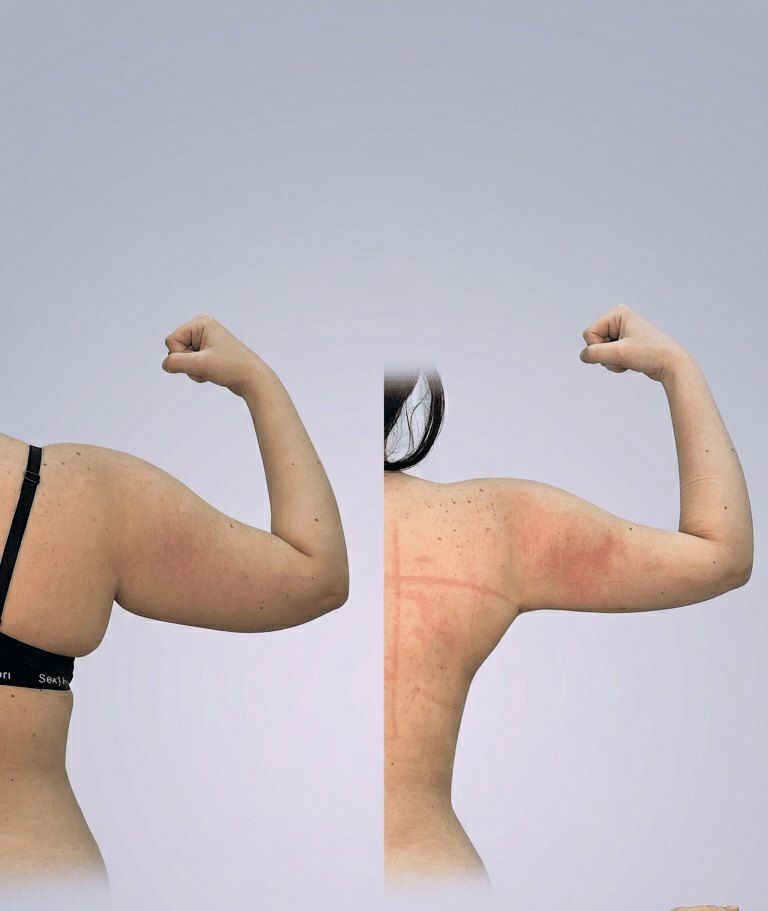
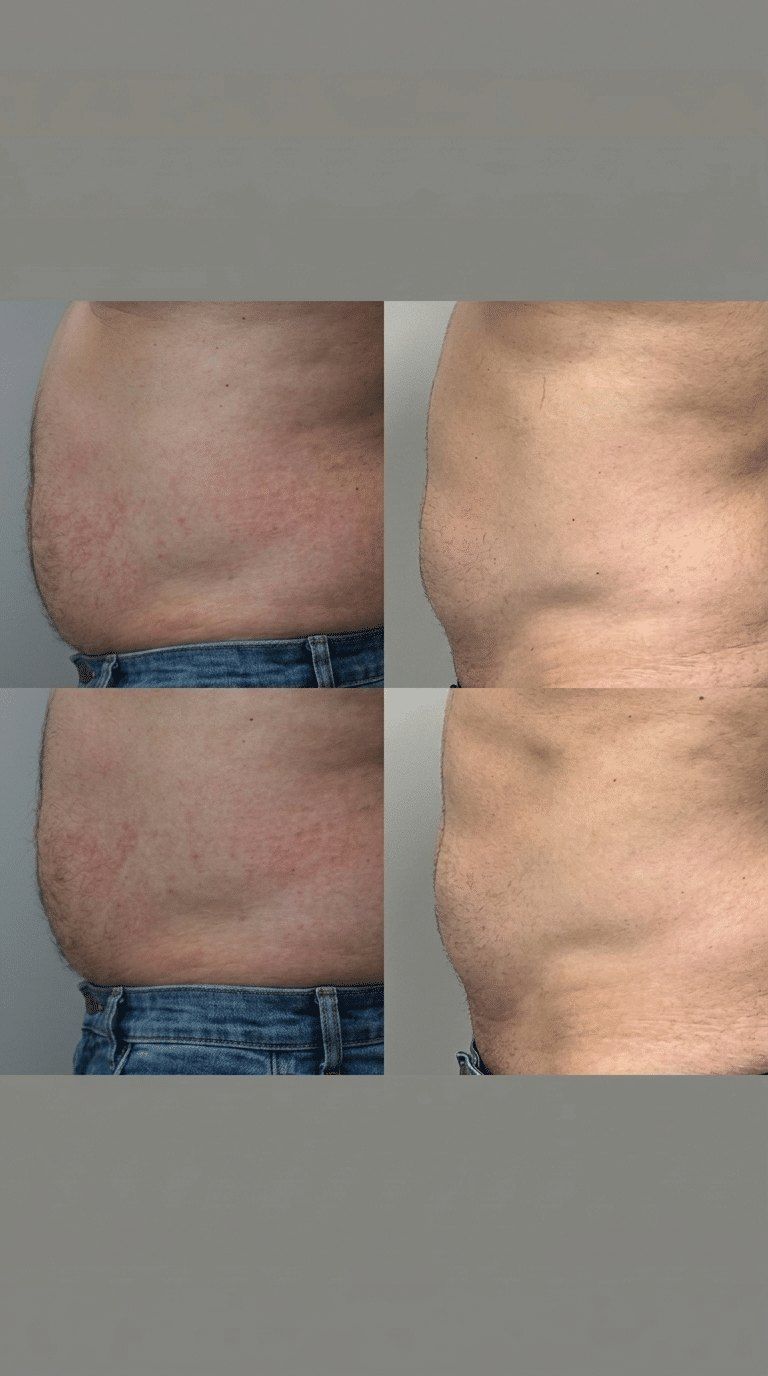
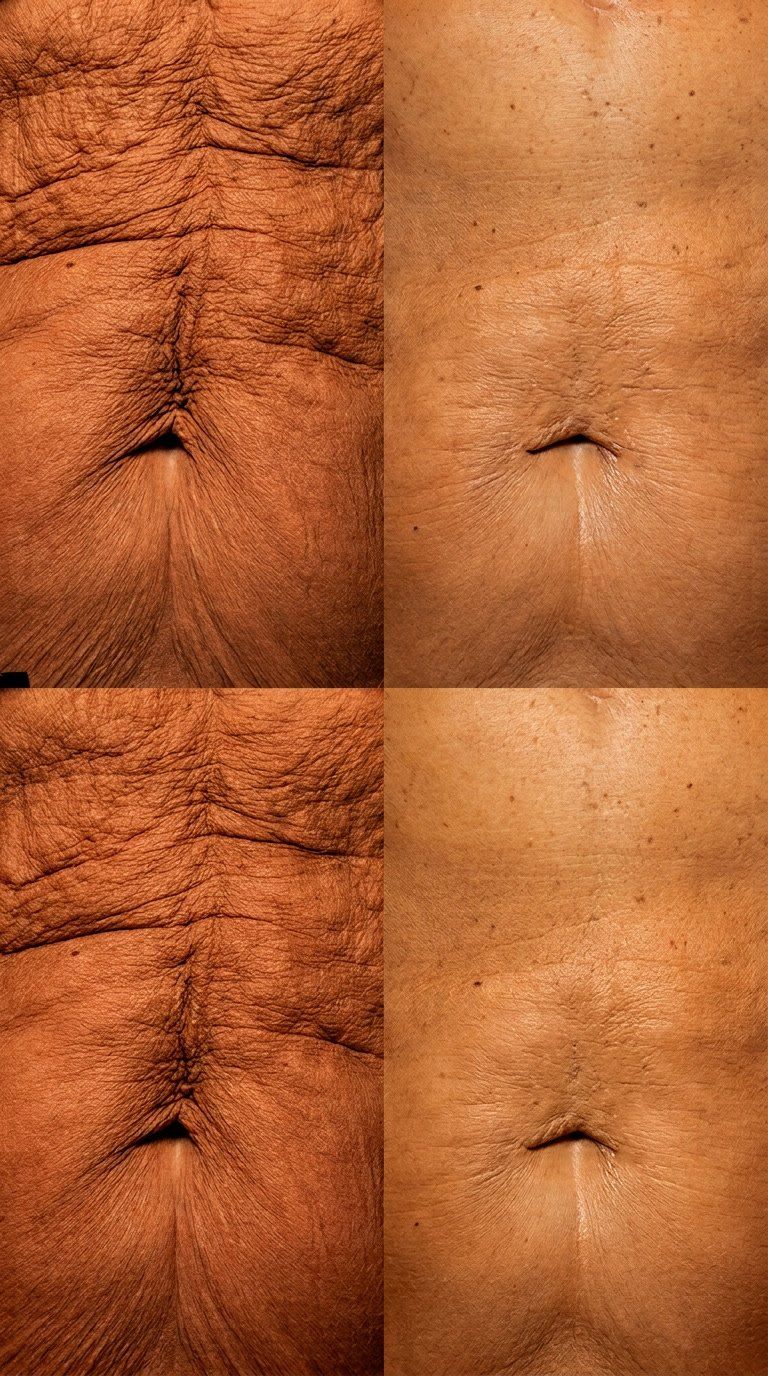
Individual results vary. Photos published with patient consent.
Price
| Liposuction, one area | ₪8,000–16,000 |
| Comprehensive liposuction | ₪15,000–50,000 |
The final price depends on the extent of treatment and is given at the consultation.
Questions
Is Quantum RF the same as BodyTite?
Both come from InMode and use bipolar radiofrequency under the skin. Quantum RF is the newer device on the Ignite platform, with separate handpieces for the face and neck and for the body. At this clinic it replaced BodyTite and FaceTite.
Is Quantum RF a non-surgical treatment?
No. The probe goes under the skin through a small entry point, so it is a minimally invasive procedure done in an operating room. It is much smaller than an open lift, but it is not an external device.
How many sessions are needed?
Usually one. The skin keeps tightening for months after the treatment as new collagen forms.
Which areas can be treated?
The jawline, jowls and neck, the abdomen and flanks, the arms, the thighs, the back and the male chest. The small handpiece serves the face and neck, the larger one the body.
Can Quantum RF fix very loose skin?
It tightens mild to moderate looseness. Heavy hanging skin after major weight loss usually needs surgical skin removal, and Dr. Meir will say so at the consultation.
How is it different from VASER?
VASER uses ultrasound to loosen fat before suction. Quantum RF uses radiofrequency heat, aimed at both fat and the underside of the skin, with the goal of contraction. The right choice depends on how much fat there is and how the skin behaves.
Related
Sources: A systematic review of subsurface radiofrequency treatments in plastic surgery (Ann Plast Surg); Improving outcomes in upper arm liposuction: adding radiofrequency-assisted liposuction to induce skin contraction (Aesthet Surg J, 2012)