
What AviClear is and how it works
AviClear is a laser at a wavelength of 1726 nm, made by Cutera and cleared by the US Food and Drug Administration in 2022 for mild to severe acne. At this wavelength sebum absorbs more energy than the water in the skin, so heat concentrates in the oil glands in the dermis. Measurements of sebum’s absorption spectrum found a peak close to 1728 nm.
The advantage of sebum over water is modest, so cooling is half the technology. The handpiece touches the skin and cools it before and during each pulse. The surface stays cool while heat builds at the depth of the gland.
A gland does not disappear after one session. The heat damages part of the cells that produce sebum, and the glands shrink gradually. The skin keeps making oil at a lower level and does not become dry for good. This is why a series is needed, and why the result builds over months.
Who it suits
- Active inflammatory acne on the face, mild to severe, with spots that keep coming back.
- Comedonal acne with blackheads, whiteheads and enlarged oil glands, alongside a home routine.
- Patients for whom topical treatment has not been enough.
- Patients who cannot or prefer not to take isotretinoin (Roaccutane), and those whose acne returned after a course.
Topical retinoids and benzoyl peroxide act on the skin surface while the gland keeps producing sebum, and keeping up a cream every evening for months is hard. The usual next step is antibiotic tablets or isotretinoin, both whole-body medicines. AviClear offers another step before that, and for some patients a laser series with topical care at home makes the tablets unnecessary.
Teenagers. At the clinic Dr. Meir starts AviClear from age 10. The laser targets the oil glands, causes little discomfort and, in his experience, no significant side effects, so there is no reason to wait for acne to leave scars. The FDA clearance has no age limit, though the clinical studies were done mainly in adults. Under 18 a parent comes to the consultation and gives consent. Teenagers go back to school the same day.
When Dr. Meir chooses something else
For severe acne with deep cysts or scars beginning to form, isotretinoin usually stays the main treatment. For back and chest acne he chooses a different combination, because the AviClear studies were done on the face. When acne flares around periods, he also checks the hormonal side and considers spironolactone.
According to Cutera, AviClear is not used in pregnancy or in patients receiving treatment for skin cancer in the area. It has not been tested on the lips, eyelids and eyebrows and is not used over tattoos or permanent make-up.
Before any recommendation Dr. Meir confirms that the lesions are acne. Folliculitis, persistent cysts and benign enlargement of oil glands can look similar and need different treatment.
How a session works
- Come without make-up or rich cream on the face. The laser is absorbed by oil, and residue on the skin interferes.
- The skin is cleansed thoroughly before the session.
- A full face takes about 30 minutes, with the handpiece cooling the skin during the pulses.
- Most patients feel heat and stinging, which varies between people and between areas of the face.
The course is a series of sessions about two weeks apart. The basic course at the clinic is three sessions, and more severe acne may need up to five. Between sessions the home treatment continues every day, even when the skin looks calm. Before each session Dr. Meir asks about new medicines and sun exposure.
Aerolase for active acne. The clinic also uses the Aerolase Neo Elite, a 1064 nm laser with very short pulses that calms inflamed spots and redness with no downtime. Dr. Meir chooses the combination by the skin in front of him.
Recovery and side effects
After a session the skin is red and slightly swollen. In most patients the redness fades within hours, and they return to work or school the same day. For the next few days wash gently, use a moisturiser and sunscreen, and avoid peels and irritating products.
- Redness and mild swelling right after the session, usually for hours.
- Mild, temporary dryness, which a moisturiser handles.
- A temporary flare of spots in the days or weeks after a session. It is a known reaction and does not mean the treatment failed.
- Rarely, according to Cutera: blisters, marks or scars.
Note: A flare after the first or second session is the most common reason people give up too early. Dr. Meir tells patients about it in advance. If something worries you, send an update before the next session.
Results and timeline
Some patients notice a change after the first session. In most the improvement adds up over the series and continues in the months after it, so Dr. Meir judges the result at the end of the series, comparing photos from the same angles.
In the 104-patient study behind the FDA clearance, people with moderate to severe facial acne had three treatments. At 12 weeks 79.8% had at least 50% fewer inflammatory lesions, and at one year the figure was 91.5%, with 66.2% rated clear or almost clear. The study had no control group and was funded by the manufacturer, so Dr. Meir presents these figures as an encouraging sign and not a promise.
AviClear does not remove scars or marks that have already formed. Red marks, brown marks and depressed scars have their own treatments, chosen once the acne is under control.
AviClear vs Roaccutane
Both target the oil glands. Isotretinoin works through the whole body, takes months of daily or low-dose tablets and needs blood tests and, in women, pregnancy prevention. AviClear works only on the treated area in a short series, with no blood tests. Isotretinoin remains the main treatment for severe cystic acne and acne across the body. For a woman planning a pregnancy in the coming year, an AviClear series before the pregnancy is an option Dr. Meir discusses, because no drug stays in the body afterwards.
Accure is another 1726 nm laser. The clinic does not have it, and the aim of both devices is the same: calmer oil glands.
How to choose
Each series starts with Dr. Meir’s examination: confirming the diagnosis, reviewing treatments already tried, checking for a hormonal cause and setting a home routine. At each visit he reassesses the skin. If acne is still active after the series, he first checks that the topical treatment continued as planned, and only then considers another laser session, a combination or medication. Dr. Meir has more than 20 years of experience and consults in Hebrew, English and Russian at Ha-Rokmim 26, Azrieli Holon Center, Building B, 4th floor. Book through WhatsApp at 053-566-2287.
Results from the clinic
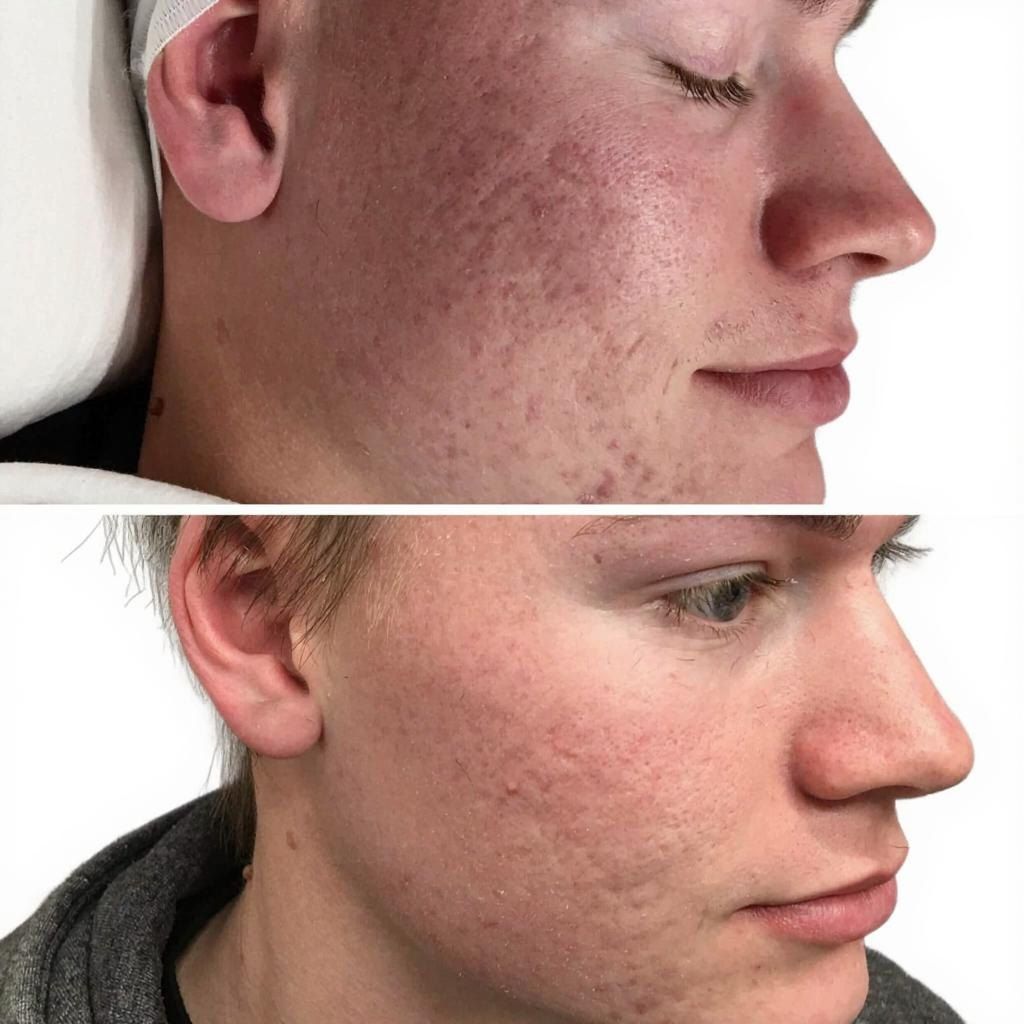
Individual results vary. Photos published with patient consent.
Questions
How many AviClear sessions do I need?
The basic course at the clinic is three sessions. More severe acne may need up to five. Dr. Meir sets the number at the examination, by the type and number of lesions and earlier treatment.
Does AviClear hurt?
Most patients describe heat and stinging during the pulses, eased by the cooling tip. In Dr. Meir's experience most people tolerate it well with little discomfort.
My acne got worse after the first session. Is that normal?
Yes. Some patients get a temporary flare in the days or weeks after a session. It passes and does not mean the treatment failed, so finish the series.
Does AviClear treat acne scars?
No. It works on the oil glands and does not resurface the skin. It reduces new spots and so lowers the chance of new scars. Existing scars and marks need other treatments.
Is AviClear safe for dark skin?
The pivotal study included skin types II to VI, with similar results and comfort across them. The wavelength targets oil, not pigment. Sun protection after each session applies to every skin type.
Can acne come back after the series?
No one can promise that acne will never flare again, especially while hormones are active in the teenage years. A topical treatment continues at home, and a flare-up can be treated again.
Related
Sources: 1726 nm laser for moderate to severe acne: 26-week results. J Am Acad Dermatol 2023; American Academy of Dermatology: Guidelines of care for the management of acne vulgaris (2024)