
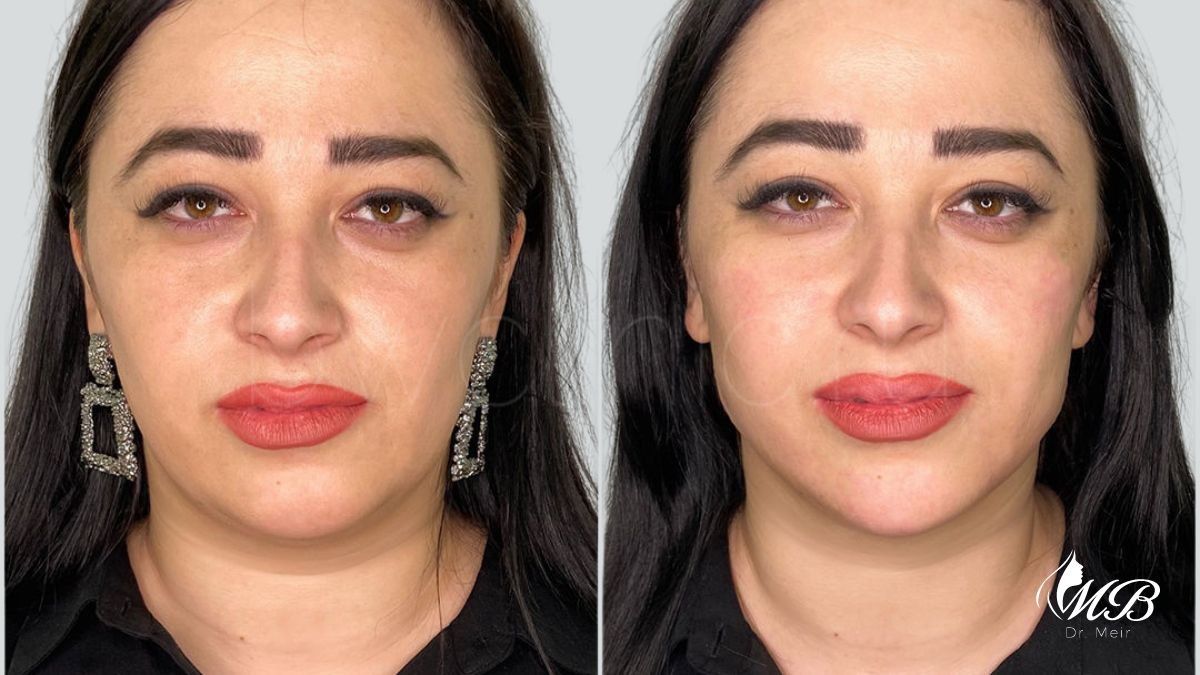
What cheek filler does
The cheeks hold up the middle of the face. With age the fat pads there shrink and slide down, and the bone itself recedes. The cheekbone loses height, the fold between the nose and mouth deepens and a shadow appears under the eye. The face starts to look tired even after a good night’s sleep.
Cheek filler is a hyaluronic acid gel injected at chosen points on and around the cheekbone. It can do three different jobs:
- Restore volume in cheeks that have flattened with age or after weight loss.
- Lift, by placing small amounts on the bone so the soft tissue above the folds is supported.
- Contour, by defining the cheekbone so light catches it, the way a highlighter does in make-up.
Most faces need a mix of the three. A young face with a flat cheekbone needs contour. A face in its fifties usually needs support first and shape second.
Lift or volume: why placement matters more than amount
Filling a sunken cheek with soft gel close to the surface gives the “pillow face” look: the face is fuller and does not look younger. The structure under the soft tissue has receded, and volume needs something to rest on.
For this reason the gel goes deep, onto the bone. There it creates real support, stays in place and does not drift down over the years. A shallow injection can look puffy and may slide lower.
A full cheek session works on several anchor points in small amounts: the outer cheekbone, the middle of the arch and the highest point of the cheek, where a little more gel creates a natural highlight. Support at the bone next to the nose lifts the nasolabial fold from below instead of filling the fold directly. Small amounts in the right place give more lift than a large amount in the wrong one.
The cheeks and the temples work as a pair. If the cheeks are filled and the temples stay hollow, the face can look heavy in the middle. Dr. Meir checks the whole face, and sometimes the temples are treated first.
Who it suits
- Cheeks that have flattened with age or after weight loss
- A deepening nasolabial fold, where support from the cheek softens it
- A shadow under the eye caused by a cheek that has dropped
- A flat cheekbone line in a young face
- Asymmetry between the two sides
Before treatment Dr. Meir looks for the cause of what bothers you. Full cheeks are sometimes bone structure, and then he does not try to reduce them: he defines the cheekbones instead. A heavy lower face is often fat under the skin, which responds better to a subdermal laser or fat-dissolving injections than to filler.
Many young patients ask for buccal fat removal to slim the face. Dr. Meir does not recommend it. Ten to twenty years later it can leave the face hollow under the cheekbones, at an age when the face loses volume anyway.
Cheek filler for men
Men come for cheekbone definition and a stronger frame. The aim differs: a flatter, wider line at the side of the face and less fullness at the front, which can look feminine. Cheek work in men is often combined with chin and jawline filler for a balanced profile.
How the treatment is done at the clinic
- Consultation. What bothers you, earlier treatments, medicines and allergies, photos from the front and the side.
- Preparation. Numbing cream is applied, and most gels also contain lidocaine. Arrive a little early to give the cream time.
- Injection with a fine needle on the bone or a blunt cannula, depending on the point. Before each needle injection Dr. Meir pulls back on the plunger to check the tip is not inside a vessel, and injects slowly in small amounts.
- Shaping. The gel is moulded with the fingers. Any massage is upward and inward, never downward.
There is no fixed product for the cheeks. Dr. Meir chooses the gel for each patient and each point after the examination: a dense, firm gel for support on the bone, a softer one where the tissue moves. The clinic keeps several types for this reason.
Alternatives to hyaluronic acid
Radiesse (calcium hydroxylapatite) adds volume and stimulates collagen. It suits thicker skin and people prone to swelling. Sculptra (poly-L-lactic acid) builds volume over a few months through your own collagen and suits wide volume loss across the face. Both last longer than most hyaluronic gels, and neither can be dissolved with hyaluronidase. Dr. Meir discusses them when hyaluronic acid is not the best fit.
Recovery and side effects
You go back to your routine the same day. Plan for the chance of a bruise: do not book the injection for the day before a wedding or an important meeting. For a week before, avoid painkillers such as ibuprofen if your doctor agrees, as they raise the chance of bruising.
After the injection:
- avoid hard exercise for 48 hours
- avoid saunas, steam rooms and strong heat for two weeks
- do not press or massage hard for two weeks
- sleep on your back for the first nights
Expected effects are swelling, tenderness and small bruises, which pass within days. The rare serious risk is filler entering a blood vessel. Skin that turns pale or blotchy, pain that gets worse or any change in vision needs an immediate call to the doctor who injected you. The clinic keeps hyaluronidase for this situation.
Note: Cheek filler is not done during pregnancy or breastfeeding, or over an active skin infection. Tell the doctor about any earlier filler in the area, especially permanent ones.
Results and timeline
The change shows at the end of the session. The area looks fuller for the first days because of swelling, and the real result shows after about two weeks, when you come back for a check and a small top-up if needed.
Hyaluronic acid in the cheeks usually lasts 9 to 12 months, and denser gels last about a year and a half. People who smoke or train hard may lose it a month or two sooner. When the gel is absorbed, the face returns to where it started. With repeated treatments, the gap between sessions tends to grow.
How to choose
Ask the doctor what will be done at each point and why, which product suits your skin, how many syringes the plan needs and whether hyaluronidase is kept at the clinic. Choose a doctor who examines the whole face and tells you when filler is the wrong tool.
Consultations at the clinic in Holon are held in Hebrew, English and Russian. You can write in English on WhatsApp to 053-566-2287.
Results from the clinic
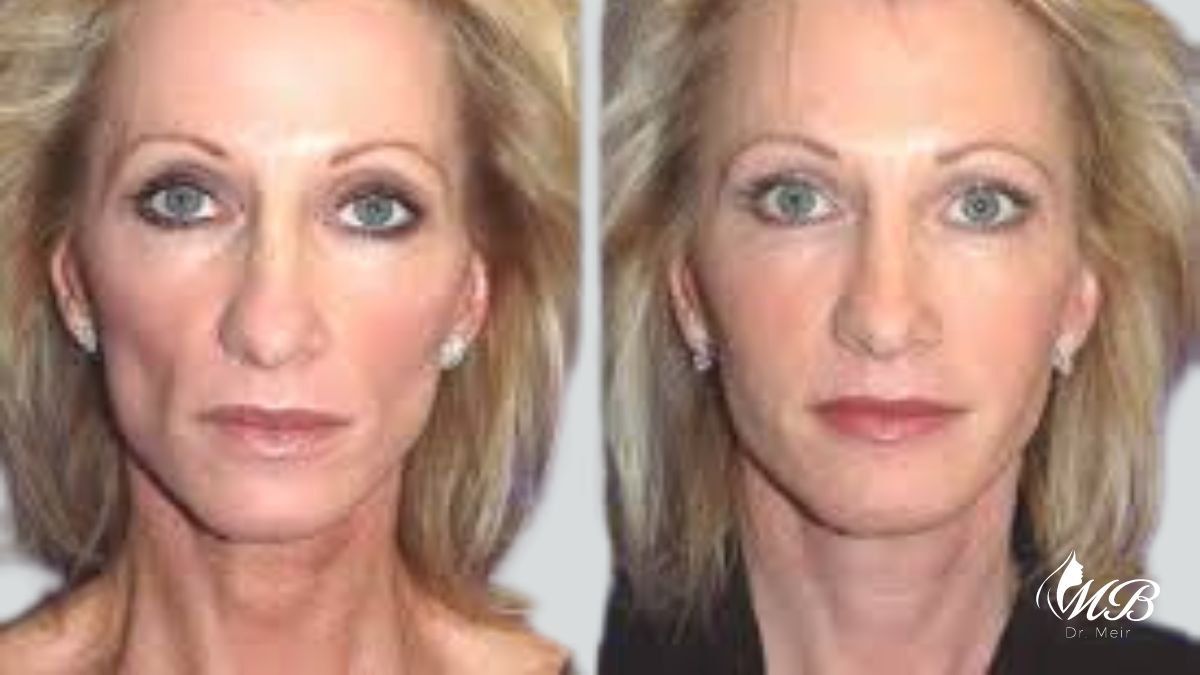
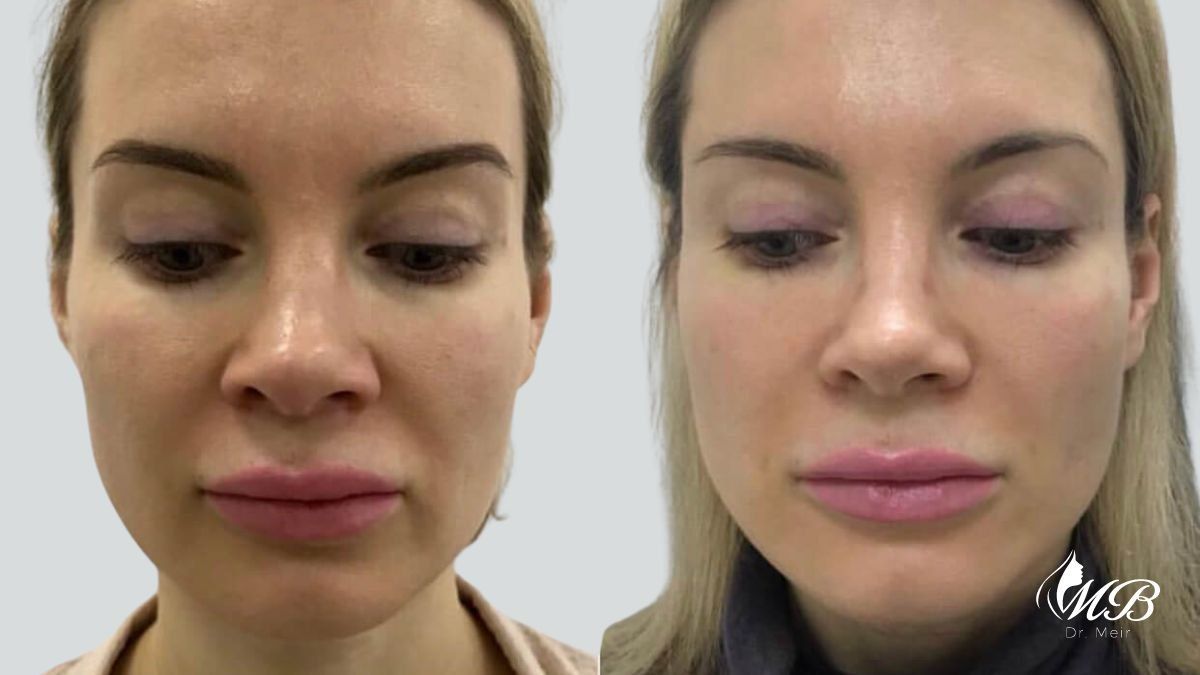
Individual results vary. Photos published with patient consent.
Price
| Hyaluronic acid filler, one syringe | ₪1,500–2,000 |
The final price depends on the extent of treatment and is given at the consultation.
Questions
How many syringes do I need for cheek filler?
A first treatment usually takes one or two syringes. A face that has lost a lot of volume may need more, sometimes split over two visits. Dr. Meir gives the number at the consultation.
How long does cheek filler last?
Usually 9 to 12 months, and denser gels can last about a year and a half. Smoking, a fast metabolism and intense sport shorten it.
Does cheek filler lift the face?
Placed on the bone at the right points, filler supports the mid-face and softens the nasolabial folds and the hollow under the eye. It does not replace a surgical lift when the skin is very loose.
Can men have cheek filler?
Yes. In men the aim is usually a flatter, wider cheekbone line and support for the jaw, with less volume at the front of the cheek.
What if I do not like the result?
Hyaluronic acid can be dissolved with hyaluronidase, which breaks the gel down within about 48 hours. Radiesse and Sculptra cannot be dissolved this way.
Should I remove buccal fat instead?
Dr. Meir does not recommend it. Ten to twenty years later it can leave the face hollow under the cheekbones, at an age when the face loses volume anyway.
Related
Sources: U.S. FDA: Dermal filler do's and don'ts for wrinkles, lips and more; U.S. FDA: Dermal Fillers (Soft Tissue Fillers)