
Three small areas that show age
Most people look at the cheeks, lips and folds when they think about filler. The temples, the back of the hands and the earlobes also lose volume with age, and each of them can add years to how a person looks. All three are treated at the clinic with short injections and no downtime.
Temple filler
Why temples hollow
The temple is the flat area at the side of the head, above the cheekbone and between the eye and the ear. In youth it is full or slightly rounded, and the forehead flows into the cheek in one line. The temple is built in layers: skin, two layers of fat, the temporalis chewing muscle and bone. With age every layer thins.
Some people hollow earlier:
- after weight loss, including fast loss on medicines such as Ozempic and Mounjaro
- athletes and people who are slim by nature
- people whose skull shape gives hollow temples from a young age
- smokers and people with long sun exposure
A hollow temple casts a shadow that separates the upper face from the middle. The face looks narrow at the top, tired, and the tail of the brow can look lower. After treatment many patients cannot point to what changed, yet the face looks fresher.
Check the cause first
Before filling, Dr. Meir checks that the temple has lost volume. Prominent cheekbones can make a temple look hollow, and then filling the temple will not solve it. The temples and cheeks are planned together: filling only the cheeks and leaving hollow temples can make the face look heavy in the middle.
How temple filler is done
Important vessels run through the temple, including the superficial temporal artery and the middle temporal vein. The depth of the injection is the most important part of the treatment. Two accepted approaches are used, alone or together:
- Deep, on the bone. A small amount is placed with a needle under the muscle at a defined point in the front of the temple. There are no large vessels at this depth, and the gel gives structural support.
- Superficial, with a cannula. A blunt cannula moves through the fat layer under the skin and spreads the gel evenly, with less risk of hitting a vessel and fewer bruises.
Each needle injection starts with aspiration, and the gel goes in slowly and in small amounts. The usual amount is 0.5 to 1 ml per side. A deep hollow can take up to 2 ml per side, and then the treatment is better split over two visits.
Hyaluronic acid suits most patients and can be dissolved if needed. Radiesse suits thicker skin and people prone to swelling. Sculptra builds volume gradually and suits wide volume loss across the face. Dr. Meir chooses the product after the examination.
After temple filler
The result shows at once and settles over one to two weeks. Because the temple moves little, hyaluronic acid usually lasts 12 to 18 months here. Expect mild swelling, tenderness, a possible small bruise and, for a few days, pressure when chewing. A mild headache on the day of treatment is common. For the first day avoid hard exercise, sauna and heat, do not press on the temples, and sleep on your back the first night.
Hand rejuvenation
Why hands age
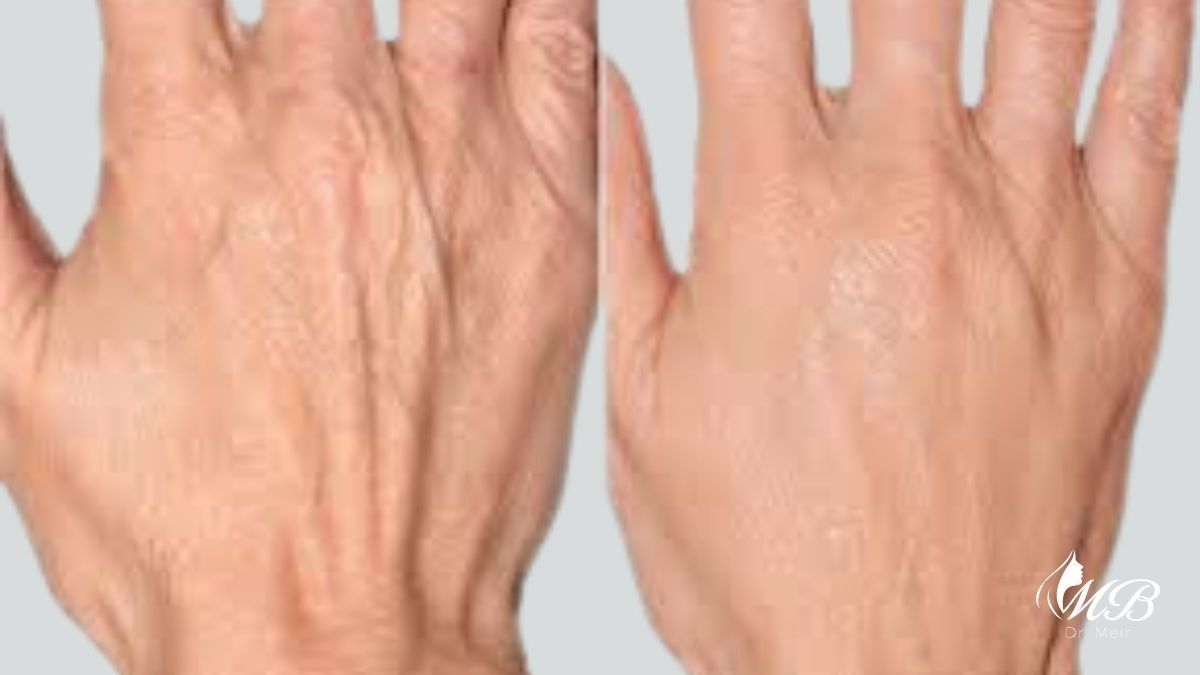
The back of the hand loses its fat layer with age. Veins and tendons start to stand out, and the skin thins and creases. Hands also get constant sun, so age spots appear. Hands often give away age even when the face has been treated.
Treatments for the back of the hands
- Filler. Hyaluronic acid injected under the skin of the back of the hand restores the fat layer and hides veins and tendons. It usually lasts 6 to 12 months.
- Radiesse. Calcium hydroxylapatite adds volume and stimulates collagen, and lasts longer than most hyaluronic gels.
- Skin boosters. Non-cross-linked hyaluronic acid improves thin, dry, crepey skin. It adds hydration and no volume, and works well together with filler.
- Light treatment for spots. Age spots and sun damage respond to IPL with the Lumenis M22 at the clinic.
Dr. Meir combines these by what your hands need: volume, skin quality, spots or all three. Filler is usually injected through a few entry points with a cannula, and the gel is massaged to spread evenly. Hands swell for a few days, so plan around events where your hands will be on show.
Protect treated hands with sunscreen every day. Without it, spots come back.
Earlobe filler
What changes in the earlobe
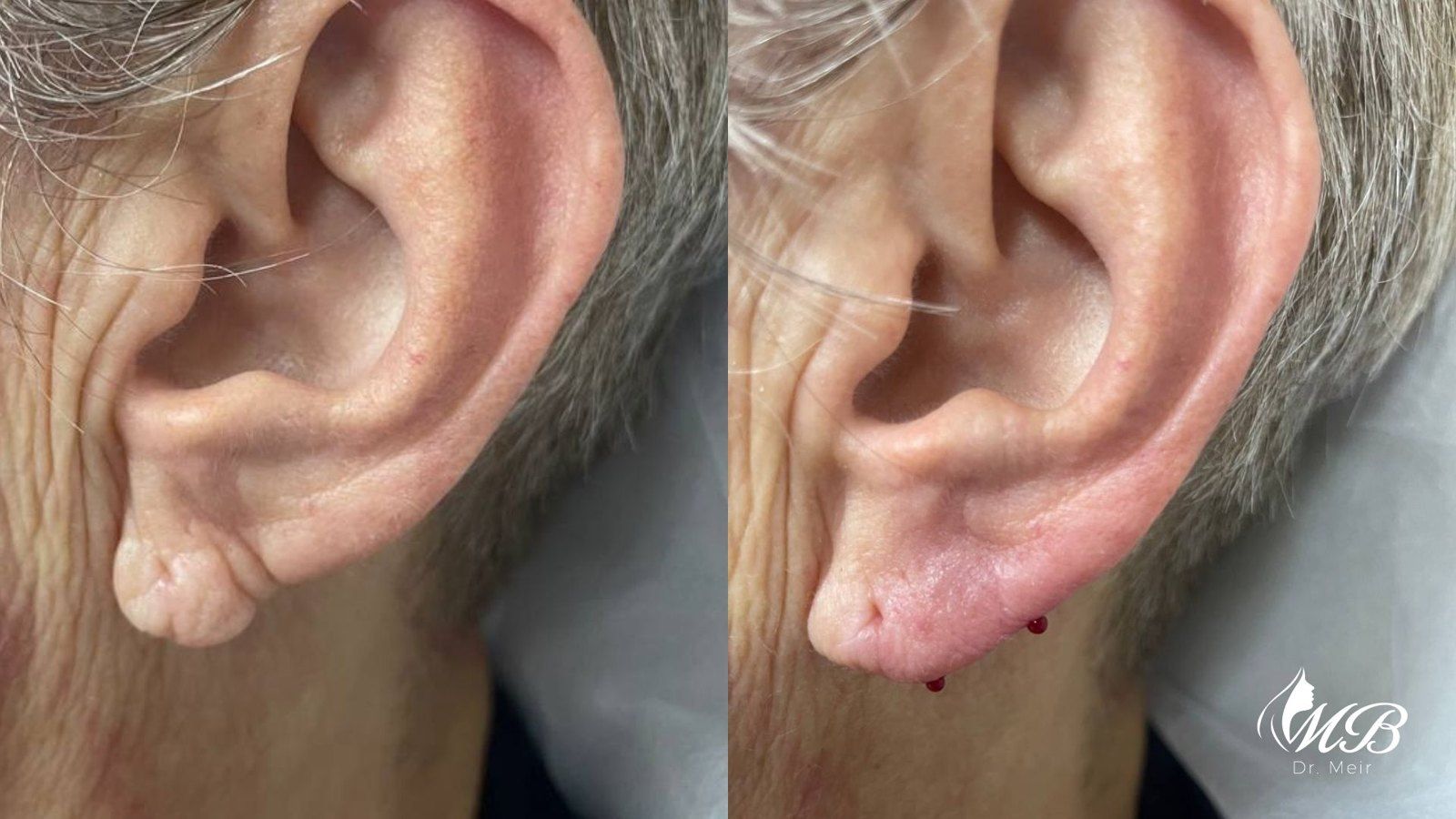
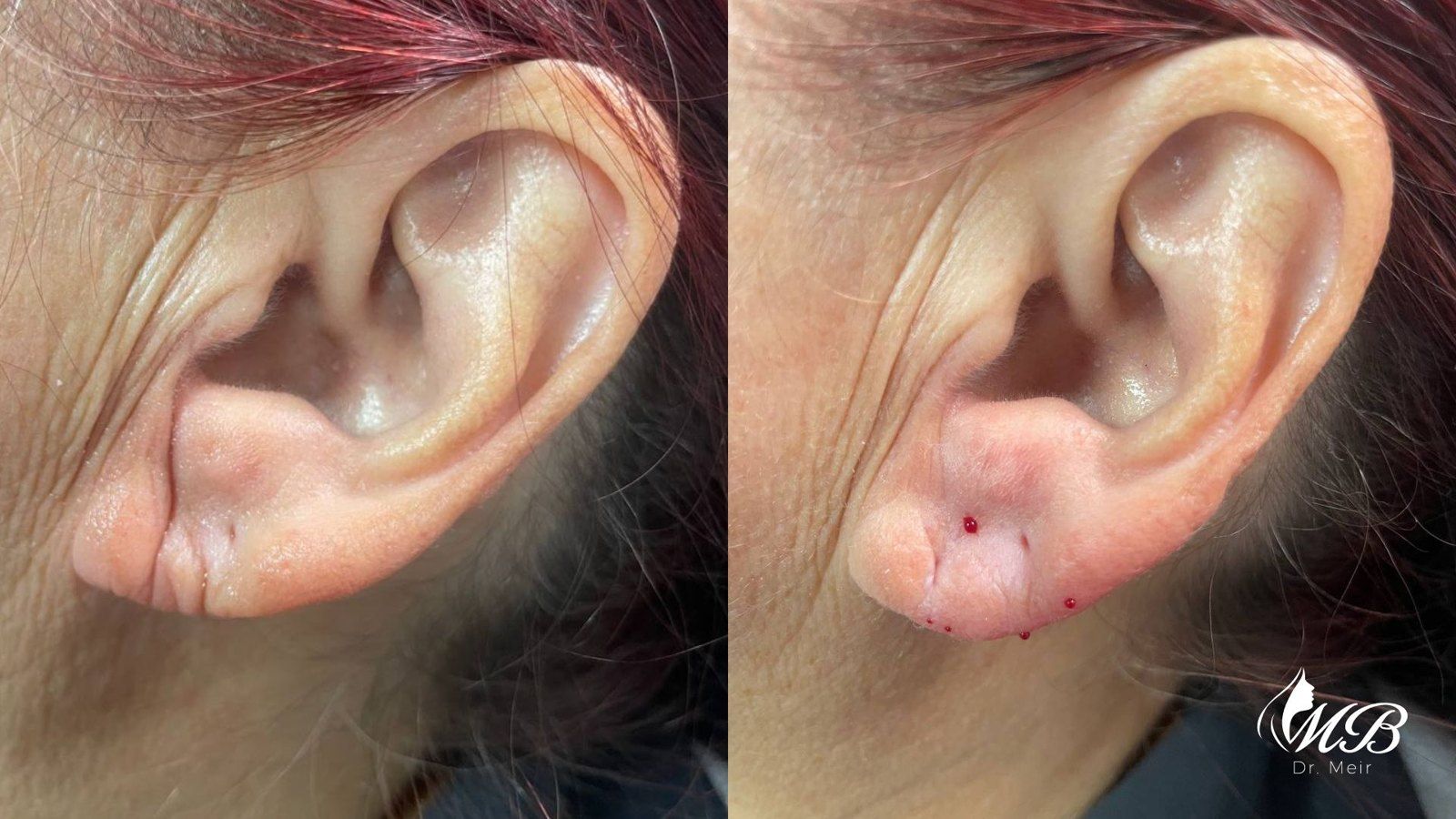
The earlobe is made of skin and fat with no cartilage or bone. With age, sun and heavy earrings it becomes thin, flat and creased, and the earring hole stretches. Earrings then hang forward or tilt.
Who it suits
- thin, flat or creased earlobes
- a stretched earring hole from heavy jewellery
- asymmetry between the two lobes
- earlobes treated as part of a wider facial plan
A fully torn lobe or a very wide hole needs a small surgical repair. Filler can then strengthen the lobe around the hole.
How it is done
The amount is small: usually 0.2 to 0.5 ml per lobe, and one 1 ml syringe of hyaluronic acid often covers both. A soft gel is injected into the middle of the skin around the earring hole and the lower lobe, sometimes with a fine cannula. Dr. Meir builds it up gradually to avoid overfilling. The session takes about 30 minutes.
The result shows at once and settles in about a week. It usually lasts 12 to 18 months. Avoid heavy earrings for at least seven days, and avoid massaging the lobe for two days.
Risks and side effects
Expected effects in all three areas are swelling, tenderness and small bruises, which can last up to 10 to 14 days on the hands. The rare serious risk is filler entering a blood vessel. Skin that turns pale or blotchy, pain that gets worse or a change in vision needs an immediate call to the doctor who injected you. The clinic keeps hyaluronidase to dissolve hyaluronic acid in this situation.
Note: Filler is not injected during pregnancy or breastfeeding, over an active infection or open wound, or into an area with earlier permanent filler such as silicone. Tell the doctor about blood thinners, a tendency to keloid scars and any earlier filler in the area.
How to choose
Ask the doctor what causes the hollow, which product will be used in each area and why, how deep it will be injected and whether hyaluronidase is kept at the clinic. Choose a doctor who looks at the whole face and hands together.
Consultations at the clinic in Holon are held in Hebrew, English and Russian. You can write in English on WhatsApp to 053-566-2287.
Results from the clinic
Individual results vary. Photos published with patient consent.
Price
| Hyaluronic acid filler, one syringe | ₪1,500–2,000 |
The final price depends on the extent of treatment and is given at the consultation.
Questions
How many syringes does temple filler need?
Usually about two syringes for both temples, and one can be enough for a mild hollow. A deep hollow may need more, split over two visits.
Is temple filler dangerous?
The temple has important blood vessels, so depth matters. Injecting deep on the bone at a defined point, or with a blunt cannula in the fat layer, slowly and in small amounts, keeps the risk low.
Can temple filler cause headaches or pain when chewing?
A mild headache on the day and a feeling of pressure when chewing for a few days are common, because the chewing muscle lies under the temple. Both pass on their own.
What helps veins on the back of the hands?
Filler or Radiesse under the skin restores the fat layer and makes veins and tendons less visible. Skin boosters improve thin, crepey skin.
Can a torn earlobe be fixed with filler?
A stretched earring hole and a thin, sagging lobe respond well to filler. A fully torn lobe or a very wide hole needs a small surgical repair, and filler can strengthen the lobe afterwards.
When can I wear earrings after earlobe filler?
Avoid heavy earrings for at least seven days so the lobe can settle.
Related
Sources: U.S. FDA: Dermal Fillers (Soft Tissue Fillers); U.S. FDA: Dermal filler do's and don'ts for wrinkles, lips and more