
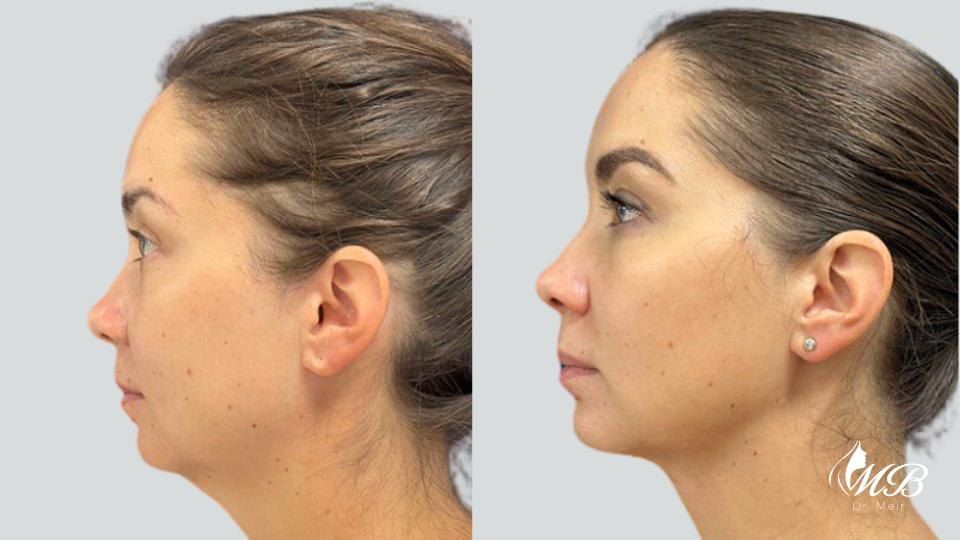
What non-surgical fat reduction can and cannot do
Non-surgical body contouring covers treatments that change the shape of an area without an operation: lasers, radiofrequency, injections and fibres placed under the skin through a needle. They work in small steps. A typical course takes off a few centimetres, softens a pocket of fat or tightens skin that has started to sag.
These methods do not treat obesity and do not replace weight loss. They also do not remove the deep visceral fat around the organs, which gives a firm, rounded belly. Only weight loss reduces that layer. What they reach is the soft subcutaneous fat you can pinch, and the skin above it.
Stubborn fat has a reason. Genes and hormones decide where the body stores fat, and some areas, such as the flanks, lower belly, outer thighs and under the chin, hold on to it after diet and exercise have worked elsewhere. That is the situation body contouring was built for.
Who it suits
The patients who gain the most share three features:
- Weight close to target, with one or two areas that do not respond to diet and training.
- A modest volume of fat, roughly a pinch rather than a fold.
- Skin with some elasticity left, or mild looseness that tightening can improve.
When the fat volume is large, the skin hangs, or the abdominal muscles separated after pregnancy, non-surgical methods give a small result for a long series of visits. Dr. Meir tells patients this at the first consultation. In those cases liposuction, sometimes with Quantum RF tightening, or a tummy tuck answers the problem better.
The options at the clinic
Emerald low-level laser
Emerald is a cold laser that works without heating the skin, and most people feel nothing during a session. The light makes fat cells release part of their content, which the lymphatic system then clears. It is FDA-cleared for circumference reduction and is given as a series of short sessions with no downtime. The change is modest, measured in centimetres across the waist, hips and thighs. Dr. Meir uses it as a complement and does not present it as a substitute for liposuction.
INDIBA radiofrequency
INDIBA uses radiofrequency (CRET technology) to warm the tissue. The heat improves circulation and stimulates collagen, so the skin feels firmer and smoother. Its main role in body contouring is skin quality and recovery, including after liposuction, when it can help the tissue settle. It does not remove fat on its own in any meaningful amount.
Fat-dissolving injections
Injections of deoxycholic acid break down fat cells in a small, defined pocket. The FDA approval covers fat under the chin. Other areas are treated off-label, and in 2026 the FDA added a warning about nerve and muscle damage and lasting nodules after injections outside the chin. Dr. Meir keeps injections to small areas and explains the trade-offs. Expect marked swelling for several days after each session and two to four sessions in total.
Endolift for loose skin
Endolift places a laser fibre thinner than a hair under the skin through a needle, under local anaesthetic. The fibre heats the deep layer, the skin contracts and new collagen forms over the following months. On the body it suits mild to moderate looseness on the inner arms, the belly and above the knees. It tightens; it is a tool for skin, with a small effect on fat.
Morpheus8 for skin texture
Morpheus8 combines microneedling with radiofrequency. On the body it improves crepey skin, stretch marks and the texture of skin over an area that has lost volume. It is often added after weight loss or liposuction.
When the answer is Quantum RF and liposuction
Quantum RF is minimally invasive: radiofrequency delivered under the skin through a small incision, usually together with liposuction. It removes fat and tightens the skin in one procedure, which no external device can do. Dr. Meir performs it himself in an accredited medical centre’s operating room, with consultation and follow-up in Holon.
Note: In Dr. Meir’s experience fat freezing and external laser fat reduction are mostly ineffective in every body area. The clinic no longer offers magnetic muscle stimulation (HIEMT, Emsculpt), last used in 2024. Plans at the clinic rely on the methods above.
How a plan is built
The consultation starts with an examination standing up. Dr. Meir pinches the fat, tests how fast the skin springs back and looks at the area from the side. Four questions shape the plan:
- Where is the fat, and how thick is it?
- How loose is the skin above it?
- Is there also cellulite or stretch marks?
- What is the goal: a smaller circumference, firmer skin, or both?
A woman with a soft lower belly and good skin may need a short series of injections. A man with firm flank fat usually gains more from liposuction. Loose skin after pregnancy often calls for Endolift or Quantum RF. Many plans combine two methods, for example Emerald for circumference with INDIBA for skin.
Recovery and what to expect
Laser and INDIBA sessions take around 20 to 40 minutes, and you go back to work straight after. Injections leave swelling, tenderness and sometimes bruising for several days. Endolift causes mild swelling for a few days and some tenderness when you press the area.
The body clears fat slowly, so the visible change builds over two to three months after a series. Skin tightening continues for up to six months as collagen forms. Photographs and measurements at the start and at follow-up show the change, which is easy to miss in a mirror every day.
Risks and side effects
External laser and radiofrequency carry low risk: redness, warmth and, rarely, a superficial burn. Radiofrequency is not used over metal implants in the area, with a pacemaker or during pregnancy.
Fat-dissolving injections can cause swelling, bruising, numbness, hard lumps and, rarely, nerve injury. Endolift can cause swelling, bruising and, rarely, a small burn or temporary numbness. Treatment is postponed during pregnancy and breastfeeding, with an active skin infection, or with a fever.
How to choose
Ask the clinic three things before you book a series: how many centimetres or how much tightening is realistic for your area, how many sessions it takes, and what liposuction would achieve instead. An honest answer to the third question tells you a lot about the clinic.
Bring your weight history and a list of treatments you have already tried. A first assessment can start from clear photographs on WhatsApp, front and side, standing in good light.
Questions
Does non-surgical fat reduction work?
It works for small, local changes: a few centimetres off a waist, a softer pocket of fat, firmer skin. It does not replace weight loss or liposuction when the fat volume is large.
What is the difference between body contouring and weight loss?
Weight loss shrinks fat cells all over the body. Body contouring targets one area and changes its shape. People near their target weight with a stubborn area gain the most from it.
Does the clinic offer fat freezing?
No. In Dr. Meir's experience fat freezing and external laser give mostly disappointing results in every area, so the clinic does not build plans around them.
Is Emsculpt available at the clinic?
Not at present. The clinic last used magnetic muscle stimulation (HIEMT) in 2024. For muscle tone, structured strength training remains the reliable tool.
How long do the results last?
Fat cells that the body clears do not return, but the remaining cells grow with weight gain. A stable weight keeps the result. Skin tightening fades slowly with age and may need maintenance.
Can I have the consultation in English?
Yes. Dr. Meir consults in English, Hebrew and Russian at the clinic in Holon, and you can write on WhatsApp in English.
Related
Sources: American Society for Dermatologic Surgery: Non-invasive body contouring treatments; FDA: Kybella (deoxycholic acid) prescribing information