What stretch marks are
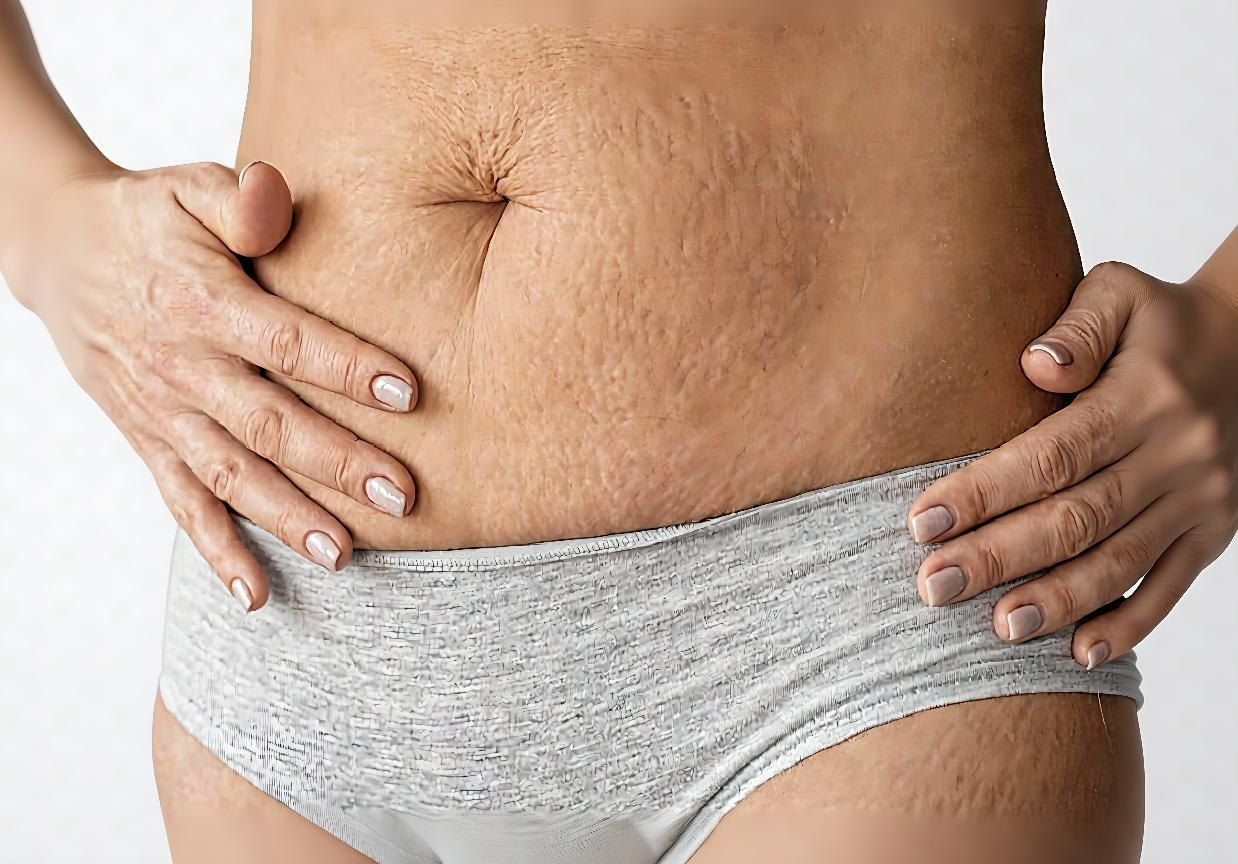
Stretch marks, called striae by doctors, are scars in the dermis, the deep layer of the skin. They form when the skin stretches faster than its collagen and elastic network can adapt. The deep fibres tear, and the skin above them becomes thin, sometimes with a fine wrinkled texture like tissue paper.
The colour tells the age of the scar:
- Red or purple (striae rubrae): new marks. Blood vessels in them are still active and the tissue is inflamed. This is the stage that responds best to treatment.
- White or silvery (striae albae): older marks that have lost pigment and blood supply. They are flatter in colour but often have a sunken, shiny texture.
On darker skin new marks can look dark brown rather than red, and older marks lighter than the surrounding skin.
Stretch marks do not harm your health. Treating them is an aesthetic choice.
Why they appear
Common causes:
- Pregnancy, mostly in the last trimester
- Growth spurts in adolescence
- Fast weight gain, or fast muscle gain in people who train hard
- Long use of corticosteroid creams or tablets, which weaken the skin
- A family tendency, which decides a lot of who gets them
The usual areas are the belly, breasts, inner arms, thighs, hips and buttocks. Stretch marks that appear without any clear reason, with no pregnancy, weight change or training, deserve a medical check, because they can signal a hormonal problem or a reaction to a medicine.
Treatment depends on the colour
Red marks: tretinoin and vascular laser
Tretinoin, a prescription vitamin A cream, has the best evidence among creams, mainly for new red marks. It thickens the dermis and supports collagen. It is used for several months, can cause dryness and redness, and is not used in pregnancy or breastfeeding.
Vascular laser targets the dilated vessels that make the marks red. At the clinic Dr. Meir works with the Lumenis M22 IPL, the Aerolase Neo Elite and VBeam, choosing by skin type and the depth of the colour. The redness fades, and the heat also stimulates collagen in the scar. Two to four sessions are typical for red marks.
White marks: rebuilding the dermis
White marks need new collagen in the deep layer. Two tools do most of this work at the clinic:
- Morpheus8 combines microneedling with radiofrequency. The needles create controlled micro-injuries in the dermis and the energy heats the tissue at depth, which drives collagen and elastin production. It suits older white marks, darker skin, and a belly where loose, crepey skin comes with the marks.
- UltraClear, a cold fibre laser, resurfaces the upper layer and smooths the shiny texture of the marks with less heat than classic resurfacing lasers.
In Dr. Meir’s experience the strongest results come from combining mechanisms in the same plan: RF microneedling for depth, laser for the surface, and a collagen-stimulating injection such as a biostimulator to improve skin thickness and elasticity. Each one works in a different layer.
Note: A white stretch mark is built like a scar. The aim is blending: the lines fill in, the texture evens out and the marks catch the light less. Dr. Meir says this at the start so expectations match what the skin can give.
Stretch marks after pregnancy
Pregnancy is the most common cause in women. The skin on the belly, breasts and thighs stretches fast, and most marks appear in the last weeks.
Active treatment starts after the birth, once the skin and belly have settled, usually a few months later. Marks that are still pink or red at that point respond better. During breastfeeding, local treatments such as vascular laser and microneedling can be done after a consultation, while retinoid creams wait.
If you plan another pregnancy soon, it often makes sense to wait, because new stretching can form new marks. Loose skin on the belly is a separate problem from the marks and may need its own tightening treatment.
The course of treatment
Sessions are usually spaced about a month apart, because collagen needs time to build. If you want a result for summer, start in winter. A numbing cream is applied before each session, and the sensation varies with the device and the area.
After Morpheus8 or UltraClear expect redness and mild swelling for two to four days. Most people return to normal activity the next day. Sun protection over the treated area for at least a week after each session lowers the risk of dark marks. Leave at least two weeks between the last session and an important event.
Darker skin
In darker skin types (Fitzpatrick IV to VI) pigment cells react strongly to heat, and an aggressive laser can leave dark patches weeks later. Dr. Meir prefers methods that do not target melanin, such as RF microneedling and 1064 nm laser, lowers the energy and spaces sessions further apart. A test spot before the series helps.
Risks and side effects
Expected effects are redness, swelling and small pinpoint marks after microneedling, which fade within days. Less common are dark patches after inflammation, especially in darker skin, temporary light patches, and, rarely, infection or a superficial burn. Treatment is postponed with active skin infection or an open wound in the area, and laser over a recent tan.
Results and timeline
Many people see a visible change after the first or second session. The result builds from session to session and keeps improving for several months after the series ends, as new collagen forms. Red marks often fade the most. White marks become flatter and narrower and blend into the skin.
When to see a doctor
Come early when marks are still red, including in teenagers, because this stage responds best. Older white marks can still improve; the series is longer. A first assessment can start from clear photographs on WhatsApp in daylight.
Questions
Can stretch marks be removed completely?
White marks behave like scars and do not disappear with any known method. Treatment makes them flatter, narrower and closer to the surrounding skin colour. Some red marks fade almost fully, but no one can promise that in advance.
How many sessions do I need?
Most people need three to six sessions about a month apart. Mild red marks can need fewer, deep white marks on the thighs or buttocks more.
Does tretinoin cream help?
Tretinoin has the best evidence among creams, and mostly for new, red marks. It is not used in pregnancy or while breastfeeding, and it can irritate the skin.
When can I start treatment after giving birth?
Wait until the skin and belly have settled, usually a few months after the birth. Marks that are still red respond better, so there is no reason to wait for years.
Can I treat stretch marks while breastfeeding?
Local treatments that do not enter the bloodstream, such as vascular laser and microneedling, can be done after a consultation. Tretinoin and other retinoids wait until breastfeeding ends.
Which areas are hardest to treat?
The inner thighs and the buttocks respond slowest. Marks on the breasts and behind the knees tend to respond faster.
Related
Sources: DermNet: Stretch marks (striae); A narrative review of current striae treatments (PMC)