What an IPL photofacial is
IPL stands for intense pulsed light. The handpiece sends short flashes of broad-spectrum visible light into the skin. Two targets absorb that light: haemoglobin in small blood vessels and melanin in brown spots. The light turns into heat inside the target, the vessel closes or the pigment breaks up, and the body clears the remains over the next weeks.
A laser works at a single wavelength. IPL covers a wide band, and filters decide which part reaches the skin. A filter that lets through shorter wavelengths suits fine surface vessels and light brown spots, while longer cut-offs reach a little deeper and spare the surface. This flexibility lets one session treat redness and sun damage together, which is why the treatment is often called a photofacial.
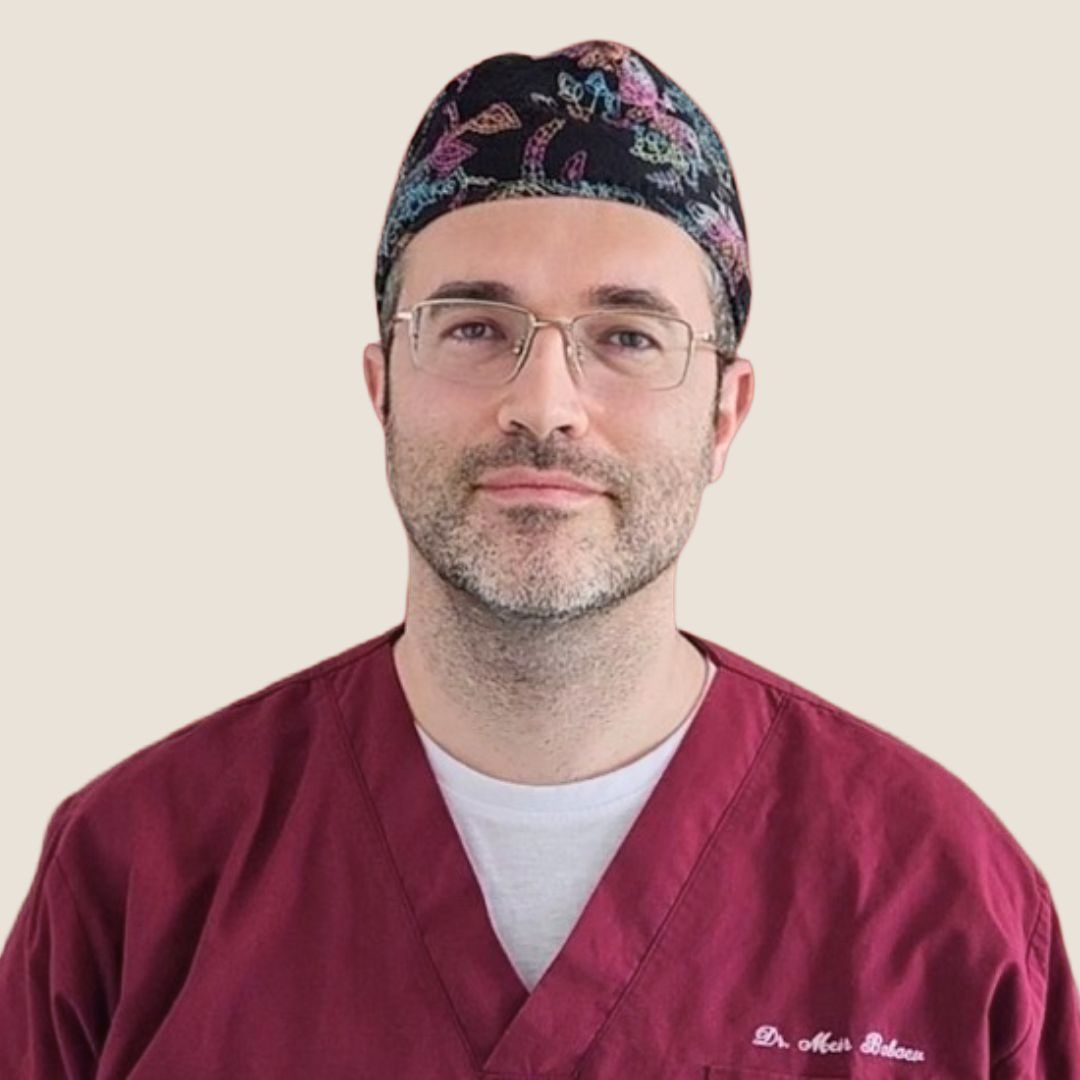
At the clinic in Holon the device is the Lumenis M22. The clinic’s records show it in regular use for facial redness, rosacea and sun-damaged skin.
Who it suits
IPL works best on fair to medium skin that has not tanned recently. Typical reasons to come in:
- Diffuse redness of the cheeks and nose, including rosacea.
- Broken capillaries on the face and the sides of the nose.
- Many fine sun spots and freckles on the face, neck, chest or hands.
- Uneven tone and dullness after years of Israeli sun.
- Red marks that stay after acne has calmed.
Some problems do not respond or need a different tool. IPL reaches brown pigment near the surface, and deep blue-grey pigment stays out of its range. Melasma responds poorly and can darken with heat. Raised or changing moles are never flashed, because light can darken them and mask a change that needs a biopsy. Dr. Meir examines any prominent or new pigmented lesion, with dermoscopy when needed, before treating the area.
When IPL waits or is not done
Treatment waits during pregnancy and breastfeeding, an active cold sore or infection in the area, and a fresh tan or self-tan from the last two to four weeks. Light-sensitising medicines matter too: doxycycline and minocycline are usually paused a few days before a session, and isotretinoin (Roaccutane) must be mentioned at the consultation. Retinoid and acid creams stop about a week before.
Other conditions call for a careful decision: a history of keloids, vitiligo, lupus or other autoimmune disease, epilepsy triggered by light, and cosmetic tattoos near the treated zone. Dark skin is the main limit. Melanin in the surface layer competes with the target, and the risk of burns and dark marks rises. For olive and darker skin Dr. Meir often prefers the Aerolase Neo Elite, a 1064 nm laser with a very short pulse.
How it is done at the clinic
- Consultation. Dr. Meir separates redness from pigment and from other red lesions, checks your skin type and tan, and reviews medication. Some patients send photos in daylight beforehand.
- Preparation. The skin is cleansed. You and the operator wear eye protection, since the flashes are bright.
- The session. A cool gel layer goes on the skin and the handpiece is pressed to it, one flash at a time. Each flash feels like a warm snap. The filter and pulse settings are matched to the target and to your skin.
- After. Cooling, a soothing cream and sunscreen. A full face takes about 20 to 45 minutes.
For rosacea and persistent redness, Dr. Meir rarely relies on one device. Redness comes from dilated vessels, inflammation and sometimes pigment, so the clinic’s protocol combines the M22 with the Aerolase laser and NeoGen plasma. A typical plan is five sessions, one every two weeks, alongside a calming cream at home and, when needed, doxycycline or ivermectin tablets.
Note: IPL lightens existing sun spots. New ones appear with new sun exposure, so daily SPF 50 belongs to the treatment plan.
Recovery and aftercare
Mild redness and a feeling of sunburn last a few hours to a day or two. Brown spots turn darker, sometimes nearly black, within a day, then flake off over 7 to 14 days. Do not pick or scrub them. Treated vessels can look more visible for a few days before they fade over one to three weeks.
For the first two to three days, use a gentle cleanser, avoid hot water, saunas and hard exercise, and skip active creams such as retinol and acids. Make-up can usually go back on after 24 hours if the skin is intact. Apply SPF 50 every morning and avoid direct sun for at least two to four weeks.
Risks and side effects
Most effects are short-lived: redness, mild swelling and a stinging feeling. Less common are blisters, crusts and temporary darkening or lightening of the skin. Scarring is rare. The risk rises sharply with a tan, with settings that are too strong for the skin type, and with picking at crusts. A patient with a history of cold sores around the mouth may need antiviral tablets before treatment near the lips.
Results and timeline
Sun spots usually lighten after two to three sessions, with the full effect after four to six. Redness and fine vessels improve gradually across the series. Results for pigment last as long as the skin is protected from new sun damage. Rosacea and vessel redness come back over time in many patients, so a maintenance session every 6 to 12 months is common.
How to choose
Ask who decides the settings and whether the doctor examines the skin first. A good plan separates brown spots from redness, checks suspicious lesions, and states clearly when IPL is the wrong tool, as with melasma or very dark skin. Consultations at the clinic in Holon are in English, Russian and Hebrew, and you can write on WhatsApp at 053-566-2287.
Questions
Is IPL the same as laser?
No. A laser emits one wavelength. IPL emits a broad band of light, and filters on the M22 cut it to the range that suits the target, such as vessels or brown pigment. That makes it flexible, and less selective than a dedicated laser.
How many IPL sessions will I need?
Most courses run three to six sessions about a month apart. For rosacea redness the clinic often uses a series of five sessions every two weeks that combines the M22 with Aerolase and NeoGen. Maintenance once or twice a year keeps the result.
Does IPL help melasma?
IPL is a poor choice for melasma on its own, and heat can make the patches darker. Melasma is treated with sun protection, prescription creams and sometimes tablets, with gentle laser only as an add-on.
Can I have IPL with olive or dark skin?
IPL light is absorbed by melanin in the skin, so dark or tanned skin carries a higher risk of burns and dark marks. Dr. Meir assesses your skin type first and often chooses the Aerolase 1064 nm laser instead.
What does skin look like after IPL?
Brown spots darken, sometimes almost to black, and flake off over 7 to 14 days. Treated vessels can look more visible for a few days before they fade. Mild redness and swelling pass within hours to a day or two.
Can I have IPL in summer?
It is possible with strict sun avoidance, but autumn and winter are safer in Israel. A tan from the last few weeks means the session waits.
Related
Sources: DermNet: Intense pulsed light therapy; American Academy of Dermatology: Rosacea diagnosis and treatment