
What rosacea is
Rosacea is a chronic inflammatory disease of the central face: cheeks, nose, chin and forehead. It usually starts after 30 with easy flushing, then persistent redness, and in some patients bumps, pustules or thickened skin. It runs a course of flares and calm periods.
Four processes work together: an overactive innate immune response, unstable small blood vessels that dilate too easily, nerve endings that react to heat, and in many patients a high density of Demodex mites in the follicles. Treatment targets whichever of these dominates in your skin.
Subtypes and phenotypes
The classic division has four subtypes. Since the 2017 global consensus, doctors describe the features each patient has, because most people have more than one.
- Erythematotelangiectatic: flushing, fixed redness and visible small vessels.
- Papulopustular: red bumps and pustules on top of redness, often mistaken for adult acne.
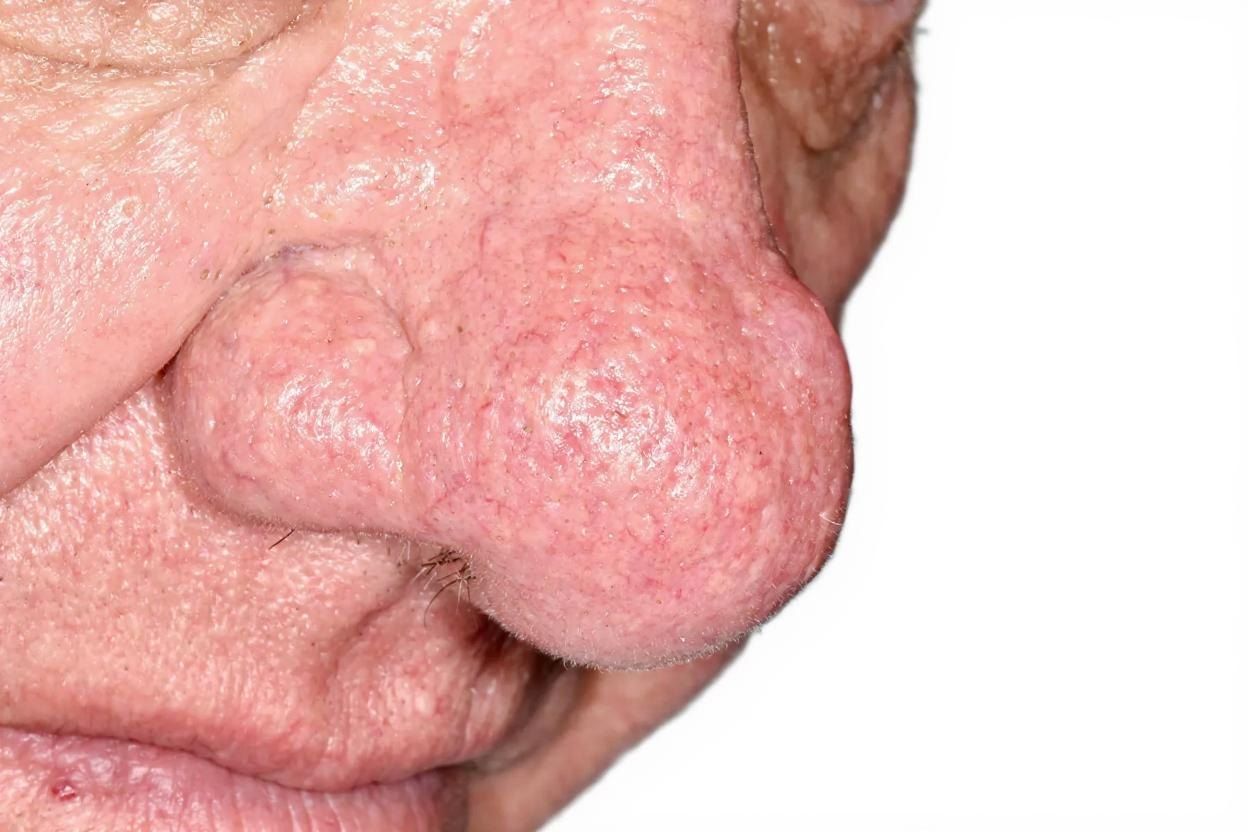
- Phymatous: thickened, bumpy skin, most often on the nose (rhinophyma), mainly in older men.
- Ocular: gritty, red, dry eyes and swollen lids. This part is treated together with an eye doctor.
Triggers
Sun is the most common trigger in Israel. Others include heat, hot drinks, alcohol (red wine in particular), spicy food, hard exercise, stress and sudden temperature changes. A two-week diary of flares and what preceded them shows your own pattern better than a generic list.
Note: steroid creams on the face are a trigger patients often miss. They calm the skin for a while and then cause severe rosacea with rebound flares when stopped. Tell the doctor about every cream you used in the last six months. Coming off a steroid is done gradually, often with tacrolimus (Protopic) or pimecrolimus.
Creams for bumps and redness
- Metronidazole 0.75% or 1% (Rozex in Israel): a long-standing first-line cream or gel for bumps and pustules. It works through an anti-inflammatory effect.
- Ivermectin 1% cream (Soolantra): acts against Demodex and inflammation. In the registration trials it outperformed a cream without the active drug over 12 weeks, and it beat metronidazole in a head-to-head study. Some patients feel burning or a short flare in the first days.
- Azelaic acid 15% gel (Finacea) or 20% cream (Skinoren): calms bumps and residual redness, and is one of the options in pregnancy.
- Brimonidine or oxymetazoline: vessel-narrowing gels that reduce redness for several hours. They suit an important day and do not treat the disease. Some patients get rebound redness.
Barrier care matters as much as the prescription. Use a gentle cleanser, a plain moisturiser and a mineral sunscreen every day, and stop acids, scrubs and toners while the skin is reactive. A green-tinted primer under make-up hides redness on difficult days, and a wide-brimmed hat does more in an Israeli summer than reapplying sunscreen alone.
Tablets
Doxycycline (Doxylin in Israel) treats widespread bumps and pustules and ocular rosacea. A low-dose modified-release form works through an anti-inflammatory effect below the antibiotic threshold. Doxycycline increases sun sensitivity, so sunburn comes faster than usual in an Israeli summer.
Ivermectin tablets are used off-label when inflammation is extensive or the skin is too irritated for creams. Low-dose isotretinoin is an option for resistant papulopustular or early phymatous rosacea. Tablets are chosen after an examination and adjusted to medicines, pregnancy plans and travel.
Laser and light for redness and vessels
Creams do little for fixed redness and visible vessels. Rosacea redness has several causes at once: dilated vessels, inflammation in the skin and sometimes pigment. A pulsed dye laser (PDL) deals only with the vessels, so the clinic does not rely on PDL alone for redness.
Dr. Meir’s main protocol is a series of five sessions, one every two weeks, that combines three devices. The Aerolase Neo Elite, a 1064 nm laser with a very short pulse, reduces redness and inflammation. The Lumenis M22 IPL treats diffuse redness, fine vessels and sun damage. NeoGen plasma improves the quality of the skin. The Aerolase also suits olive and darker skin, where IPL and PDL need more caution.
VBeam, a pulsed dye laser at 595 nm, complements this protocol. It targets the red pigment in blood and closes single prominent vessels, for example on the nose. Expect redness and sometimes short-lived bruising after it, and plan strict sun protection between sessions.
Dr. Meir combines in almost every case. In-clinic sessions treat the redness and inflammation in the skin. At home the patient uses a calming cream, often based on azelaic acid, and when needed takes doxycycline, ivermectin or both. Treating one side alone tends to let bumps or redness return sooner.
Rhinophyma
Rhinophyma is thickened, bulbous nose skin from enlarged oil glands and tissue. The idea that it comes from heavy drinking is a myth. Medication calms the inflammation in early stages, but it does not return the shape once the tissue has thickened.
Reshaping removes the excess tissue layer by layer under local anaesthesia, with ablative CO2 or erbium laser or with electrosurgery. New skin covers the area in about one to two weeks, and the surface settles over about six weeks. Possible effects include temporary lightening or darkening of the skin and scarring. Removed tissue is sent for examination, because skin cancers occasionally hide inside rhinophyma.
Results and maintenance
With creams and tablets, bumps and pustules settle over 8 to 12 weeks. Laser results for redness show after the course and last months, longer with sun protection. Rosacea returns in many patients after full withdrawal of treatment, so the plan ends with maintenance: a cream a few times a week and a laser session when redness builds up again.
When treatment fails, the answer is to recheck the diagnosis before raising the dose. Contact dermatitis, steroid-induced rosacea, seborrheic dermatitis and Demodex folliculitis can all look alike.
How to choose a plan
The first visit sorts out which features you have, which creams you have used and what triggers your flares. Dr. Meir then builds a plan of home treatment, prescription medicine and in-clinic sessions, and reviews it at follow-up. Consultations at the Holon clinic run in Hebrew, English and Russian. Book through WhatsApp at 053-566-2287.
Questions
Can rosacea be cured?
No treatment removes the tendency. Most patients reach long calm periods with a maintenance cream, trigger control and laser for redness when needed.
Is rosacea a type of acne?
No. Rosacea has no blackheads, appears later in life and centres on flushing and redness. Some acne treatments, such as strong retinoids, irritate rosacea skin.
Metronidazole or ivermectin?
Both treat bumps and pustules. Trials found ivermectin cream (Soolantra) more effective than metronidazole, while metronidazole (Rozex) is often gentler to start with. The choice depends on the skin.
Can I drink alcohol with metronidazole gel?
The well-known alcohol interaction concerns metronidazole tablets. The gel is absorbed in tiny amounts. Alcohol itself is a common rosacea trigger, so many patients limit it anyway.
Does laser alone fix rosacea?
Laser treats redness and vessels. It does little for active bumps, so most patients combine it with a cream and sometimes tablets.
Is rosacea contagious?
No. Demodex mites live on most adult faces and do not pass rosacea from person to person.
Related
Sources: American Academy of Dermatology: Rosacea treatment; DermNet: Rosacea; NHS: Rosacea