What acne is
Acne is a chronic disease of the hair follicle and its oil gland. Four processes drive it at the same time: excess oil under the influence of androgen hormones, dead skin cells that plug the follicle opening, overgrowth of the bacterium Cutibacterium acnes, and inflammation around the blocked follicle. Each drug group works on a different link in that chain, which is why doctors combine them.
Family history, hormonal shifts (puberty, the menstrual cycle, pregnancy, polycystic ovary syndrome), some medicines such as steroids, and heavy cosmetics all affect how acne behaves. The link with diet remains unproven. The 2024 American Academy of Dermatology guideline found too little evidence to recommend any specific diet.
Grading severity
The type of lesion decides the treatment, so the first visit is an examination: which lesions dominate, how many, where, and whether scars or dark marks have already formed.
- Comedonal acne: blackheads and whiteheads with little inflammation. A topical retinoid such as adapalene (Differin) or azelaic acid usually suffices.
- Mild to moderate inflammatory acne: red papules and pustules. A retinoid with benzoyl peroxide, sometimes with a topical antibiotic.
- Moderate to severe inflammatory acne: many lesions on the face, back or chest. A limited course of antibiotic tablets next to topical treatment, and in women, hormonal treatment.
- Nodulocystic acne: deep, painful lumps that tend to scar. Isotretinoin (Roaccutane).
Topical treatment
Topical retinoids open the follicles and stop new comedones from forming. Adapalene and tretinoin belong here, and they stay on as maintenance once the skin is clear. Benzoyl peroxide kills acne bacteria without creating resistance, though it bleaches towels and pillowcases. Azelaic acid is a gentler option that also fades the brown marks left after spots.
A topical antibiotic such as clindamycin is used only together with benzoyl peroxide or a retinoid, to limit bacterial resistance. The home routine stays gentle: a mild cleanser twice a day, a non-comedogenic moisturiser and sunscreen every morning. Scrubs and brushes irritate inflamed skin and make it worse.
Hormonal acne in women
Adult acne is more common in women. It tends to sit along the jawline, chin and neck and to flare before a period. When it starts after 25 together with irregular cycles, excess hair or hair thinning, Dr. Meir also checks hormone levels.
Spironolactone (sold in Israel as Aldactone) blocks the effect of androgens on the oil glands. The 2024 AAD guideline allows starting it without trying antibiotics first. In the SAFA trial, published in the BMJ in 2023, women on spironolactone reported more improvement than placebo at 12 weeks, and the gap grew by 24 weeks. Common effects are more frequent urination, breast tenderness and irregular periods. Routine potassium tests are not needed in healthy young women, though the decision depends on age, kidney health and other medicines.
Note: spironolactone can harm the development of a male fetus. Dr. Meir prescribes it only to women who are not planning a pregnancy and asks for reliable contraception throughout. It is not given to men for acne.
Combined contraceptive pills are another hormonal option, arranged together with a gynaecologist.
Antibiotic tablets
Doxycycline and other tetracyclines treat moderate to severe inflammatory acne, always together with a non-antibiotic topical. Guidelines limit the course and recommend a review after about three months. Take them with a full glass of water and not right before lying down. They increase sun sensitivity, which matters in an Israeli summer, and they are not used in pregnancy or in children under 8.
Isotretinoin (Roaccutane)
Isotretinoin shrinks the oil glands and acts on several causes of acne at once. It suits nodulocystic acne, acne that leaves scars and acne that has failed other treatment. Before prescribing, Dr. Meir confirms that the lesions are acne: fixed cysts are removed, folliculitis responds poorly to isotretinoin, and sebaceous hyperplasia is treated by removal.
A course lasts several months. Liver tests and blood lipids are checked before and during treatment. Isotretinoin causes severe birth defects, so women who can become pregnant have pregnancy tests and use contraception until a month after the last capsule. Expect dry lips, skin and eyes, and report any change in mood to the doctor. For some patients Dr. Meir uses a low-dose regimen as a supporting treatment. Every prescription follows a consultation.
Back and chest acne
Back acne sits mainly on the upper back and shoulders. Friction from clothes, bag straps and sports gear makes it worse, so reducing friction is part of the treatment. A typical start is a benzoyl peroxide wash at 5 to 10 percent, left on the skin for 2 to 5 minutes before rinsing, with salicylic acid or a retinoid added. Applying a cream across the whole back every day is hard, so tablets are needed more often than for the face.
Before treating, it is worth ruling out folliculitis. Uniform itchy bumps after sweating often point to Malassezia (fungal) folliculitis, which needs a different treatment.
1726 nm acne lasers
A newer group of lasers (Accure, AviClear) works at 1726 nm, and the clinic uses AviClear. The laser heats the oil glands while a cooling system protects the skin surface. The FDA cleared it for mild to severe inflammatory acne. At the clinic the course is usually three sessions about two weeks apart, and improvement builds gradually over the following months. The published efficacy figures come mainly from manufacturer-sponsored studies.
At the consultation Dr. Meir explains whether this route makes sense for you and where it fits next to tablets and creams. It mainly suits patients who cannot or prefer not to take isotretinoin, acne that returns after tablets, and teenagers whose parents want to delay oral treatment. Topical treatment usually continues alongside it. Redness and mild swelling last hours to a few days.
Results, maintenance and marks
- Topical treatment: clear improvement after two to three months of daily use.
- Antibiotic tablets: gradual change over the first weeks, review at about three months.
- Isotretinoin: dryness and sometimes a mild flare in the first month, then steady progress.
Stopping early during the irritation phase of a retinoid is a common reason for failure. Once the skin is clear, a retinoid continues as maintenance, because acne tends to return. Photograph your skin at the start: gradual change is hard to see in the mirror.
Red marks left after spots respond to vascular laser such as VBeam, and brown marks to lightening creams and strict sun protection. Depressed or raised scars are a structural change and are treated once the acne is under control, as described on the acne scars page.
How to choose a plan
Dr. Meir starts with the lesions, the areas involved, existing scars and the treatments already tried, and asks about cycles, medicines and contraception. From that he builds a plan of creams, tablets and in-clinic treatment, with follow-up and blood tests when needed, and adjusts it at each visit. Consultations at the Holon clinic are held in Hebrew, English and Russian. Book through WhatsApp at 053-566-2287.
Results from the clinic
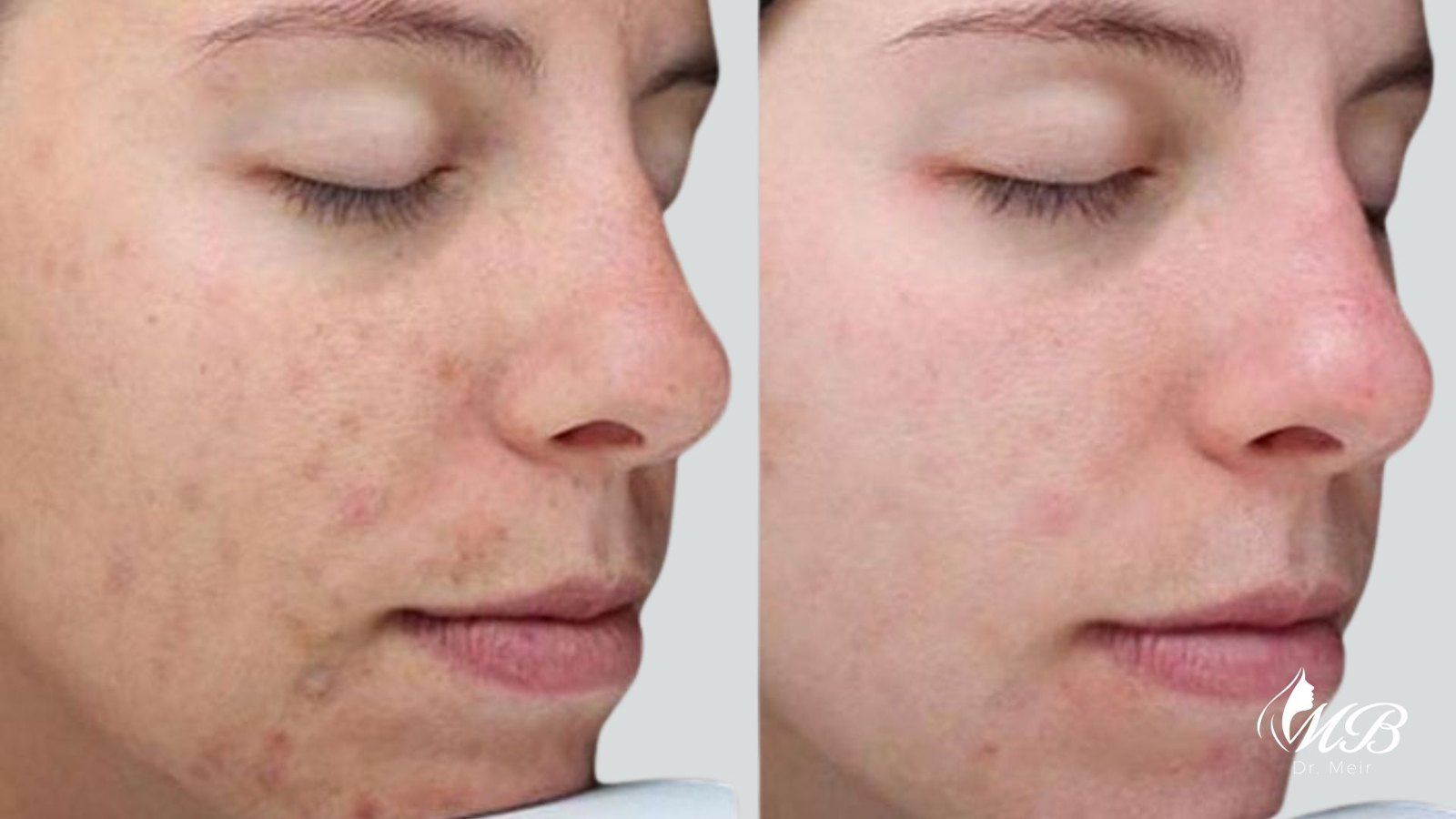
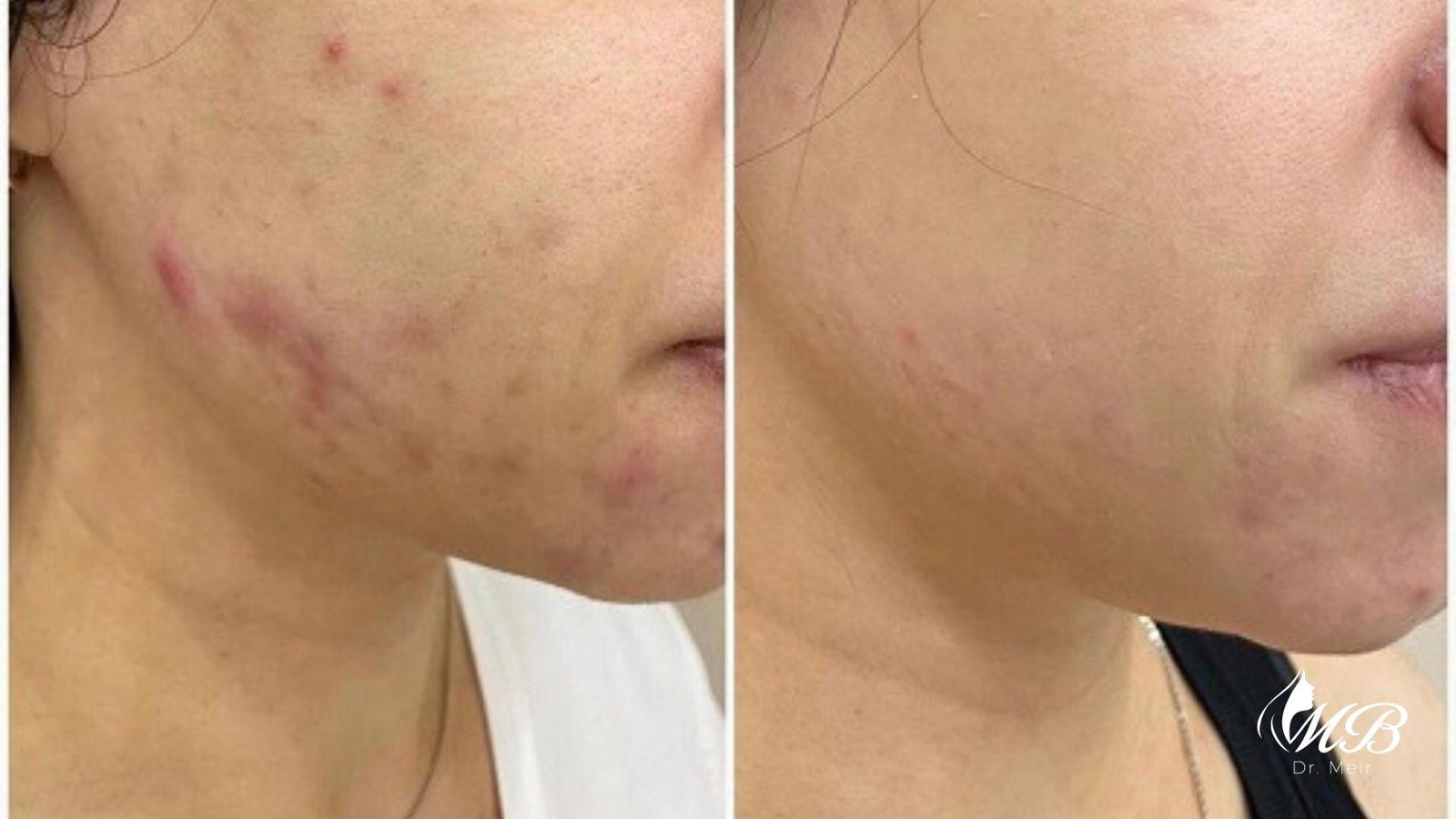
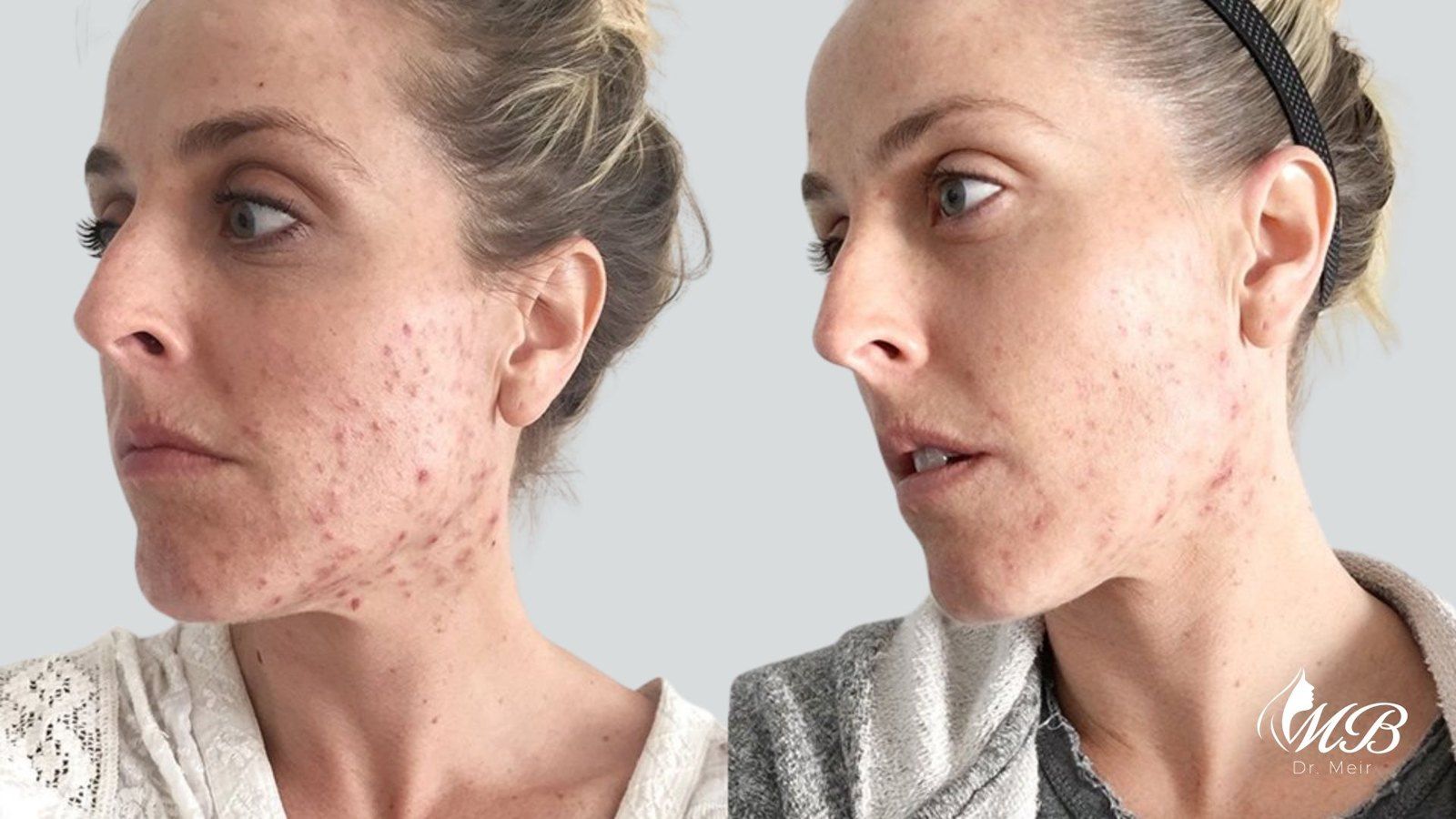
Individual results vary. Photos published with patient consent.
Questions
Does acne go away on its own?
In some teenagers it fades in the early twenties. In others it lasts for years or starts in adulthood. Waiting with inflammatory acne raises the risk of permanent scars.
How long until acne treatment works?
Topical treatment needs 8 to 12 weeks of daily use. Spironolactone is judged after 3 to 6 months. The first weeks of a retinoid can bring dryness and a short flare.
Is spironolactone safe for acne?
For healthy young women it has a long safety record. It must not be taken in pregnancy, so it requires reliable contraception. It is not prescribed to men for acne.
Can I have laser or a peel while on Roaccutane?
A 2017 expert consensus found no reason to delay fractional laser, superficial peels or laser hair removal during isotretinoin. Deep peels, dermabrasion and fully ablative laser wait.
Should I squeeze pimples?
No. Squeezing pushes the contents deeper and raises the risk of a dark mark or a scar. A painful cyst can be calmed in the clinic with a small injection.
What is fungal acne?
Malassezia folliculitis: small itchy bumps of the same size on the chest, back and forehead. It looks like acne but needs antifungal treatment, and antibiotics can make it worse.
Related
Sources: American Academy of Dermatology: Guidelines of care for the management of acne vulgaris (2024); NICE guideline NG198: Acne vulgaris management; NHS: Acne treatment