
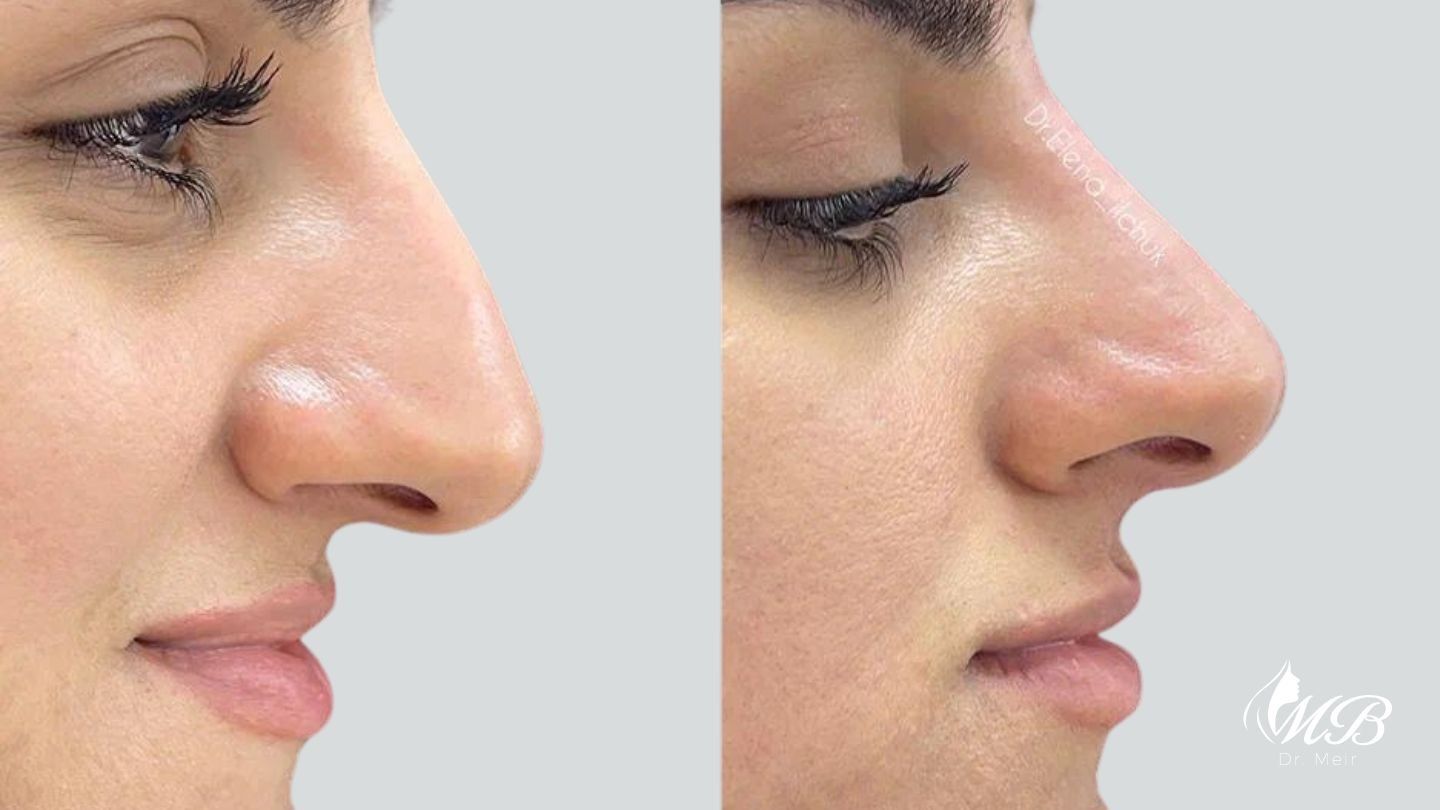
What non-surgical rhinoplasty is
Non-surgical rhinoplasty, also called a liquid nose job or nose filler, reshapes the nose with injections of hyaluronic acid gel. It works by adding volume in chosen spots, so the profile line looks straighter and the proportions more balanced. It is done in the clinic without general anaesthesia, takes about 20 minutes and leaves no cut or cast.
The change is real and limited. Knowing the limits before you book saves disappointment.
What filler can do for the nose
- Camouflage a small hump. Filler does not remove the hump. Small amounts above it at the root of the nose and below it toward the tip make the line look straight. This works for a hump of up to about 3 mm.
- Raise a low bridge or a deep root between the eyes, for a more balanced profile.
- Lift and rotate a drooping tip, which also makes the nose look shorter.
- Correct small asymmetry, up to about 2 to 3 mm in one direction.
- Smooth irregularities after surgical rhinoplasty, such as a small dent or step.
The nose and chin also work together. A weak chin makes any nose look larger, and sometimes chin filler improves the profile more than work on the nose itself.
What it cannot do
- Make the nose smaller. Adding volume never reduces size, and a large nose may look bigger.
- Narrow wide nostrils or reduce the width of the nose in a meaningful way.
- Remove a large hump.
- Fix breathing problems or a deviated septum.
These need surgery. Dr. Meir says so at the consultation when filler will not give the result you want.
Why the nose is a high-risk zone
The nose has a dense network of small arteries, and some of them connect to the artery that feeds the eye. If filler enters one of these vessels, it can block blood flow to the skin of the nose. In rare cases it can travel back toward the eye and damage vision. Reviews of vision loss after filler list the nose among the highest-risk sites, together with the area between the brows and the forehead. The tip carries the highest risk of skin damage.
The safety measures follow from this anatomy:
- Hyaluronic acid only. It can be dissolved with hyaluronidase within hours if a vessel is blocked. Radiesse, PMMA and silicone cannot be dissolved, and are never used in the nose. Liquid silicone is banned for cosmetic use in Israel.
- The right layer. The gel goes deep, on the bone at the root and on the cartilage at the tip, away from the vessels that run just under the skin. A superficial injection in the nose is never correct.
- Tiny amounts, injected slowly. At the tip, each deposit is a fraction of a millilitre.
- Hyaluronidase at the clinic and a doctor who knows the signs of a blocked vessel and acts within minutes.
If you have had surgical rhinoplasty, the scar tightens the soft tissue and fixes the vessels in place. Even a small amount of filler can press on them from outside. Tell the doctor about any surgery and any earlier filler in the nose. A previous permanent filler in the nose, such as silicone or PMMA, rules out treatment.
Who it suits
- Adults who want a small, defined change in the profile
- A small hump, a low bridge or a drooping tip
- Small irregularities after a past rhinoplasty
- People who want to see how a change looks before deciding on surgery
It does not suit pregnancy or breastfeeding, an active infection or cold sore, uncontrolled diabetes, active autoimmune disease, bleeding disorders, a tendency to keloid scars, or a nose with earlier permanent filler.
How the treatment is done at the clinic
- Consultation and photos from the front and both sides. Dr. Meir marks what will change and explains what the result can and cannot be.
- Preparation. The skin is cleaned and numbing cream applied. Most gels contain lidocaine.
- Injection at the root, the bridge and the tip as planned, with a fine needle or a blunt cannula, slowly and in very small amounts. After each point Dr. Meir checks the colour of the skin.
- Check before you leave. Blood flow to the skin is checked at the end of the session.
Dr. Meir chooses the product after the examination. A firmer gel suits the bone at the root, a softer one suits the tip.
Recovery
You go back to your routine the same day. Mild swelling lasts 24 to 72 hours. For the first days:
- do not touch, rub or press the nose for 48 hours
- avoid heavy glasses or sunglasses on the bridge for about three days
- sleep on your back with the head raised for two to three nights
- avoid hard exercise for a week, and saunas, steam and strong sun for a week or two
Note: Skin on the nose that turns white, grey or blotchy purple, pain that gets worse, or any change in vision after the treatment is an emergency. Call the clinic at once. With a vision change, go straight to an emergency room.
Results and timeline
You see the new line at the end of the session. The final shape shows after about two weeks, when the swelling has gone and you come back for a check. A small correction can be made then. The result usually lasts 12 to 18 months, and the gel breaks down gradually. If you dislike the result, hyaluronidase dissolves it.
Why an experienced doctor matters
In most areas of the face, a mistake with filler shows as a lump or asymmetry. In the nose, a mistake can harm skin or sight. Choose a doctor who injects noses often, uses hyaluronic acid only, injects deep and slowly, keeps hyaluronidase at the clinic and tells you when surgery is the better route. Ask how many nose treatments the doctor does and what the plan is if something goes wrong.
Consultations at the clinic in Holon are held in Hebrew, English and Russian. You can send profile photos on WhatsApp to 053-566-2287.
Results from the clinic
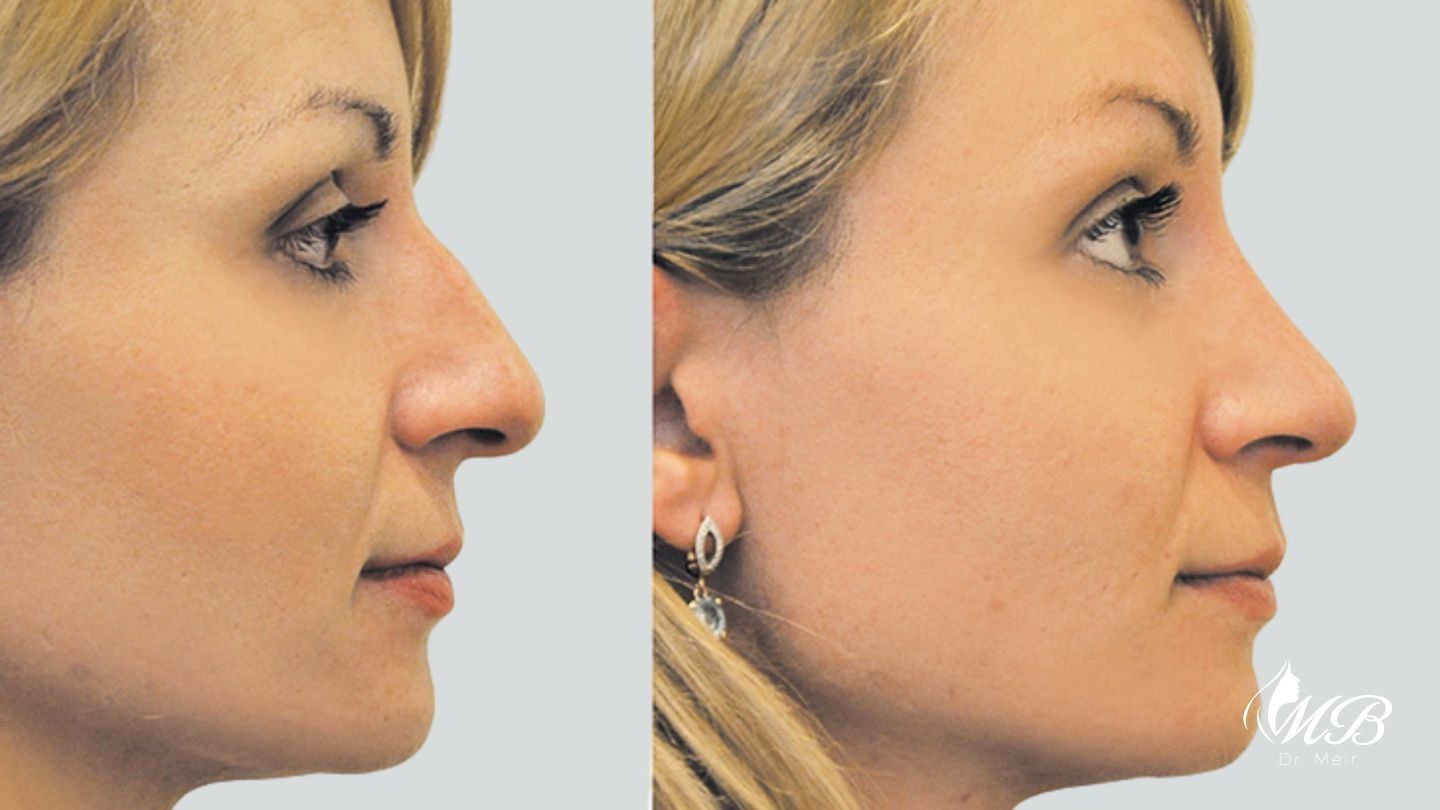
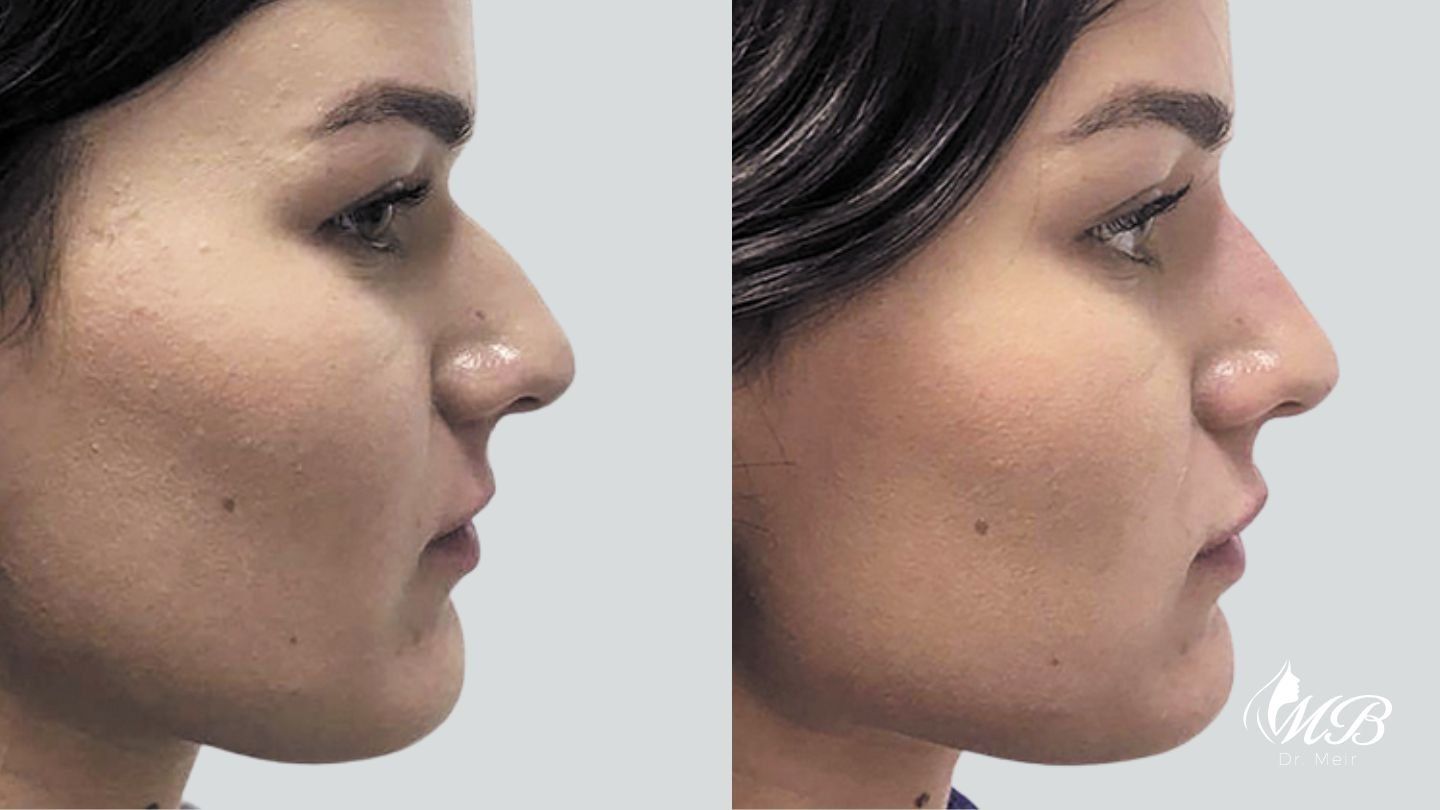
Individual results vary. Photos published with patient consent.
Price
| Hyaluronic acid filler, one syringe | ₪1,500–2,000 |
The final price depends on the extent of treatment and is given at the consultation.
Questions
Can non-surgical rhinoplasty make my nose smaller?
No. Filler adds volume. It can make a nose look straighter or more balanced, and a large nose may look bigger after it. Reducing size needs surgery.
Can filler hide a hump on the nose?
A small hump, up to about 3 mm, can be camouflaged by filling above and below it so the line looks straight. A large hump needs surgery.
How long does nose filler last?
Usually 12 to 18 months, sometimes longer, since the nose moves little.
Is nose filler dangerous?
The nose is one of the highest-risk areas for filler entering a blood vessel, which can damage skin and, in rare cases, vision. The risk is lowered by correct depth, tiny amounts, slow injection and hyaluronic acid only, with hyaluronidase ready at the clinic.
Can I have nose filler after a rhinoplasty?
Yes, it is often used to smooth small irregularities after surgery. Scar tissue makes the nose higher risk, so the doctor injects less, more slowly and with close monitoring.
Can I wear glasses after the treatment?
Avoid heavy glasses or sunglasses that press on the bridge for about three days so the gel does not shift.
Related
Sources: Nonsurgical Rhinoplasty: A Systematic Review of Technique, Outcomes, and Complications (Plast Reconstr Surg, 2020); Vision Loss Associated with Hyaluronic Acid Fillers: A Systematic Review of Literature (Aesthetic Plast Surg, 2020); U.S. FDA: Dermal Fillers (Soft Tissue Fillers)