
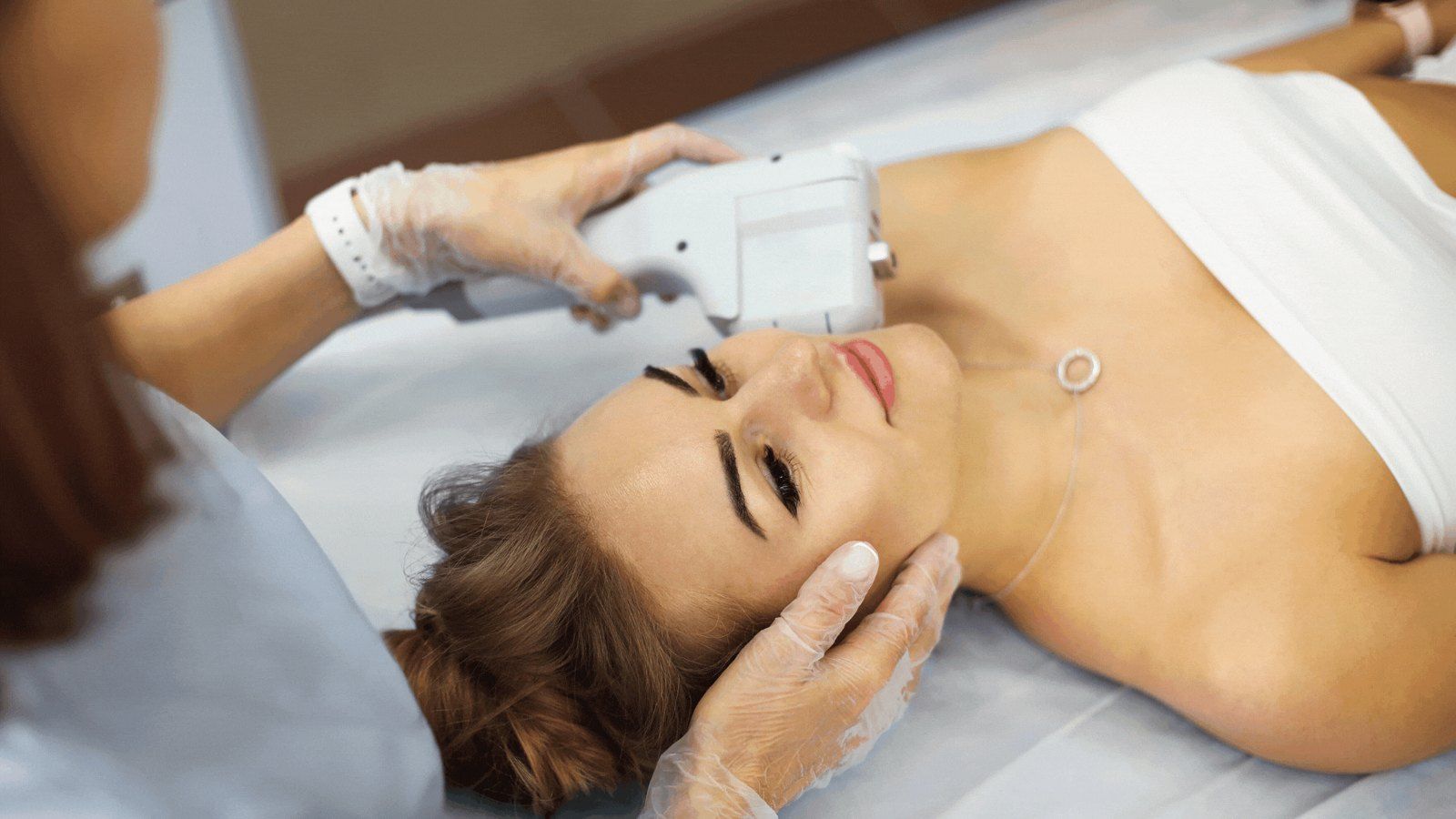
Three ways to tighten skin with heat
Collagen fibres contract when heated to the right temperature, and the skin then builds new collagen over the following months. Every non-surgical tightening method uses this response. The methods differ in how the heat reaches the tissue and at what depth.
- HIFU (high-intensity focused ultrasound) focuses ultrasound into tiny points deep under the skin, as far as the SMAS, the layer of connective tissue that supports the face. The surface stays intact.
- Surface radiofrequency warms a broad area of skin from outside. It works gradually over a course of sessions, with no downtime.
- RF microneedling (Morpheus8) releases radiofrequency energy through needles inside the skin. It tightens and also treats texture, pores and scars.
Under these sit the subdermal methods: Endolift (a laser fibre under the skin) and Quantum RF (radiofrequency under the skin, with liposuction when there is fat). They give more tightening and need a few days of recovery.
HIFU at the clinic: Ultracel Q+
The clinic’s HIFU device is Ultracel Q+ by Jeisys. It works with cartridges that focus at different depths, so treatment matches the thickness of the skin in each zone: deeper over the cheeks and jawline, shallower where the skin is thin.
Suits: mild to moderate laxity of the jawline, under the chin, the cheeks and the brows. Also a choice for people in their thirties and forties who want to keep a defined contour.
The session: numbing cream, then the handpiece is moved line by line across each area. You feel short points of deep heat, most noticeable near bone. A full face and neck takes about 60 to 90 minutes.
Afterwards: at most mild redness or swelling for a few hours to a day. You can return to routine the same day.
Results: a slight change may show at once. The main tightening develops over two to three months and continues up to about six. HIFU can be repeated as the skin keeps ageing, usually once every year or two.
HIFU is not applied over the thyroid gland on the front of the neck or too close to the eyes.
Surface radiofrequency: INDIBA
For radiofrequency without needles, the clinic uses INDIBA, a capacitive-resistive RF system. It warms the tissue gently and evenly. To build collagen without harming the outer skin, RF devices hold the deeper skin at a measured target temperature for several minutes while the surface stays comfortable.
Suits: people who want no downtime at all, early laxity and maintenance. At the clinic INDIBA also speeds recovery after Endolift and Quantum RF, helping swelling and fluid clear.
Limits: results are gentle and need a course of sessions. When skin is visibly loose, surface RF and HIFU will not give a satisfying change on their own.
RF microneedling: Morpheus8
Morpheus8 delivers radiofrequency through fine needles at depths up to about 4 mm on the face. It tightens the skin and improves texture, pores, fine lines and acne scars at the same time.
Suits: laxity that comes with skin-quality problems, such as crepey neck skin, pores, scars or uneven texture.
Afterwards: two to four days of redness and mild swelling. Used alone it often takes one to three sessions about a month apart. Details are on the Morpheus8 page.
How to choose by degree of laxity
Dr. Meir decides at the examination, from the front and in profile, because jawline and neck laxity show most clearly from the side.
| Skin condition | What it looks like | What usually fits |
|---|---|---|
| Mild laxity | Thin skin, fine lines, a jawline starting to soften | HIFU (Ultracel Q+), Morpheus8, a biostimulator |
| Moderate laxity, little fat | Early jowls, loose neck skin | Endolift, often with Morpheus8 |
| Moderate laxity with fat | Double chin, fat along the jawline | Quantum RF with liposuction |
| Marked laxity, skin folds | Skin hanging under the jaw or on the neck | Surgery; non-surgical methods give a limited change |
A quick test helps: when the skin is pulled gently towards the ear and springs back, non-surgical treatment is likely to help. When it stays folded and hanging, surgery belongs in the conversation.
Lost volume is a separate problem. Hollow cheeks and temples make the face look looser than it is, and filler or a biostimulator often helps more than any heat device. After large weight loss, including with GLP-1 medications, Dr. Meir usually restores volume first and adds tightening afterwards.
Combining methods
No single device covers every layer of an ageing face. A common plan pairs a method under the skin, Endolift or Quantum RF, with Morpheus8 inside the skin, in one visit and under the same local anaesthetic. When methods are combined this way, a series is often unnecessary. Botox and fillers fit into the same plan, timed so device heat does not act on freshly placed filler.
Non-surgical facelift or surgery
A surgical facelift tightens the SMAS and removes excess skin through incisions around the ear. It is the only option for large skin excess, with weeks of swelling and bruising and the risks of an operation. The clinic does not perform facelift surgery; Dr. Meir refers to a surgeon when the examination points there.
Non-surgical treatment contracts skin where it is, builds collagen and restores volume. The change is softer and builds gradually. It also improves skin quality, which a facelift does not address.
Note: Smokers and people whose weight is still changing usually respond less well to tightening. Stabilising weight first avoids paying for treatment that will not meet expectations.
Recovery and side effects
- HIFU: redness or slight swelling for hours; tingling or tenderness for a few days. Rare: bruising, temporary numbness, burns or nerve irritation from poor technique.
- Surface RF: warmth and pinkness for a short time.
- Morpheus8: redness for a few days, pinpoint marks, dryness. Rare: temporary dark marks, mainly in darker skin.
- Endolift and Quantum RF: swelling for several days, possible bruising, a tiny entry point that needs cleaning.
For a day or two after external treatments, avoid saunas and workouts that heat the skin. Pregnancy and breastfeeding, active skin infection or herpes, a pacemaker or metal implants near the area, and conditions that impair healing mean postponing or checking first. Tell Dr. Meir about blood thinners.
Results and how long they last
Tightening does not stop ageing. The skin ages from its new starting point, so daily sun protection and not smoking keep the result longer. How far skin contracts depends on individual response, partly genetic, which is why no method can promise a fixed amount.
HIFU results are usually maintained with a session every one to two years. Morpheus8 maintenance is often once every 12 to 18 months. Subdermal methods last longer; in Dr. Meir’s experience Endolift and Quantum RF on the neck hold for years. Dr. Meir compares photos taken from the same angle and in the same light, because gradual change is hard to judge in a mirror.
Before the consultation, you can send two photos, front and side, in good light and without filters. Dr. Meir uses them to suggest whether external tightening is enough, whether you need a method under the skin, and whether fat removal belongs in the plan.
Results from the clinic
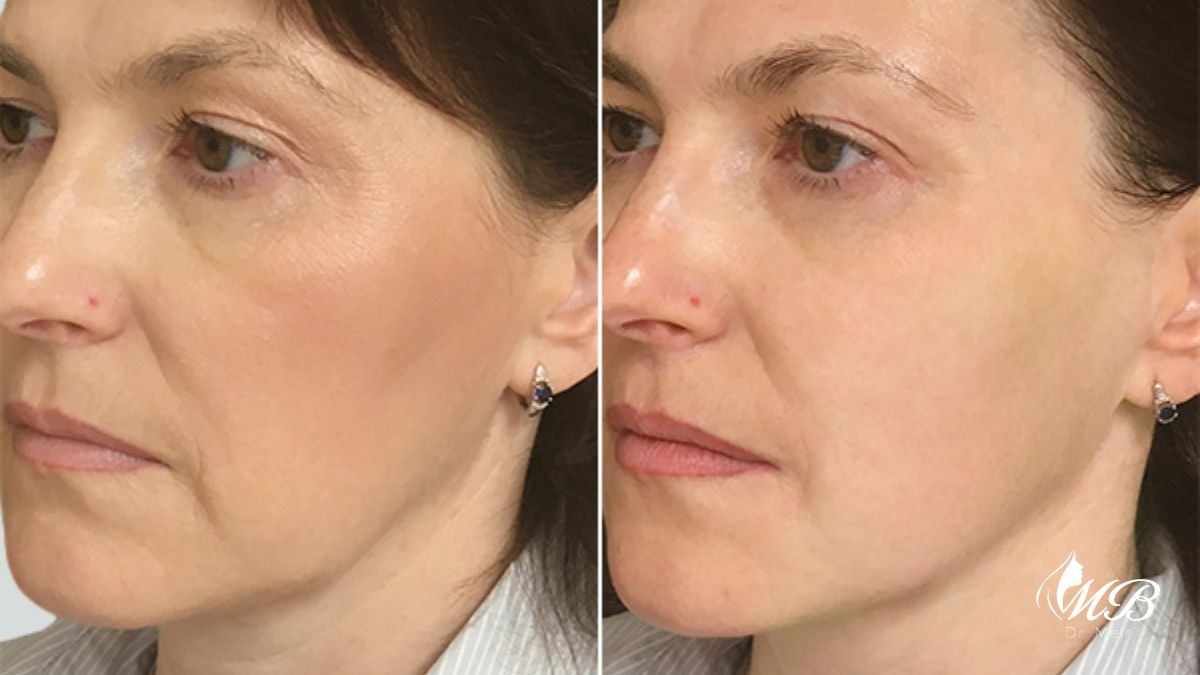
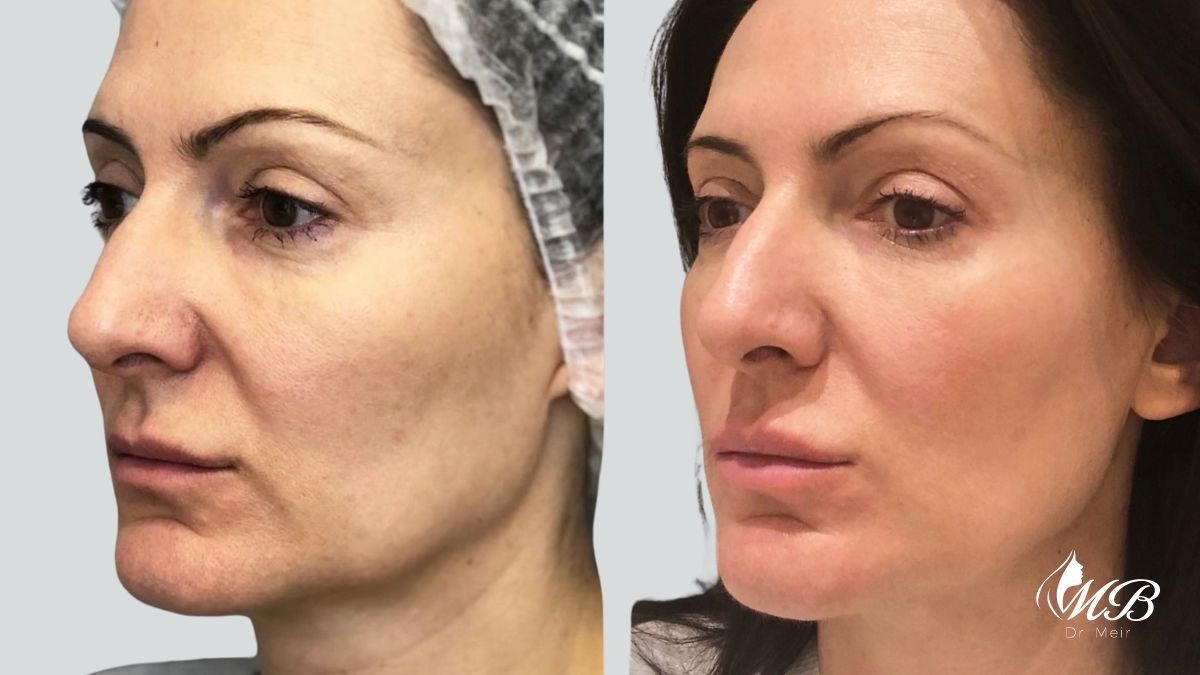
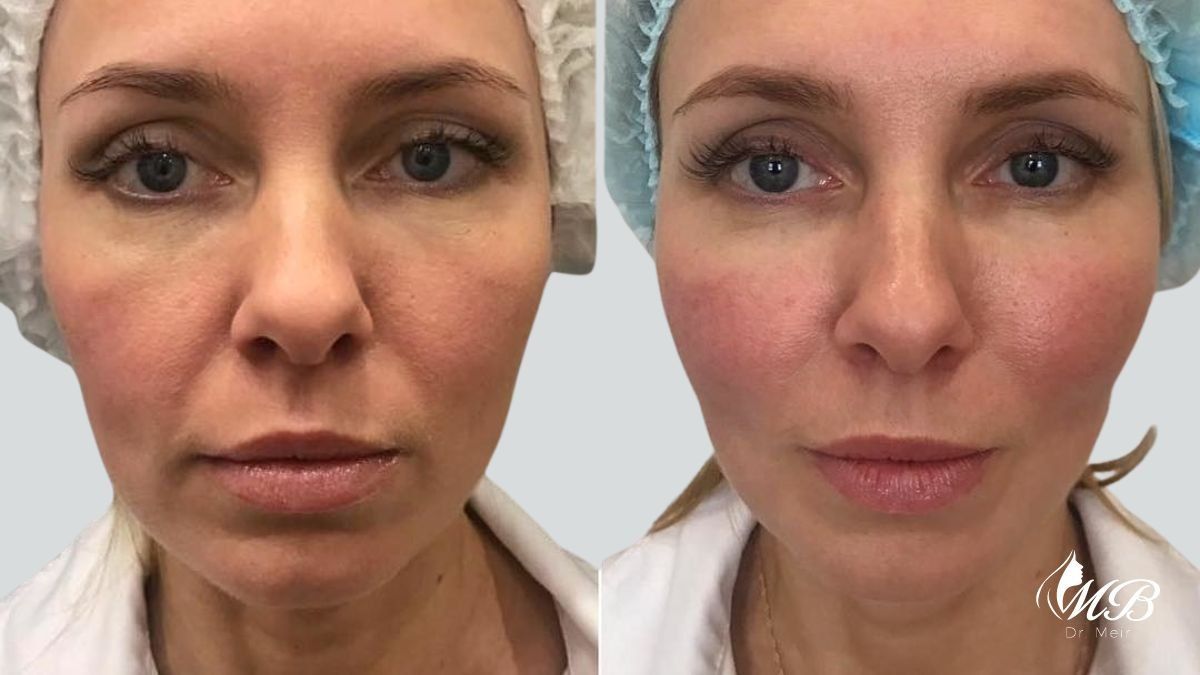
Individual results vary. Photos published with patient consent.
Questions
Does HIFU replace a facelift?
No. HIFU gives a modest lift for mild to moderate laxity. Large folds of skin under the jaw or on the neck need surgery, and Dr. Meir says so at the consultation.
When will I see results after HIFU?
A slight change may show right away. Most of the tightening appears two to three months later and keeps improving up to about six months, as new collagen forms.
Is HIFU or Morpheus8 better for the neck?
They do different jobs. HIFU lifts the deeper layer with no downtime. Morpheus8 improves crepey texture and lines inside the skin. Moderate neck laxity often responds better to Endolift or Quantum RF.
Does HIFU hurt?
You feel brief points of deep heat, strongest near bone. Numbing cream and settings adjusted by area keep it tolerable, and most people return to normal activity the same day.
Can I have HIFU after fillers?
Heat can affect hyaluronic acid filler in the treated area. Dr. Meir plans the order, usually HIFU first and filler afterwards, or a gap of several months after recent filler.
Does skin tightening reduce fat or inches?
No. Tightening contracts the skin; it does not remove volume. When fat causes the bulge, it needs removing, and Quantum RF does both in one procedure.
Related
Sources: American Academy of Dermatology: Firm sagging skin; American Society for Dermatologic Surgery: Non-invasive skin tightening