
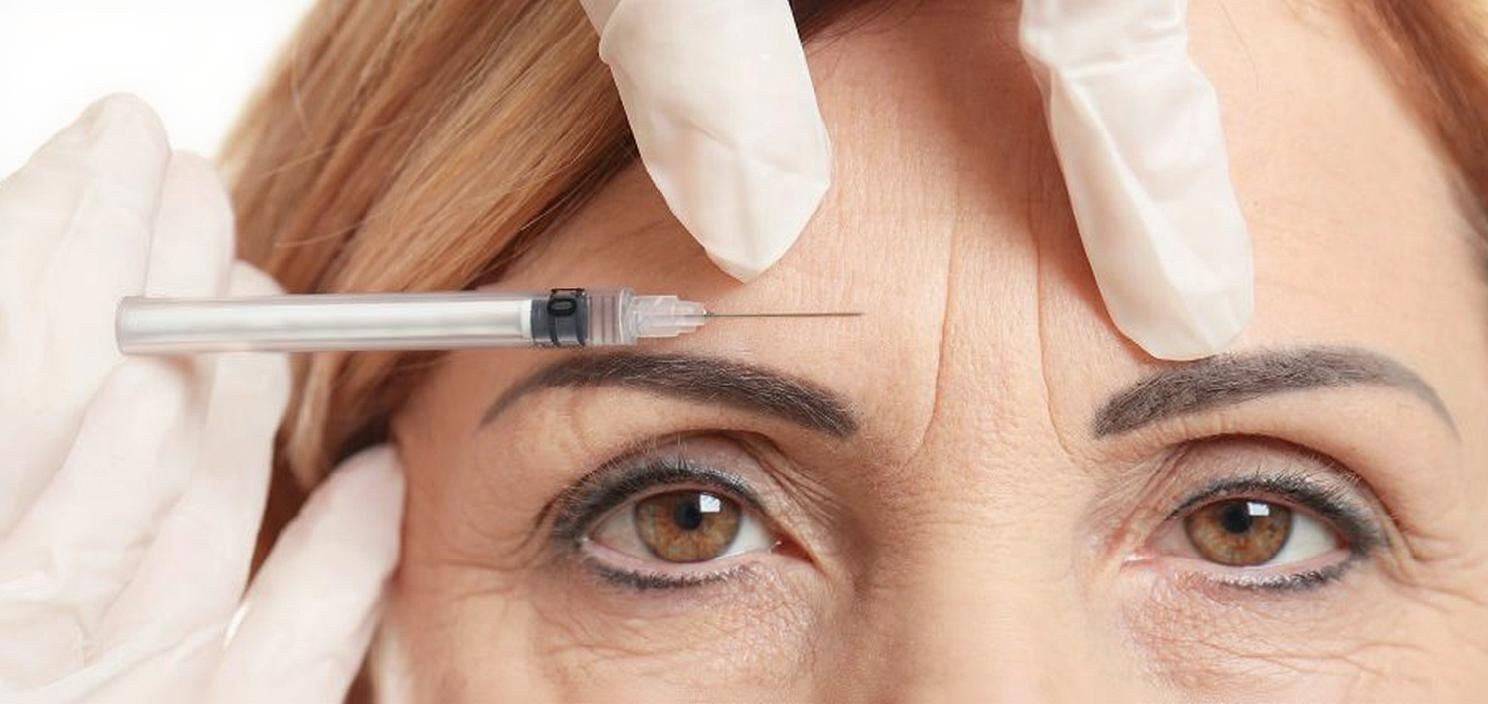
What Botox is and how it works
Botox is a brand of botulinum toxin type A, a purified protein that blocks the signal from a nerve to a muscle for a few months. The injected muscle contracts less, and the skin over it stops creasing as deeply. After 3 to 4 months the nerve rebuilds the connection and movement returns gradually.
The treatment works on dynamic lines: the ones you see when you frown, raise your eyebrows or smile. A line that stays etched in the skin at rest will soften after Botox, but it may also need a hyaluronic acid filler. Botox adds no volume, so it does not replace a filler in areas that have lost fullness.
In Israel only a doctor may inject botulinum toxin. At the clinic in Holon, Dr. Meir does every injection himself.
Areas treated
The three most common areas are the forehead, the space between the eyebrows and the outer corners of the eyes. Beyond the upper face, botulinum toxin treats the lower face, the neck, the jaw muscles and excessive sweating.
| Area | What it treats | Notes |
|---|---|---|
| Forehead | Horizontal lines | Measured dose so the brows do not feel heavy |
| Frown lines (glabella) | Vertical “11” lines between the brows | The most studied area |
| Crow’s feet | Lines at the outer corner of the eyes | Shallow injection; the smile stays |
| Brow lift | Low or flat outer brow | A few units lift the tail of the brow |
| Corners of the mouth (DAO) | A downturned, “sad” mouth at rest | Very small doses |
| Masseter | A wide or square jaw, clenching, grinding | The muscle shrinks over several weeks |
| Neck (platysma) | Vertical neck bands | Suits necks without lax skin |
| Underarms, palms, soles | Excessive sweating | Many small injections into the skin |
The forehead and the frown lines are planned together. The forehead muscle lifts the brows and the frown muscles pull them down. Treating the forehead alone can drop the brows and give a tired look, so Dr. Meir sets the points by where your brows sit and how you move them.
A brow lift with Botox relaxes the muscle that pulls the outer brow down, so the lifting muscle wins slightly. The same dose can lift one person’s brow and lower another’s, which is why the examination comes first.
The DAO muscle runs from the corner of the mouth to the jaw and pulls the corners down. A small dose on each side lets them rise. When the lines below the mouth are deep or the area has lost volume, Botox alone is not enough and a hyaluronic acid filler is added.
In the masseter, the injection reduces the bulk of the chewing muscle over several weeks. The jawline looks narrower, and pain from clenching often eases. For sweating, the toxin is placed in the skin itself and quiets the sweat glands for months, sometimes for more than a year.
Botox, Dysport and Xeomin compared
All three products contain botulinum toxin type A and block the same nerve signal. They differ in formulation, how far they spread and how their units are counted.
| Product | Active substance | Typical duration | What stands out |
|---|---|---|---|
| Botox | onabotulinumtoxinA, with complexing proteins | 3 to 4 months | Precise control in small areas, the longest track record |
| Dysport | abobotulinumtoxinA, with complexing proteins | 3 to 4 months | Spreads wider, useful for a broad forehead |
| Xeomin | incobotulinumtoxinA, no complexing proteins | 3 to 4 months | An option for people whose response faded after years of injections |
A Dysport unit is not equal to a Botox unit. Clinical conversion ratios sit around 2.5 to 3 Dysport units per Botox unit, while Xeomin is dosed roughly one to one with Botox. A price per unit tells you little about the total dose or the result.
The clinic works with Botox and Dysport and chooses between them by area and goal. Xeomin is included here so you can compare when you read about it elsewhere.
Note: When you compare quotes, ask how many units each area includes, which product is used and who injects. A low price with few units gives a shorter effect.
How the treatment is done at the clinic
The appointment starts with an examination of your face in motion. Dr. Meir asks you to frown, raise your brows and smile, then marks the points over the muscles that are active in your face. He also asks about regular medications, a tendency to bruise and earlier treatments, including fillers.
The injection uses a very fine needle. Most people feel a short sting at each point, and numbing cream can be applied first. The treatment itself takes about a quarter of an hour, and most patients go back to work the same day.
For a first treatment, or for someone who wants a light look, Dr. Meir often starts with a lower dose and adds at the two-week check. This shows how your muscles respond, and the next treatment is dosed to fit.
After the treatment
The main rule is to skip exercise on the day of the injection. The next day you can go back to your normal routine.
- Do not massage or press on the treated areas that day.
- Make-up, work and driving are fine straight away.
- Small bumps at the injection points settle within hours. A small bruise fades in a few days.
- If one side looks stronger after two weeks, come back for a small top-up. A correction at that point is safe.
Side effects and who should not have it
Most side effects are mild and pass within days: redness, slight swelling or a small bruise at the injection point, and sometimes a mild headache for a day or two.
A less common side effect is a drooping eyelid or brow, when the toxin affects a nearby muscle. It is temporary and fades over weeks as the effect wears off. The examination in motion and a measured dose are there to reduce this risk.
The treatment is postponed during pregnancy and breastfeeding because there is not enough safety data. It is not given over an infection at the injection site or with a known allergy to the product. Caution is needed with diseases of the nerve-muscle junction, such as myasthenia gravis, and with some antibiotics from the aminoglycoside group.
If you notice a drooping eyelid, difficulty swallowing or weakness spreading beyond the treated area, contact the doctor who injected you the same day. These effects are rare at cosmetic doses.
Results and timeline
| Time after injection | What happens |
|---|---|
| Day 1 | No visible change yet |
| 3 to 5 days | The treated muscles start to weaken |
| About 2 weeks | Peak effect, the right time to check and adjust |
| 3 to 4 months | Movement returns gradually; plan the next session |
The duration depends on the area, the strength of the muscle and the dose. Strong muscles, as in many men, often need more units. On the face, expect 3 to 4 months. You do not need to wait for the effect to wear off completely before the next session.
How to choose
Choose a doctor who examines your face in motion before deciding on the dose, tells you which product is used and how many units, and sees you again at two weeks. Ask what the plan is if one area needs Botox and another needs a filler: many patients need both, each where it fits.
Consultations at the clinic in Holon are held in Hebrew, English and Russian. You can write in English on WhatsApp to 053-566-2287.
Results from the clinic
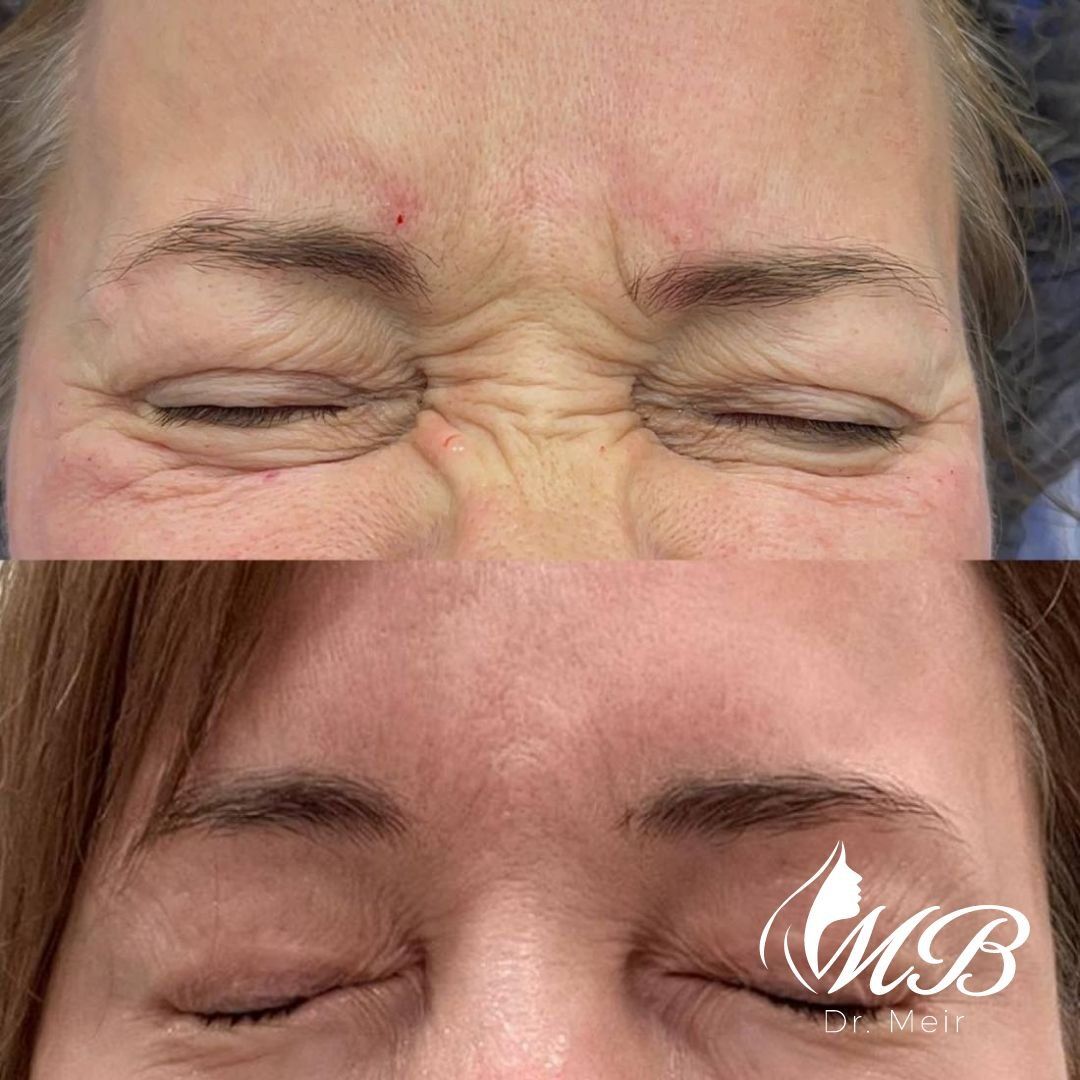
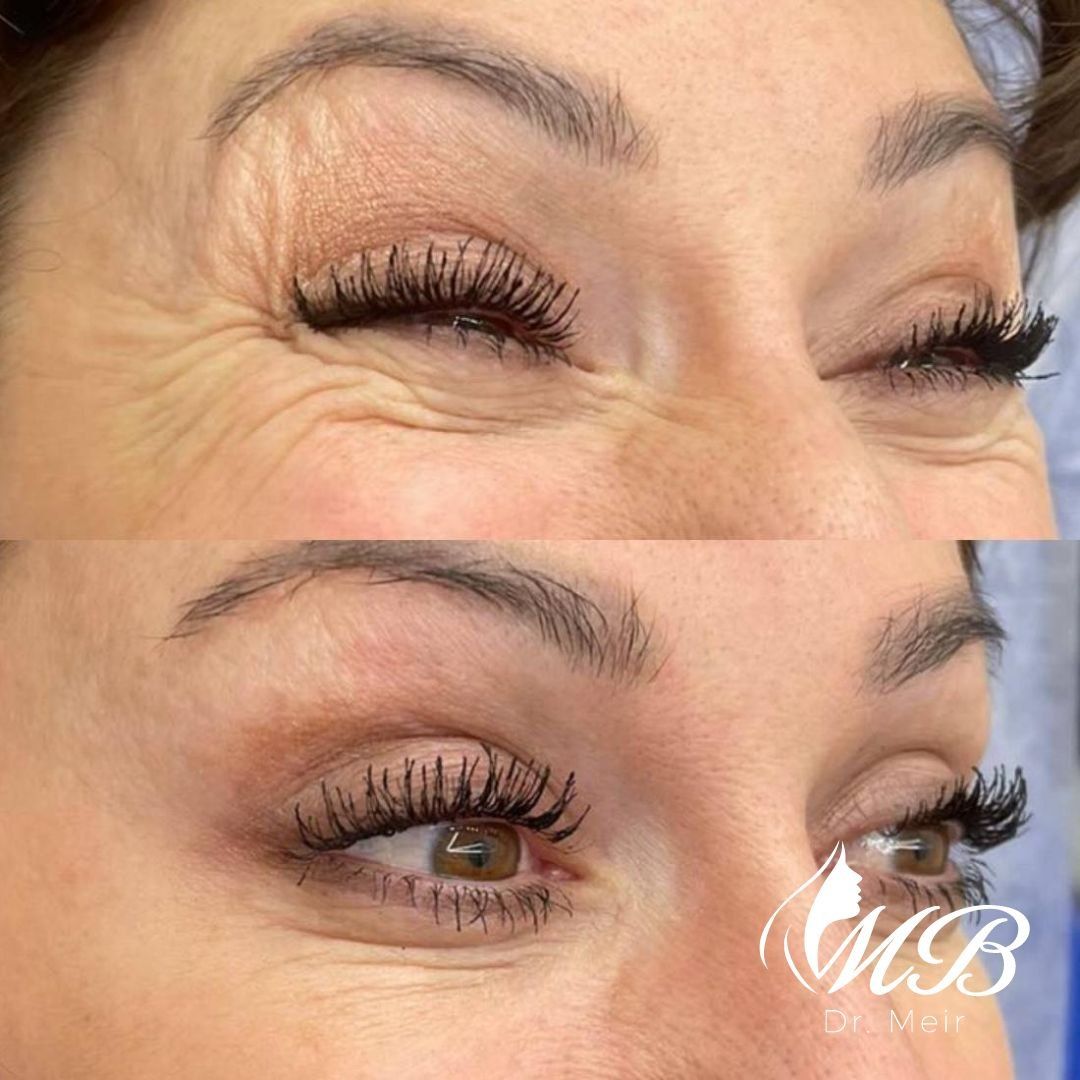
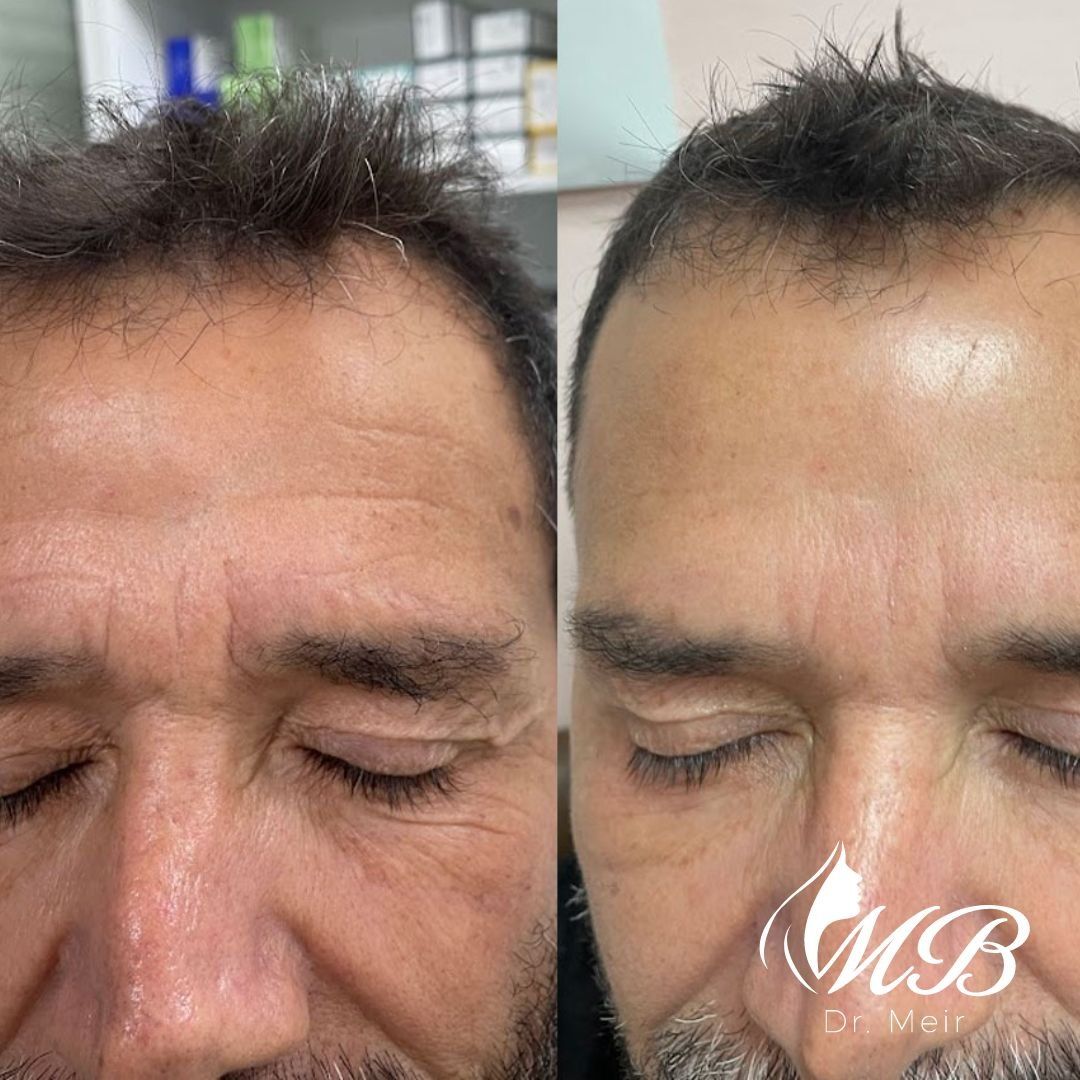
Individual results vary. Photos published with patient consent.
Questions
How long does Botox last?
On the face, about 3 to 4 months. Strong muscles and low doses wear off sooner. Underarm sweating treatment lasts longer, sometimes more than a year.
What is the difference between Botox and Dysport?
Both contain botulinum toxin type A and work the same way. Dysport spreads a little wider and is dosed in different units, so unit prices cannot be compared one to one.
Can I exercise after Botox?
Skip the workout on the day of the injection and avoid massaging the treated areas. You can go back to normal exercise the next day.
Will my face look frozen?
Not with a measured dose. The aim is to soften one movement while you can still raise your brows, smile and frown a little.
Can a result be adjusted?
Yes. At the two-week check, when the effect has peaked, Dr. Meir can add a small dose if one side is stronger or a line has not softened.
Who should not have Botox?
People who are pregnant or breastfeeding, people with an infection at the injection site, a known allergy to the product or a neuromuscular disease such as myasthenia gravis.
Related
Sources: American Academy of Dermatology: Botulinum toxin therapy FAQs; American Academy of Dermatology: Botulinum toxin therapy overview