
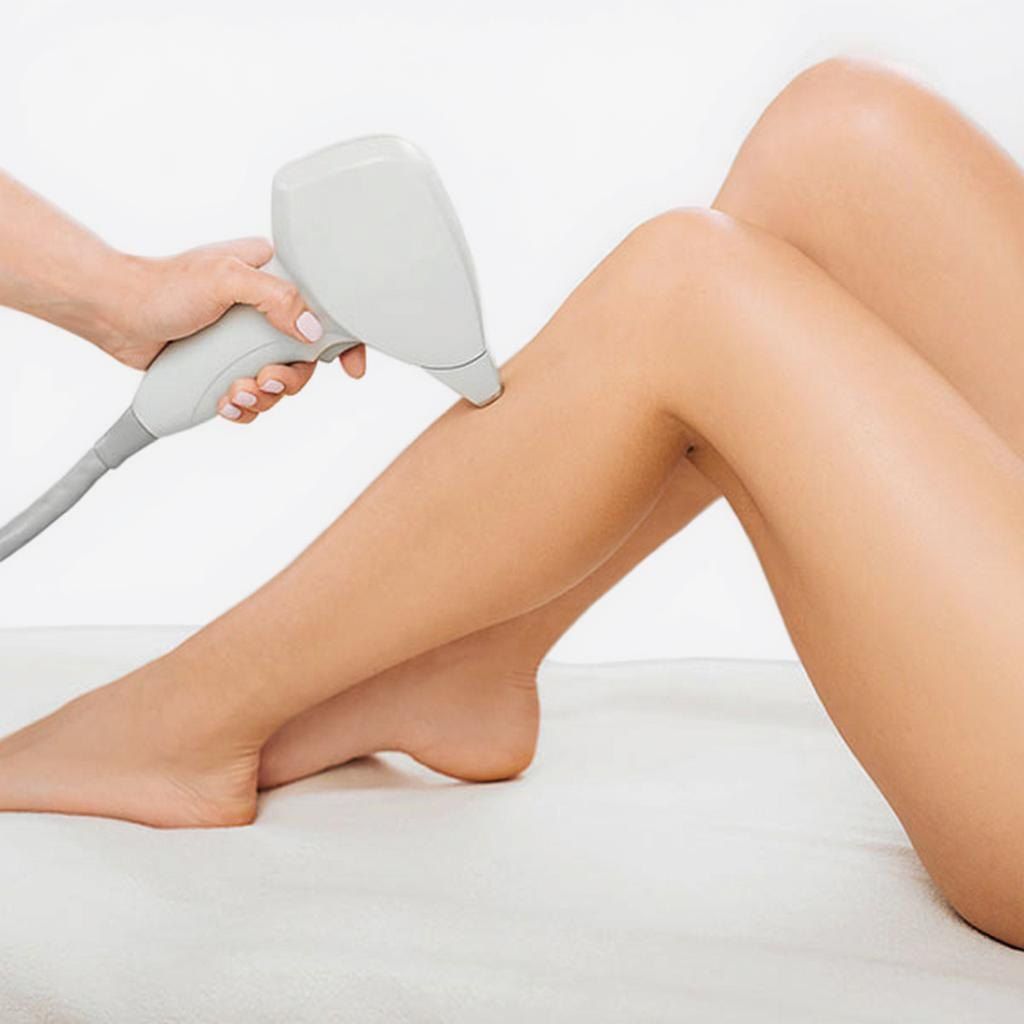
How laser hair removal works
The laser or light pulse is absorbed by melanin in the hair shaft and the follicle. The energy turns into heat and damages the stem cells and the papilla that feed hair growth. When the wavelength and energy match the contrast between hair colour and skin colour, the follicle takes the heat and the skin around it stays intact.
Because melanin is the target, the hair must contain pigment. Dark hair on light skin responds fastest. Blond, red, grey and white hair has almost no melanin, so results are weak or absent whatever the device. For those hairs electrolysis, which destroys each follicle with a fine probe, remains the practical option.
Hair grows in cycles. A follicle in its active growth phase responds to the laser. Follicles that are resting or shedding do not. At any moment only part of the hair in an area is growing, which is why a series of sessions is needed to catch each wave.
A medical treatment at the clinic
At the clinic in Holon, laser hair removal is part of medical practice, led by Dr. Meir. The focus is on small areas where hair causes a skin problem or a lot of distress: the face, chin and jawline, the underarms and the groin and bikini line.
Common medical reasons to come:
- Ingrown hairs and pseudofolliculitis. In men with curly beard hair, shaving leaves sharp tips that curve back into the skin and cause bumps, pustules and dark marks. Reducing hair density reduces these bumps.
- Recurrent folliculitis in the underarms or bikini line after shaving or waxing.
- Excess facial hair in women, including hirsutism linked to polycystic ovary syndrome (PCOS).
- Dark marks from repeated shaving irritation, which settle once the irritation stops.
New or rapidly increasing facial and body hair in a woman, especially with irregular periods, acne or scalp thinning, deserves a medical check before laser. Dr. Meir asks about these signs and refers for hormone tests when they fit.
The devices: Aerolase and M22
The clinic works with two devices, chosen by skin type and hair.
The Aerolase Neo Elite is a 1064 nm laser with a pulse of 650 microseconds. The 1064 nm wavelength sits at the edge of melanin absorption, so the skin surface takes less of the energy and the beam reaches the deep follicle. This makes it the safer choice for olive, tanned-prone and darker skin, the skin of many patients in Israel. The clinic also uses it for acne and skin redness.
The Lumenis M22 is an intense pulsed light device with filters. IPL is broader and less selective than a laser. It suits fair to medium skin with dark hair, and it is avoided on dark or freshly tanned skin, where the risk of burns and dark marks rises.
Many patients receive both in a combined plan. Dr. Meir sets the device and the parameters at the consultation.
How a session goes
Shave the area the evening before. Do not wax, pluck or use an epilator for several weeks before the series and between sessions, because the follicle has to stay in the skin as the target. Remove self-tan, and arrive without deodorant or cream on the area.
The session itself is short. Underarms or the upper lip take a few minutes. Each pulse feels like a quick snap or a flick of heat. Cooling protects the skin surface. Eyes are protected throughout, and the laser never goes inside the eye socket. Moles, birthmarks and tattoos in the area are covered or skipped.
A typical plan at the clinic is a series of about five sessions. Spacing depends on the area: facial hair grows back faster than hair on the body, so face sessions are closer together. Women with PCOS often need more sessions and planned maintenance.
Note: Do not skip sessions or stretch the gaps far beyond the plan. Resting follicles wake up in the meantime and the series loses ground.
Aftercare
Redness and small raised bumps around the follicles are normal for a few hours. Cool the skin, skip hot showers, saunas and hard exercise that day, and use a fragrance-free moisturiser. Apply SPF 50 on exposed areas and avoid sun for the following weeks. Treated hairs shed over one to three weeks, and they can look as if they are growing during this time.
Risks and side effects
Most reactions are mild and short: redness, swelling around follicles and itching. Less common are crusts, blisters and changes in skin colour, mostly after sun exposure or on tanned skin with the wrong wavelength. Darkening usually fades over months. Lightening is rarer and can last.
Two specific issues deserve mention. Patients with a history of cold sores may need antiviral tablets before treatment around the mouth. Paradoxical hair growth, where new hair appears at the edge of a treated area, is rare and mostly seen on the jawline and neck of women with darker hair and olive skin. Dr. Meir discusses it before the series and adjusts the treatment if it appears.
Laser is postponed during pregnancy, over a fresh tan, with an active infection in the area, and while taking light-sensitising medication.
Results and timeline
Hair density drops after the first sessions. After a full series most patients see far fewer hairs, and those that remain are thinner and lighter. Underarms tend to respond quickly. Hormone-driven facial hair responds slower and needs maintenance. For ingrown hairs, the bumps and dark marks settle as the hair thins out.
How to choose
Ask which wavelength will be used and why it fits your skin, whether a test spot is done for darker skin, and who examines unusual hair growth. In Holon, Dr. Meir consults in English, Russian and Hebrew. You can send a photo of the area on WhatsApp at 053-566-2287.
Questions
Is laser hair removal permanent?
It gives long-term reduction rather than complete removal. A full series leaves fewer, finer and lighter hairs, and hormones, pregnancy and age can wake up resting follicles later, so occasional maintenance is normal.
Why doesn't laser work on my blond or grey hair?
The laser targets melanin inside the hair. Blond, red, grey and white hair contain little or none, so the energy has nothing to heat. Electrolysis treats each follicle separately and is the usual option for such hair.
Can laser hair removal help ingrown hairs?
Yes. Fewer and finer hairs means fewer hairs curling back into the skin. For pseudofolliculitis of the beard and neck in men, and for repeated folliculitis in the bikini line or underarms, laser is a medical treatment.
Is laser hair removal safe on dark skin?
Yes, with the right wavelength. The 1064 nm wavelength of the Aerolase is absorbed less by the melanin of the skin surface, which makes it the safer option for olive and dark skin. IPL is used only where skin tone allows.
Should I shave or wax between sessions?
Shave. Waxing, plucking and epilators pull out the follicle that the laser needs as its target. Shave the area the evening before each session.
I have PCOS. Will laser still work?
It works, but hair tends to return faster when androgens stay high. Results are steadier when laser is combined with treatment of the hormonal cause, coordinated with a gynaecologist or endocrinologist.
Related
Sources: American Academy of Dermatology: Laser hair removal FAQs; DermNet: Nd:YAG laser treatment