Why the type of spot decides the treatment
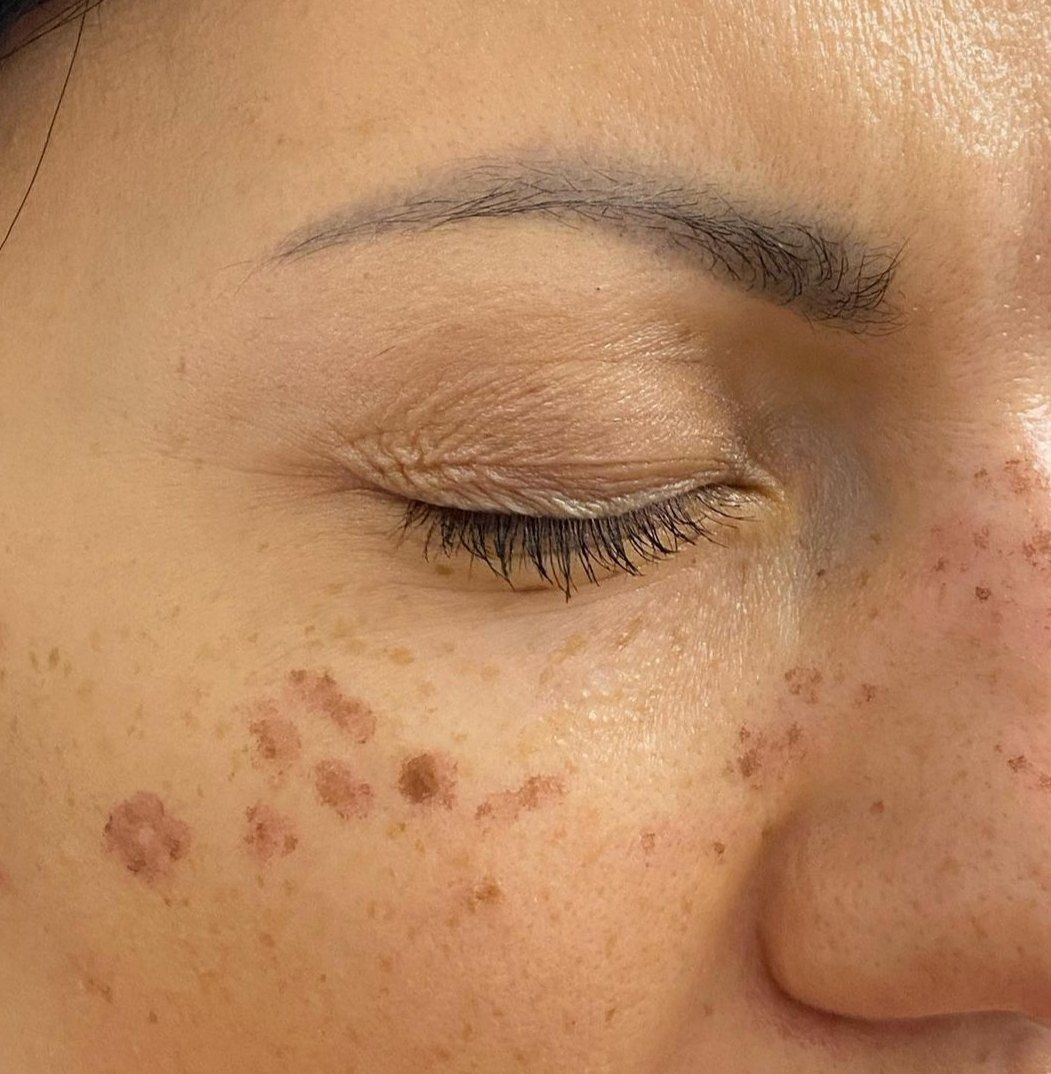
Pigmentation means extra melanin in the skin. The same brown patch can come from sun damage, hormones, inflammation or a birthmark, and each cause responds to a different treatment. A laser that clears a sun spot in one session can make melasma darker. A cream that fades a mark after acne does little for a sun spot on the back of the hand.
So the plan at the clinic starts with a diagnosis. Dr. Meir looks at the colour, borders, depth and pattern of the spots, asks about sun exposure, pregnancy, contraception and medication, and separates brown pigment from redness caused by blood vessels, which needs a different laser. A spot that is changing in shape, colour or size is checked as a skin lesion first.
The main pigment types and what helps each
| Type | What it looks like | Base treatment | Role of laser |
|---|---|---|---|
| Sun spots (solar lentigines) | Separate, sharp brown spots on the face, hands and chest | Pigment laser | Main treatment, often 1 to 2 sessions |
| Freckles | Small spots on sun-exposed skin, family tendency | Sun protection | Lightens them, they return with the sun |
| Post-inflammatory pigmentation (PIH) | Dark marks where there was acne, a scratch, a burn or a procedure | Treat the cause, creams, protection | Only selected cases, cautious settings |
| Melasma | Symmetrical patches on cheeks, forehead, upper lip, chin | Prescription creams, tablets, protection | Low-energy add-on only |
| Café-au-lait macules | Even light-brown patches, often from childhood | Assessment first | Series of sessions, partial lightening is common |
| Nevus of Ota | Blue-grey patch around the eye and temple | Laser | Long series, deep dermal pigment |
Sun spots
Sun spots form from years of accumulated UV damage and have no hormonal component, which is why they respond well to pigment laser. At the clinic Dr. Meir uses the TORO laser by DEKA, one device with two handpieces: Q-switched and picosecond. The laser breaks melanin in the spot into small particles that the body clears over the following weeks.
On fair skin with many fine spots, for example across the cheeks, chest or hands, the clinic can also use the Lumenis M22 IPL. It covers a wide area in one session and treats sun-related redness at the same time. IPL is less effective for melasma and carries a higher risk on olive, dark or tanned skin, so Dr. Meir keeps it for fair skin.
After the session the spot darkens for a few days, a thin crust forms and falls off within about a week. A treated spot stays light as long as the skin is protected. The sun keeps producing new spots on exposed skin, so daily SPF and a hat are part of the treatment.
Freckles
Freckles are a family tendency that the sun brings out. Dr. Meir treats them with the Q-switched handpiece, usually in a series of about five sessions, one a month. Each session breaks down part of the pigment and evens the tone.
Freckles can be lightened and improved, but not erased. Sun exposure brings some of them back, and freckles with very dense pigment, or very crowded freckles over a large body area, respond poorly. Dr. Meir looks at a photo before starting and says whether a response is likely.
Pigmentation after acne, injury or a procedure
Post-inflammatory hyperpigmentation (PIH) is a dark mark that stays after inflammation: a pimple, a scratch, a burn, eczema or an aggressive treatment. It is more common in olive and darker skin and fades on its own over months, faster with sun protection and with no picking or squeezing.
Treatment starts by calming the cause, for example treating active acne, and continues with azelaic acid, niacinamide and protection. Aggressive laser at this stage can create new inflammation and deepen the mark. In selected cases, such as pigment that stays after a skin injury or after plasma treatment, the Q-switched handpiece helps in a series of three to five sessions.
Melasma
Melasma is hormone-driven pigmentation and the most common reason for a failed laser elsewhere. High-energy laser stimulates the overactive pigment cells, and the patches return darker. The base is prescription tablets such as tranexamic acid (Hexakapron), lightening creams and daily tinted sunscreen that blocks visible light. Low-energy picosecond laser with needle-free infusion of lightening agents joins as an add-on, never in place of the base. The full plan is described on the melasma page.
Café-au-lait macules
A single café-au-lait patch is common and harmless. Six or more larger patches, especially in a child, raise the question of neurofibromatosis type 1 and need a medical assessment before any cosmetic decision.
For a single patch on a visible area, Q-switched and picosecond laser can lighten it over a series. Patches with jagged borders tend to respond better than those with smooth, even borders. Dark skin needs more careful settings, and the patch can repigment after treatment, so Dr. Meir photographs the area at each visit to track the response.
Nevus of Ota
Nevus of Ota is a blue-grey or brown-grey patch around the eye, temple or cheek, usually on one side. The pigment sits deep in the dermis, which explains the grey-blue tone. Q-switched laser is the standard treatment. It needs a long series with gaps of several weeks or more between sessions, and the patch lightens gradually.
Combining treatments on the face
When pigmentation comes with fine lines and rough texture, Dr. Meir adds UltraClear, a cold fiber laser, on those areas. The treatment then lightens spots and smooths the skin in the same plan. In darker or tanned skin he sometimes combines the pigment laser with NeoGen plasma, split over several sessions at adjusted energy.
For spread facial pigmentation, a typical protocol uses the Q-switched handpiece in the first two sessions to break the pigment into larger fragments, then the picosecond handpiece to break the rest into smaller ones. The series is usually four to five sessions, one a month.
When laser will not help
- Light (white) spots: laser does not add colour.
- Large congenital moles: these are clusters of cells and need surgical excision.
- Fingertips respond poorly, and lips respond less than the rest of the face.
- Very deep pigment may respond only partly, or not at all.
Dr. Meir says this at the consultation, before any series is booked.
Side effects and aftercare
Mild redness and swelling after pigment laser pass within days. For about two weeks, avoid very hot water, rubbing, peels and irritating products, and apply SPF 50 every time you go out. Do not pick the crust. The main risk is new pigmentation after treatment, mostly in dark or tanned skin, which is why aggressive resurfacing lasers such as CO2 suit pigment-prone skin less well. Laser is not done on freshly tanned skin or during an active cold sore.
Results and how to choose
The goal is lighter spots and a more even tone. Results depend on the depth of the pigment, which cannot be measured in advance. Most patients see a visible improvement, and it holds with daily sun protection and maintenance. When spots cover several areas, Dr. Meir starts with the one that bothers you most, completes the series there and then moves on.
Choose a doctor who diagnoses the spot type first, uses a laser built for pigment, and tells you in advance when laser will not help.
Results from the clinic
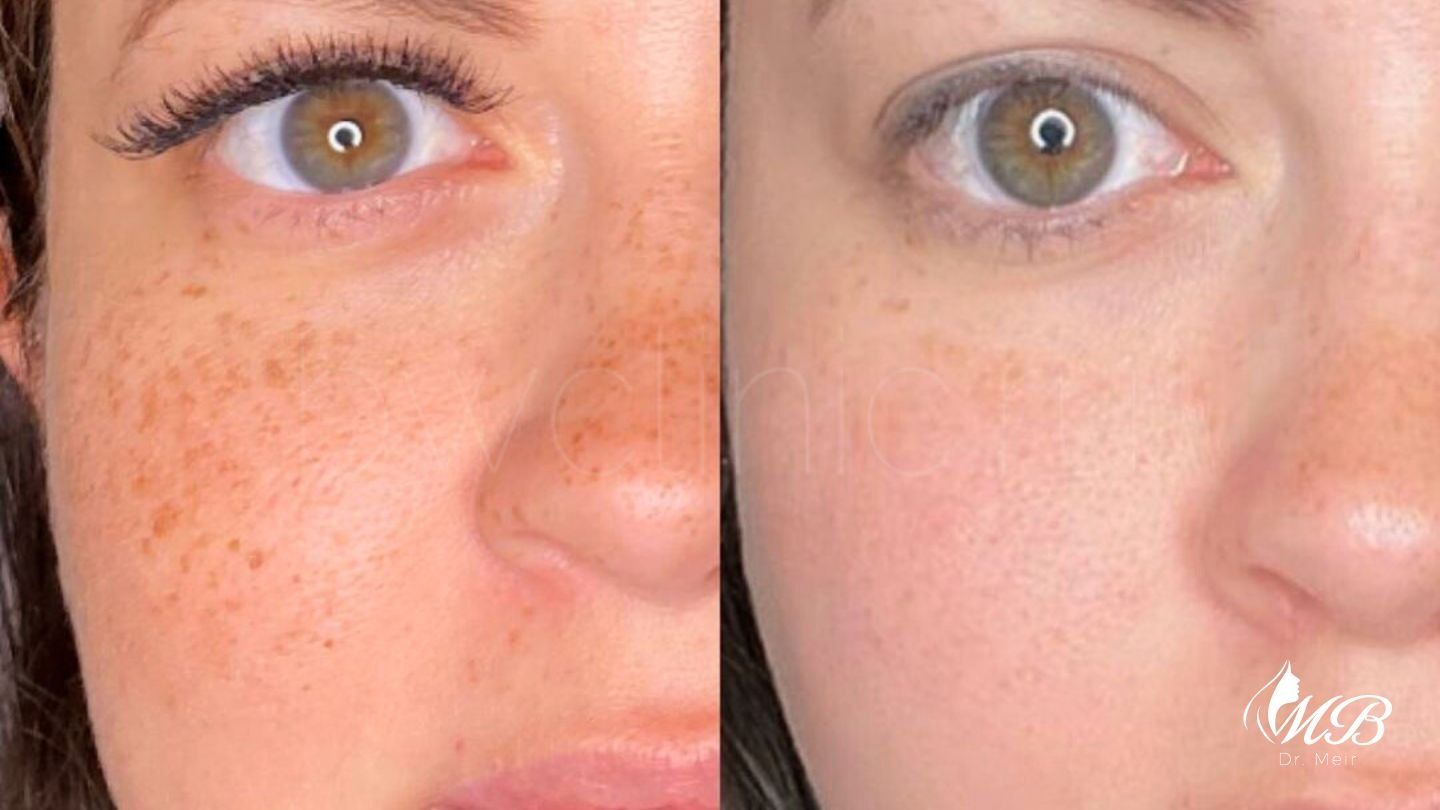
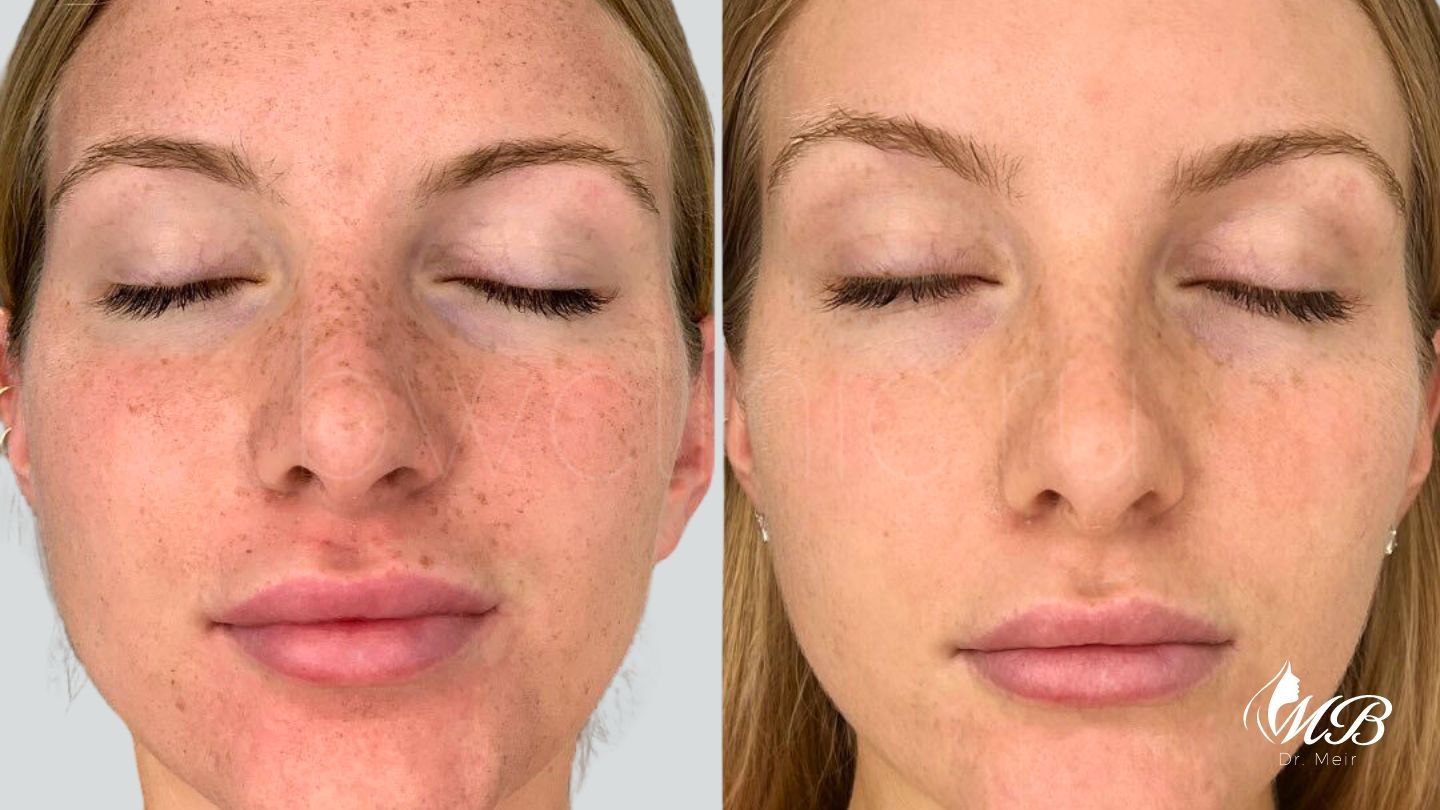
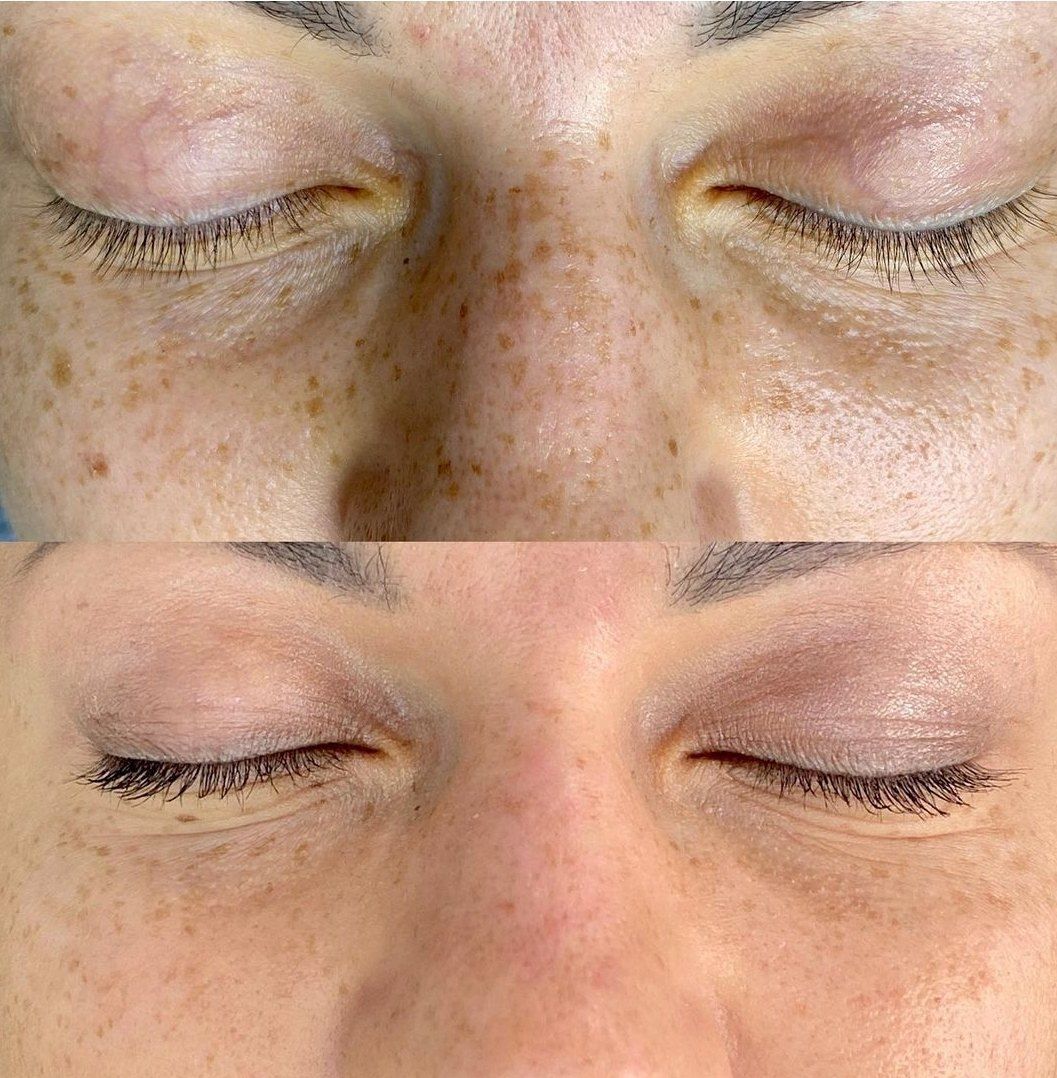
Individual results vary. Photos published with patient consent.
Questions
Can laser remove all dark spots?
No. Sun spots respond well, freckles lighten and come back with the sun, and melasma can get worse with strong laser. Light spots do not respond, because laser does not add colour.
How many laser sessions do I need for pigmentation?
A single sun spot often clears in one or two sessions. Spread facial pigmentation usually needs three to five sessions, one a month.
Is there downtime after pigment laser?
Treated spots darken for a few days and form a thin crust that falls off within about a week. Most patients go back to work the same day.
Can I have pigment laser in summer?
Autumn and winter are better, because sun right after laser raises the risk of new spots. Creams and prescription tablets can continue through summer with strict protection.
Are lightening creams enough on their own?
For mild marks and pigmentation after acne, creams can be enough. For sun spots and long-standing melasma, creams alone usually bring limited change.
Will the spots come back?
A treated sun spot stays light for years with sun protection, though new spots can appear. Melasma and freckles tend to return with sun and hormonal changes.
Related
Sources: American Academy of Dermatology: How to fade dark spots; DermNet: Postinflammatory hyperpigmentation; DermNet: Café-au-lait macule