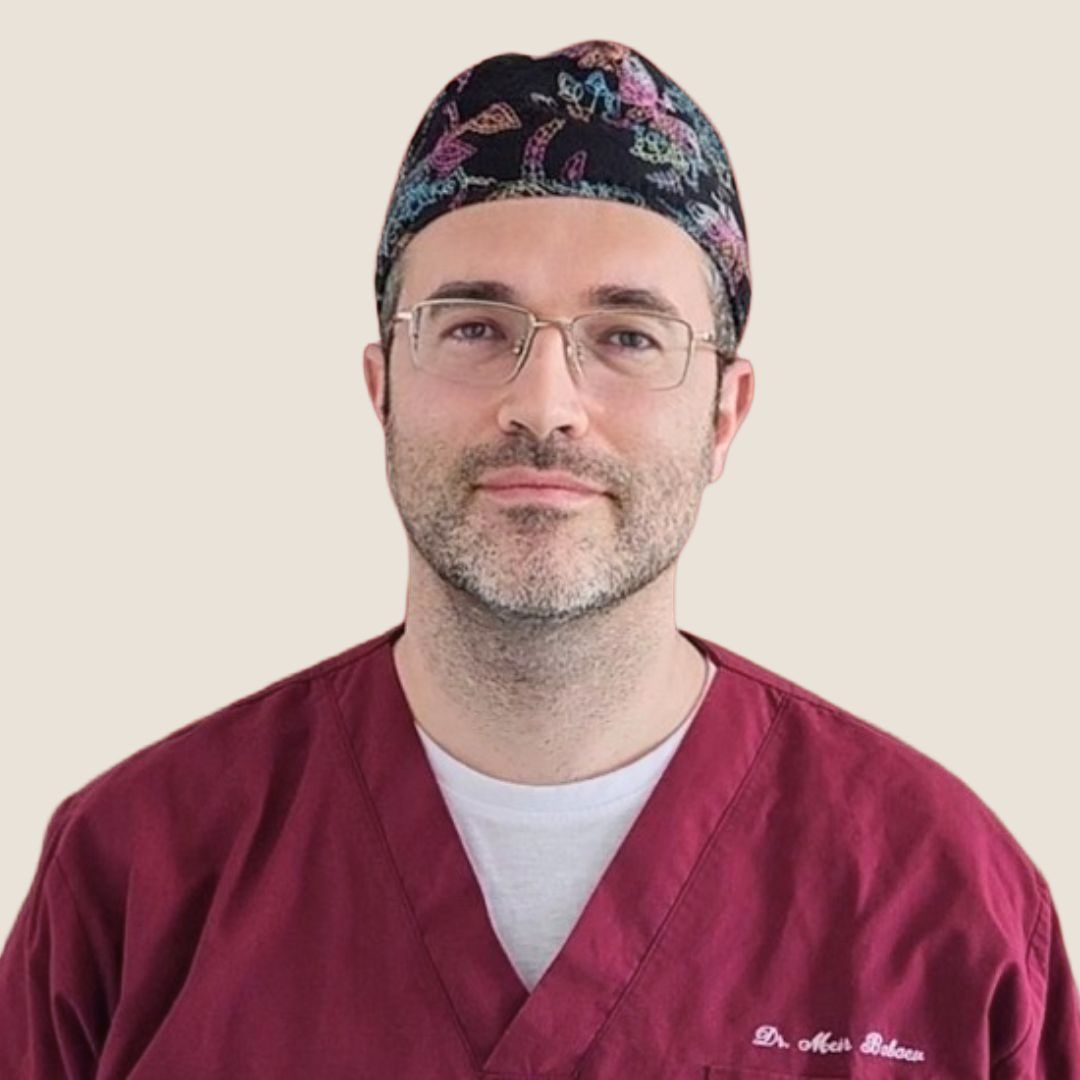
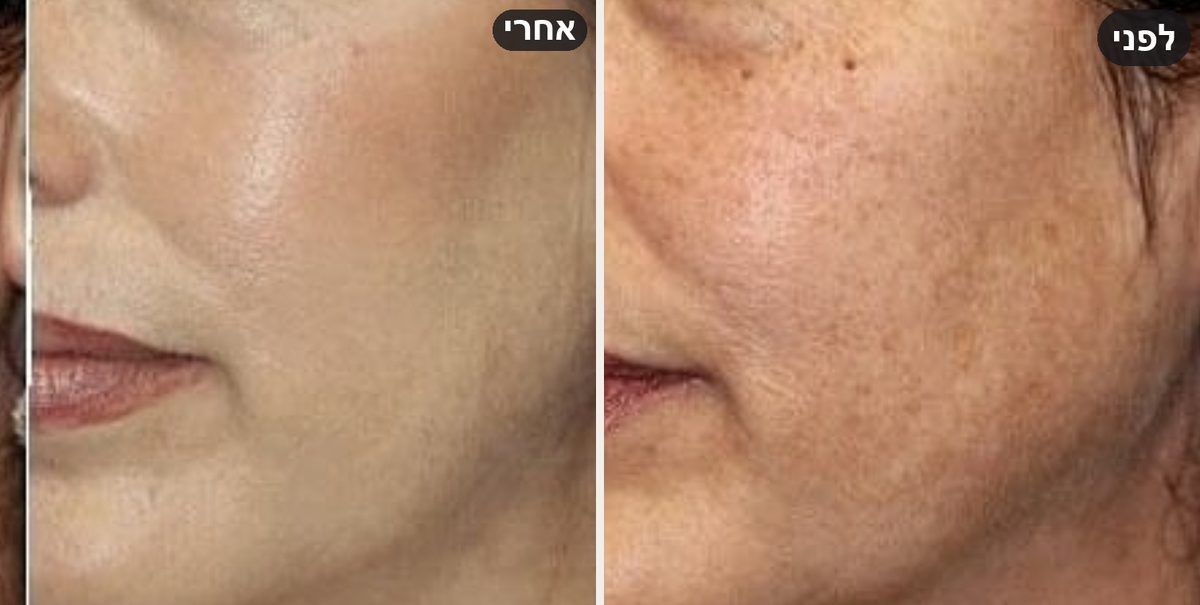
What melasma is
Melasma shows up as brown or grey-brown patches on the cheeks, forehead, upper lip and chin, usually on both sides of the face in a symmetrical pattern. It is far more common in women and in olive and darker skin, which covers a large part of the population in Israel. Men get it too.
The pigment cells (melanocytes) in melasma skin are overactive. They respond to hormones, ultraviolet light, visible light and heat by producing more pigment. Research over the last few years shows that melasma involves the deeper skin layer as well: small blood vessels and changes in the dermis play a part. That explains why some patches look brown with a reddish tint, and why a single treatment that targets only the pigment rarely holds.
What triggers it
- Sun exposure, including visible light through car and office windows
- Pregnancy, hormonal contraception and hormone therapy
- Heat: kitchens, saunas and the Israeli summer darken patches even with sunscreen
- Family history
- Irritating skin care and aggressive procedures
Melasma that appears in pregnancy sometimes fades after delivery. Melasma that stays for years tends to persist and to darken each summer.
How it is diagnosed
Not every brown patch on the face is melasma. Sun spots (solar lentigines), freckles and post-inflammatory pigmentation after acne look similar and respond to different treatments. Dr. Meir examines the skin, asks about pregnancy, contraception, medication and sun habits, and separates melasma from other pigment types before he plans anything. A patch that changes shape, colour or borders gets checked as a skin lesion first, sometimes with a biopsy.
An initial assessment can start from a clear photo of the face. The full plan is set at the consultation, in English, Russian or Hebrew.
The base of treatment: protection and creams
Daily protection. A tinted sunscreen with SPF 50 that contains iron oxides blocks visible light as well as UV. A wide-brimmed hat and avoiding heat add to it. Without this step, every other treatment loses ground within weeks.
The Kligman formula. This is a cream that a pharmacy prepares from a doctor’s prescription. It combines three active ingredients:
- hydroquinone, which blocks tyrosinase, the enzyme that makes melanin
- tretinoin, a vitamin A derivative that speeds up skin cell turnover
- a mild corticosteroid, usually dexamethasone, which calms irritation
The cream works in limited cycles. The usual protocol is daily use for up to about eight weeks, followed by a break. Long, continuous use of hydroquinone, mainly at high strength and in darker skin, can cause ochronosis, a blue-grey darkening that is hard to reverse. The steroid part is also meant for short-term use only, because long use thins the skin. Dr. Meir sets the length of each cycle and the breaks.
The Kligman formula is not an off-the-shelf product. After Dr. Meir confirms that the cream suits you, you receive a prescription and order the compounded cream from a pharmacy. If one pharmacy declines to prepare it, another one usually will.
Other lightening agents. Azelaic acid, niacinamide and retinoids work well between Kligman cycles and during maintenance. Azelaic acid and niacinamide are also options in pregnancy.
Note: In deep or long-standing melasma, a cream alone gives limited results. Dr. Meir uses the Kligman formula inside a plan, mainly to support the series and to keep the result afterwards.
Tranexamic acid tablets (Hexakapron)
Tranexamic acid is a drug registered for heavy bleeding. Dermatologists worldwide prescribe it off-label for melasma after studies showed lighter patches in many patients. In Israel it is sold as Hexakapron. The pharmacy leaflet talks about bleeding and does not mention pigment, and that is expected for an off-label use.
The exact mechanism is still under study. The leading explanations are that it blocks the plasmin pathway that stimulates melanocytes, reduces tyrosinase activity and reduces the small blood vessels in melasma skin. The tablet works from inside on new pigment production. It does not break down pigment that already sits in the skin.
At the clinic, Dr. Meir prescribes Hexakapron for about four months alongside the treatment series. According to DermNet, improvement often shows after about eight weeks. In a DermNet-cited series of 561 patients, 7% reported side effects, mainly nausea, headache, ringing in the ears and palpitations.
Tranexamic acid is not suitable for people with:
- a past or present deep vein thrombosis or pulmonary embolism
- ischaemic heart disease or stroke
- a personal or family history of a clotting disorder
- severe kidney disease or a history of seizures
- combined contraceptive pills, rings or patches (the FDA label prohibits the combination)
The tablets stop about a week before planned surgery, and at once if a clot is suspected or vision changes. They are not given in pregnancy or while breastfeeding. Dr. Meir prescribes them only as part of a treatment plan, because a tablet on its own gives a partial and temporary result.
Where laser fits
Laser in melasma is an add-on, never the first step and never the only one. High-energy laser heats the overactive pigment cells, and the patches can come back darker than before. The same applies to aggressive IPL and to strong peels in olive and dark skin.
At the clinic, laser joins only once the protection and the home plan are in place. The series is four sessions, one a month. At each session, lightening agents go into the skin with the NovoJet needle-free injector, which uses air pressure, followed by a low-energy pass with the picosecond handpiece of the TORO laser by DEKA. The laser breaks down part of the existing pigment at each visit. The creams and tablets slow the production of new pigment between visits. If only one part of the plan is done, melasma returns faster.
Laser sessions are best timed for autumn and winter. Creams and tablets continue through the summer with strict protection.
Recovery and side effects
After a session, mild redness lasts a few hours to a day. Most patients return to work the same day. Lightening creams can cause dryness, peeling and irritation in the first weeks, which a gentler routine and a moisturiser usually settle. Laser is postponed on freshly tanned skin and during an active cold sore.
Results and timeline
Melasma lightens gradually, over weeks and months. Most patients see a change after 8 to 12 weeks of consistent treatment. Deep and stubborn melasma may need sessions beyond the first series.
After the series comes maintenance: a single session every few months, home lightening creams and daily sun protection. Pregnancy, the pill or hormone therapy can trigger melasma again. Dr. Meir speaks about lightening and control. The depth of the pigment cannot be measured in advance, so a doctor cannot promise full clearance or a percentage.
How to choose a clinic for melasma
- The doctor confirms that the patches are melasma before treating.
- The plan starts with protection and prescription creams, and tablets are considered with a check of clotting risk.
- Laser is offered as a low-energy add-on inside the plan, never as a stand-alone package.
- There is a clear maintenance plan after the series.
Results from the clinic
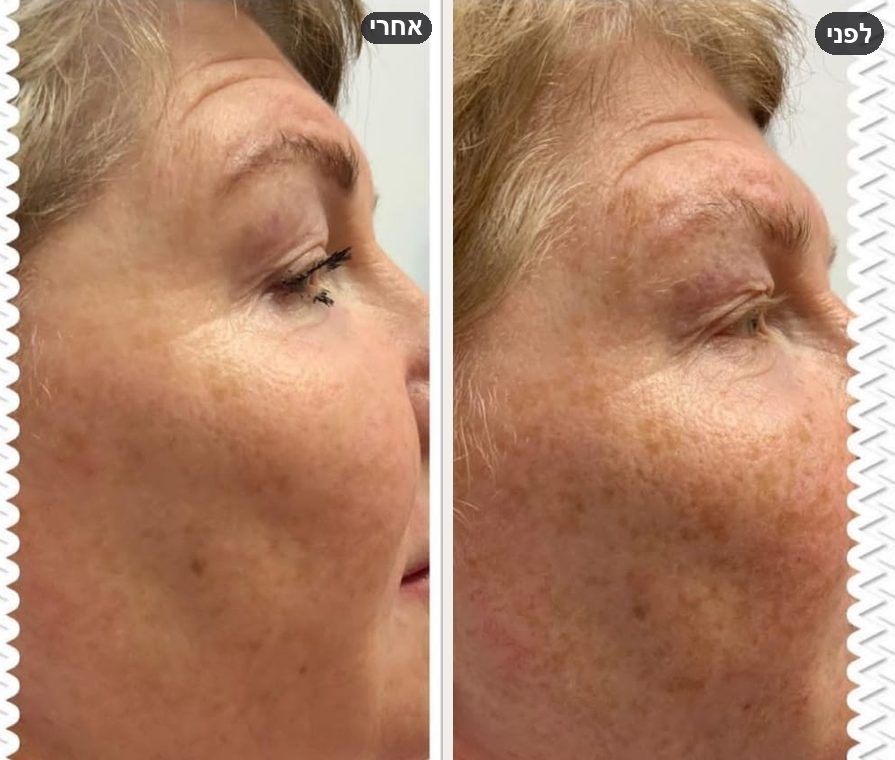
Individual results vary. Photos published with patient consent.
Questions
Can melasma be cured permanently?
No treatment removes the tendency. Most patients reach a clear improvement and keep it with sun protection, home creams and an occasional maintenance session.
Does laser remove melasma?
Laser alone does not treat melasma, and strong settings can make it darker. Dr. Meir uses low-energy laser only as an add-on to creams, tablets and protection.
What is the Kligman formula?
A pharmacy-compounded cream of hydroquinone, tretinoin and a mild corticosteroid. It is used in limited cycles of up to about eight weeks, then paused, under a doctor's supervision.
Is tranexamic acid (Hexakapron) safe for melasma?
At the low dose used for pigment, most patients have no side effects. It is not prescribed to people with a history or risk of blood clots, during pregnancy, or together with combined contraceptive pills.
Can I treat melasma while pregnant?
Tablets, hydroquinone, retinoids and laser wait until after pregnancy. Tinted high-SPF sunscreen, azelaic acid and niacinamide can be used in the meantime.
Why did my melasma get worse after laser elsewhere?
Heat from high-energy laser stimulates the pigment cells, and the patches can rebound darker. This is treatable, starting with creams, protection and, where suitable, tablets.
Related
Sources: American Academy of Dermatology: Melasma diagnosis and treatment; DermNet: Melasma; DermNet: Tranexamic acid