What a pore is
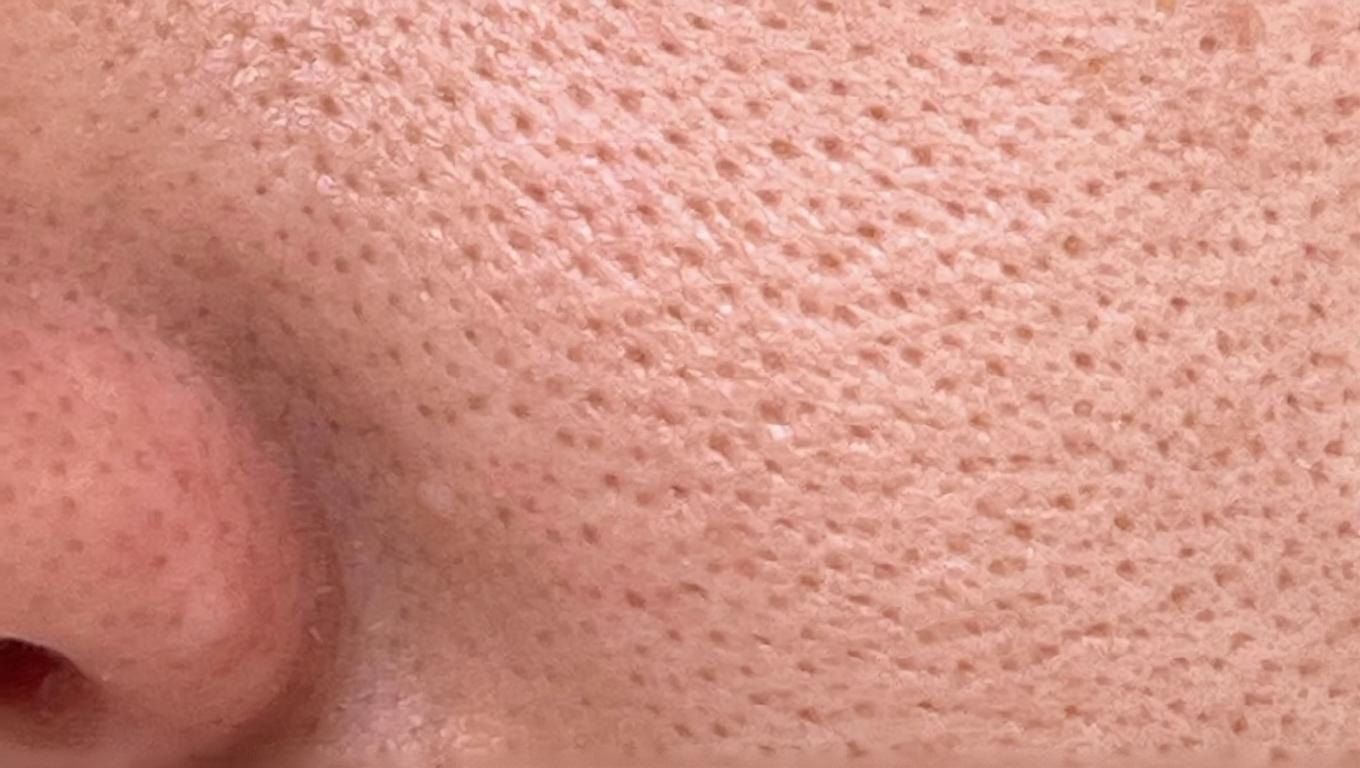
A pore is the opening of a hair follicle and its oil gland. It drains sebum, helps regulate heat and keeps the skin surface supple. It cannot be closed and has no muscle, so it does not open with heat or close with cold. What treatment changes is how wide the opening looks.
Why pores look enlarged
Reviews of the research describe three main causes, and most people have more than one.
- High oil production. Larger, more active oil glands need a wider opening. Genetics and hormones set the starting point, and this is why oily skin has visible pores from the teens.
- Loss of support around the pore. Collagen and elastic fibres hold the rim of the pore together. Sun damage breaks them down, and from the late twenties the skin makes less collagen each year. The rim loosens and the pore gapes.
- Gravity and age. As the skin loses tension, the rim is pulled down and a round pore becomes teardrop-shaped, which looks larger even when the gland has not grown.
Other factors add to it. Squeezing spots stretches the opening and damages the collagen around it. Chronic acne leaves pores wider. Harsh soaps dry the skin, and it responds with more oil.
Women often notice a change in their forties, as falling oestrogen thins the dermis while sun damage catches up. In men, oil glands stay active for longer, so wide pores on the nose and forehead are common even at 50 and beyond.
Pores on the nose
The nose, forehead and chin form the T-zone, with the highest density of oil glands on the face. This is why nose pores stand out even in people without generally oily skin.
A blackhead is a different thing: a pore plugged with oxidised oil and dead cells. Squeezing blackheads at home stretches the follicle wall and can widen the pore for good. Professional extraction, a retinoid that regulates oil and collagen treatments around the follicle work better.
What works at home
A gentle routine. Cleanse twice a day with a mild cleanser. Aggressive soap and alcohol toners strip the skin and trigger more oil. Use a light moisturiser and daily sunscreen, because sun damage thickens and loosens the rim of the pore.
Retinoids. They are the only topical group that changes how the follicle itself behaves. Tretinoin by prescription is the strongest. It normalises the lining of the follicle, reduces oil and thickens the dermis over months. Adapalene (Differin) is gentler and suits sensitive skin. Over-the-counter retinol is weaker but helps with longer use.
A typical start at the clinic is a pea-sized amount on dry skin every third night for two weeks, then every other night, then nightly. A ceramide moisturiser on top reduces irritation. Visible change builds between weeks 12 and 16.
Acids. Salicylic acid dissolves oil inside the follicle and suits the oily T-zone. Glycolic and lactic acids smooth the surface. Niacinamide and azelaic acid reduce oil and redness and are safe in pregnancy, when retinoids stop.
Note: Isotretinoin (Roaccutane) is kept for significant acne or very heavy oil production. It is not prescribed only to shrink pores.
Quick fixes that do not help. Pore strips pull out the top of the plug, and it refills within days. Toothpaste on spots dries and irritates. For an event, a silicone primer fills the pore optically without harm.
Clinic treatments
When home care reaches its limit, clinic treatments work on the dermis that holds the pore. The idea is a controlled stimulus that drives new collagen around the follicle, so the wall tightens and the opening narrows. The choice depends on skin type, skin tone, oil level and whether there are acne scars.
- Salicylic acid peel. It penetrates the follicle and dissolves keratin and oil from inside. A monthly series reduces blackheads and surface oil, mainly in the T-zone.
- UltraClear. A cold fibre laser that resurfaces the skin with little heat. It improves texture, pore appearance and shallow acne scars, with a few days of redness.
- Morpheus8. Radiofrequency delivered through fine needles tightens collagen around the pore. It suits pores with acne scars and works in darker skin types, where some lasers raise the risk of pigment.
- Aerolase Neo Elite. A 1064 nm laser with a very short pulse. It reduces oil and redness and improves texture, with no downtime in most patients.
- Botox micro-droplets. Diluted botox placed in the skin as tiny droplets reduces oil production. Pores and shine look smaller for a few months. The dose and placement avoid the muscles, so expression stays the same.
A combination is common. A peel at the start clears blocked pores and prepares the skin, and a series of Morpheus8 or UltraClear then works on tightening. Oily skin with active acne gets the acne under control first.
Recovery and side effects
A typical plan is three to four sessions about a month apart. Numbing cream goes on before Morpheus8 and UltraClear. Expect a warm, prickling feeling during the session. The next day the skin is pink and sensitive, and you can go back to your routine with sun protection.
Peels cause light flaking for a few days. Side effects of all methods include redness, dryness, a breakout in the first weeks of a retinoid and temporary pigment changes, mainly in olive and darker skin. Settings are adjusted to skin tone.
Results and timeline
The result is gradual. Collagen builds in the weeks after each session, and most patients see a change after the second. Pores look smaller and skin smoother. They do not disappear, and no treatment gives poreless skin.
Without a home routine with daily sunscreen and a retinoid, sun and oil bring the pores back within months.
When to see a doctor
If eight to twelve weeks of a consistent routine have not changed the picture, an examination is the next step. The same applies when pores come with active acne or many blackheads, or when the skin texture has changed quickly. At the clinic in Holon, Dr. Meir assesses skin type, oil production and sun damage and builds a combination of clinic treatment and home care. Consultations are held in English, Russian or Hebrew.
Questions
Can you shrink enlarged pores permanently?
Pores can look smaller for a long time, but the tendency stays. Oil production, sun and age keep working on them, so a retinoid, daily sunscreen and occasional maintenance sessions keep the result.
Why are the pores on my nose so large?
The nose, forehead and chin have the highest density of oil glands on the face. Active glands stretch the opening of the follicle, and squeezing blackheads damages the collagen around it, which widens the pore further.
Do pore strips and steaming help?
Steam softens oil so the pore is easier to clean, and cold water tightens the skin for minutes. Neither changes pore size. Pore strips pull out the top of the plug, the pore refills within days, and repeated pulling can irritate the skin.
Which laser is best for large pores?
There is no single best device. UltraClear resurfaces texture, Morpheus8 tightens collagen around the pore, and Aerolase reduces oil and redness. The choice depends on skin type, skin tone, oil level and whether there are acne scars.
Does botox help large pores?
Tiny droplets of diluted botox placed in the skin, not the muscle, reduce oil production and can make pores look smaller for a few months. It suits oily skin and is often combined with other treatments.
Is a blackhead the same as an enlarged pore?
No. A blackhead is a pore blocked with oxidised oil and dead skin cells, and the dark colour comes from oxidation, not dirt. An enlarged pore is open and clean but has a wide rim.
Related
Sources: Facial pores: definition, causes and treatment options. Dermatol Surg 2016; The efficacy and adverse effects of treatment options for facial pores: a review. J Cosmet Dermatol 2023; DermNet: Chemical peels