Benign growths that are worth a diagnosis
Most bumps that appear on adult skin are harmless. Skin tags, seborrhoeic keratosis, milia, sebaceous hyperplasia, dermatosis papulosa nigra (DPN) and cherry angiomas are all benign and do not turn into cancer. People remove them because they rub on clothing, bleed, itch or bother them in the mirror.
A diagnosis still comes first. A basal cell carcinoma can look like sebaceous hyperplasia, and a melanoma can look like a dark seborrhoeic keratosis. Dr. Meir examines each growth with a dermatoscope and chooses the removal method by the diagnosis, the size and the location. When there is any doubt, he removes the growth in a way that keeps tissue for the lab.
Skin tags (acrochordons)
Skin tags are soft, skin-coloured or slightly darker flaps hanging on a thin stalk. They appear in the folds: neck, armpits, under the breasts, groin and eyelids. They become more common with age, weight gain and pregnancy. Many skin tags on the neck, together with darker velvety skin, can be a sign of insulin resistance and are a reason to check blood sugar.
Removal: small tags are snipped at the base with fine sterile scissors, often after a numbing cream. Larger ones get a small injection of local anaesthetic and are snipped or removed with fine electrocautery. Several tags can be removed in one visit. A small crust forms and falls off within about a week.
Seborrhoeic keratosis
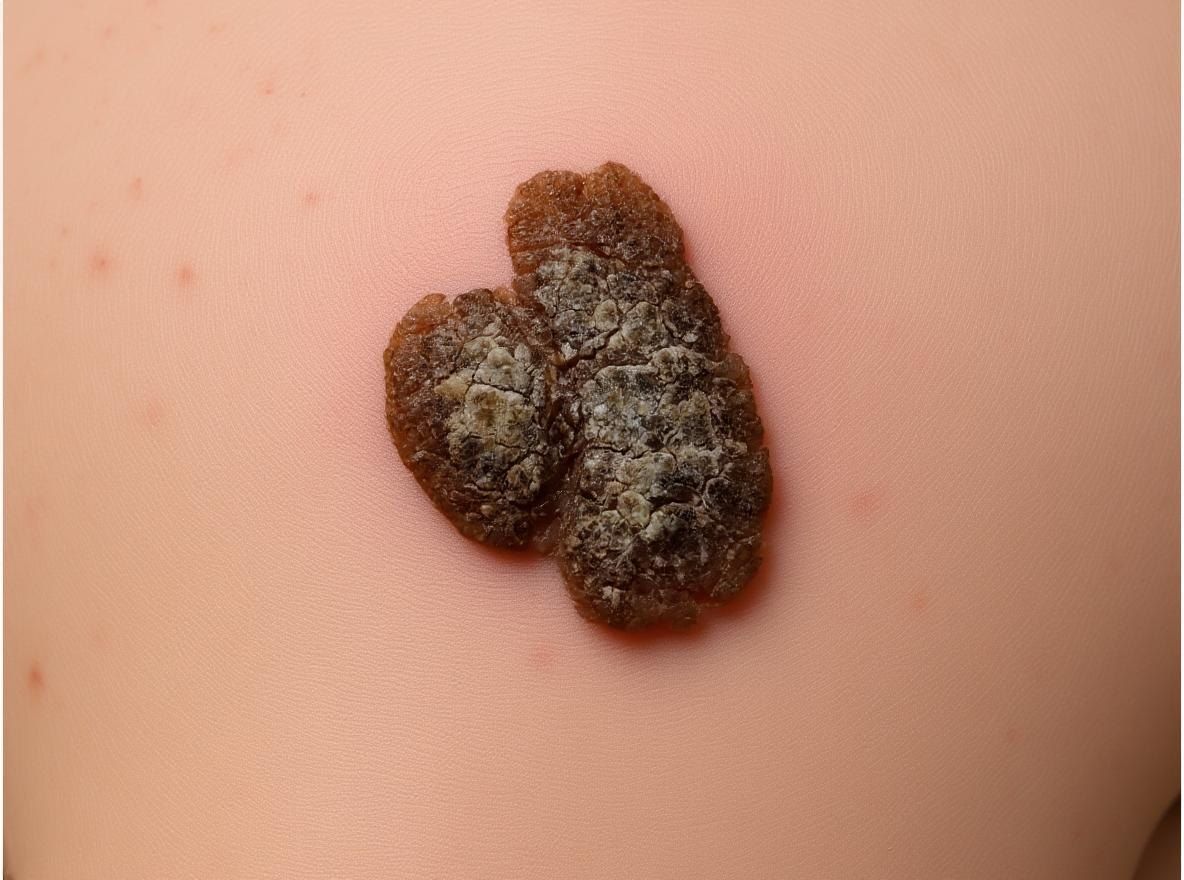
Seborrhoeic keratoses are brown, tan or black growths with a waxy, “stuck-on” look and a rough surface. They appear from middle age on the chest, back, face and scalp, and the tendency runs in families. On the scalp they can catch on a comb and bleed.
Removal: curettage (scraping) with light cautery, shave removal or electrocautery for thicker lesions. Liquid nitrogen works on thin lesions but can leave a light patch on darker skin. When the diagnosis is not certain, shave or excision is preferred over freezing or burning, because they keep tissue for the lab. Over-the-counter wart removers do not work, since these growths are not caused by a virus.
Note: Dozens of new seborrhoeic keratoses appearing within a few weeks, often with itch, is a rare sign that calls for a medical work-up. Gradual accumulation over years is the normal pattern.
Milia
Milia are tiny, hard, white “pearls” under the surface, mostly around the eyes, on the cheeks and on the nose. Each one is a small cyst filled with keratin. They appear on their own in newborns and adults, or after skin injury: burns, blistering, laser resurfacing, deep peels and long-term use of steroid creams. Heavy creams around the eyes keep producing new ones.
Squeezing does not work. A milium has no opening, so pressure only bruises the skin and leaves marks.
Removal: de-roofing is the main method. A fine sterile needle makes a tiny opening in the surface and the keratin is pressed out. It suits single milia and the delicate skin around the eyes. Clusters can be treated with gentle electrocautery. When milia are many and scattered, a light chemical peel speeds up renewal of the surface. A lighter skincare routine around the eyes afterwards reduces new ones.
Sebaceous hyperplasia
Sebaceous hyperplasia appears as small, soft, yellowish bumps with a central dip, mostly on the forehead, nose and cheeks, from middle age. Each bump is an enlarged oil gland. It is more common with oily skin, sun damage and in people taking ciclosporin after an organ transplant.
The main confusion is with basal cell carcinoma, which is also a shiny bump on the face. Under dermoscopy, sebaceous hyperplasia shows a crown of fine vessels around a yellowish centre. A bump that bleeds, grows or forms a sore needs a biopsy.
Removal: fine-needle electrocautery destroys the enlarged gland while sparing the skin around it. A small crust falls off in about a week. Several bumps are treated in one session. Retinoid creams soften the look but do not remove the gland, so they serve as maintenance. Widespread cases sometimes call for low-dose isotretinoin.
Dermatosis papulosa nigra (DPN)
DPN is many small dark brown or black bumps on the cheeks, around the eyes, on the forehead and the neck. It is common in darker skin types and runs in families. It is a variant of seborrhoeic keratosis and is harmless.
Removal: fine electrocautery after a numbing cream is the preferred method on darker skin. Each bump is touched lightly, forms a small crust and falls off within about a week. Light curettage suits larger bumps. Freezing is avoided because it can leave light patches. A temporary dark mark after treatment is common on darker skin and usually fades over weeks to months with sun protection. Removal does not prevent new bumps.
Cherry angiomas
Cherry angiomas are small, bright red, dome-shaped spots made of tiny blood vessels. They appear on the trunk and arms from about age 30 and increase with age. They are harmless, though they bleed heavily if scratched.
Removal: small angiomas respond to a vascular laser, which targets the red pigment in blood, or to fine electrocautery. Larger raised ones can be shaved and cauterised. Healing takes about a week to ten days.
Recovery and side effects
Most removals leave a small crust that falls off within a week, then pink skin that fades over weeks. Keep the area moist with the ointment you are given, do not pick the crust and use sunscreen on treated areas on the face. Possible side effects include temporary redness, light or dark marks, and, uncommonly, a small scar. Removing a growth does not stop new ones from forming, so some people come back every few years.
When to see a doctor
Book a check for any growth that is new and growing, bleeds without reason, changes colour or shape, forms a sore that does not heal, or looks different from your other spots. These signs need an examination before any removal. At the clinic in Holon, the examination and the removal of benign growths usually happen in the same visit, with consultations in Hebrew, English and Russian.
Questions
Are skin tags dangerous?
No. Skin tags are benign and do not turn into cancer. People remove them when they catch on clothing or jewellery, bleed or bother them cosmetically.
Can I remove a skin tag at home?
Tying it off with thread, acid patches and home plasma pens often cause infection, burns, dark marks and scars. A growth that has not been diagnosed can also turn out to be something else.
Do seborrheic keratoses come back after removal?
A fully removed lesion usually does not return in the same spot. The tendency is genetic, so new ones can appear elsewhere over the years.
Why do milia keep returning around my eyes?
Heavy creams around the eyes, sun damage and some skincare habits keep producing new milia. Removal clears existing ones, and a lighter routine reduces new ones.
Is removal safe on dark skin?
Yes, with the right method. On darker skin, liquid nitrogen is avoided because it can leave light patches, and fine electrocautery at low settings is preferred.
Are skin tags linked to diabetes?
Many skin tags, especially on the neck together with darker velvety skin, can be a sign of insulin resistance. A blood sugar check is worth discussing with your doctor.
Related
Sources: NHS: Skin tags; American Academy of Dermatology: Seborrheic keratoses diagnosis and treatment; DermNet: Sebaceous hyperplasia