
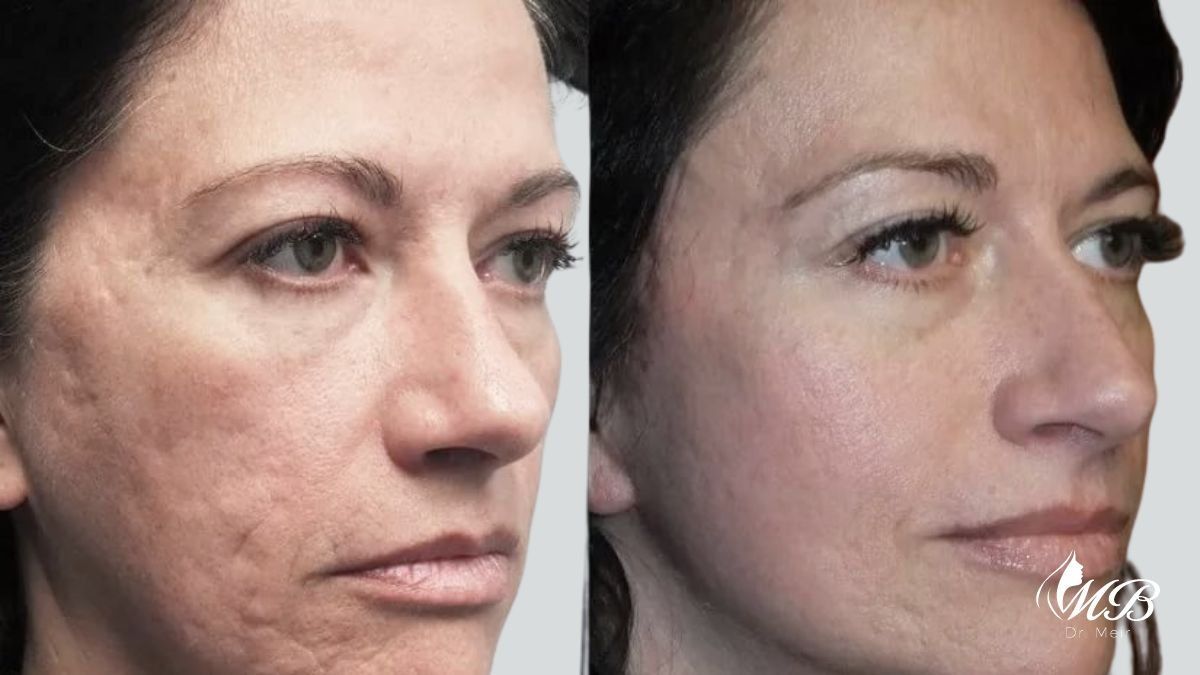
Why wrinkles form
Skin keeps its smooth surface thanks to collagen and elastic fibres in the dermis. From the mid-twenties, the skin makes about one per cent less collagen each year. Sun exposure breaks collagen down faster, and in Israel’s climate it is the strongest outside factor. Smoking, rapid weight loss, poor sleep and repeated facial expressions add to it.
Deeper changes play a part as well. With age the face loses fat in some compartments, bone at the eye sockets and jaw recedes, and soft tissue descends. Some lines that look like wrinkles, such as the nasolabial folds, come mainly from this loss of support.
Dynamic and static wrinkles
The first question at a consultation is whether a line appears only with movement or stays at rest.
Dynamic wrinkles appear when a muscle contracts: horizontal forehead lines when you raise the brows, the “11” lines between the brows when you frown, crow’s feet when you smile. The skin itself is still in good shape. Relaxing the muscle smooths the line.
Static wrinkles stay when the face is relaxed. They form after years of folding, sun damage and collagen loss. Relaxing the muscle helps only in part, so they need treatment that rebuilds the skin.
Most adults over 40 have both. A forehead line can be dynamic at 30 and static at 50.
Wrinkles by area and matching treatment
Forehead and between the brows
Botox is the main treatment for horizontal forehead lines and frown lines. Dr. Meir doses the forehead carefully: too much in the wrong place can drop the brows and make the upper lid feel heavy. Lines that remain etched at rest improve further with a superficial skin booster, RF microneedling or resurfacing.
Crow’s feet and the eye area
Botox softens crow’s feet within days. Crepey skin under the eye and fine lines at rest respond to NeoGen plasma, UltraClear and Morpheus8 with short needles. The eyelid page covers hooded lids and under-eye laxity in detail.
Around the mouth
Vertical lines on the upper lip, sometimes called smoker’s lines, come from skin damage and the action of the lip muscle. They respond to resurfacing with UltraClear or NeoGen, to soft filler placed superficially and to very small doses of botox. Folds from the nose to the mouth and marionette lines have their own page, because they are mainly a volume problem.
Neck
Horizontal neck lines and vertical bands need different treatments: boosters, Morpheus8 or soft filler for the lines, and botox for the bands. The neck page explains the full plan.
The treatment options
- Botox relaxes the muscles behind expression lines. On the face it lasts about 3 to 4 months.
- Hyaluronic acid fillers restore volume and fill deep folds. The product is chosen for each patient and each area.
- Skin boosters and Profhilo spread soft hyaluronic acid through the skin to improve hydration, fine lines and elasticity.
- Biostimulators such as Sculptra and Radiesse prompt the skin to build its own collagen over months.
- UltraClear is a cold fibre laser that resurfaces fine lines, texture and sun damage with short downtime.
- NeoGen plasma tightens skin and treats fine lines, also on the eyelids.
- Morpheus8 combines microneedling and radiofrequency for texture, lines and mild laxity.
- Chemical peels renew the surface and suit fine lines, dull skin and uneven tone.
- HIFU (Ultracel Q+) lifts and tightens mild laxity without wounds.
Note: Botox treats movement and filler treats volume. Using filler on a dynamic forehead line, or botox on a fold caused by volume loss, gives poor results. The first step is to name the type of line.
Wrinkle treatment for men
Men’s skin is thicker and oilier, and their facial muscles are stronger. Botox doses for the forehead and frown lines are usually higher than in women, and the injection pattern keeps the brows flat rather than arched. Men tend to prefer treatments with little visible downtime, such as botox, boosters and HIFU, and a result that looks rested with natural expression.
Recovery and side effects
Botox and fillers leave small marks or bruises at most, and you can return to work the same day. Resurfacing lasers and plasma cause redness, swelling and peeling for a few days, longer at higher settings. Morpheus8 leaves the skin red for a few days.
Possible side effects include bruising, asymmetry, a heavy brow after forehead botox, and temporary pigment changes after lasers or peels, especially in olive and darker skin. Filler carries a small risk of vascular occlusion. The clinic aspirates before injecting with a needle and keeps hyaluronidase on hand to dissolve hyaluronic acid if needed.
Results and timeline
Botox starts to work after 3 days and reaches its full effect at about 2 weeks. Fillers show at once and settle over 2 weeks. With lasers, RF and biostimulators, collagen builds over about 3 months, so the result keeps improving after the last session.
No treatment stops ageing. The aim is a fresher face that still moves naturally. A maintenance plan usually combines botox every few months, a collagen treatment once or twice a year and daily care at home.
Home care that supports treatment
- Sunscreen with SPF 30 or higher every day, on the face, neck and hands
- A retinoid at night: tretinoin by prescription, or retinol for sensitive skin
- A gentle cleanser and a moisturiser
- No smoking, enough sleep and a stable weight
How to choose a clinic
- The doctor separates dynamic lines, static lines and volume loss before choosing a treatment.
- The plan combines tools instead of solving every line with one product.
- Botox and fillers are injected by a doctor, with a clear plan for complications.
- Results are discussed as improvement, with photos at the start and at follow-up.
Consultations at the clinic in Holon are held in English, Russian or Hebrew.
Results from the clinic
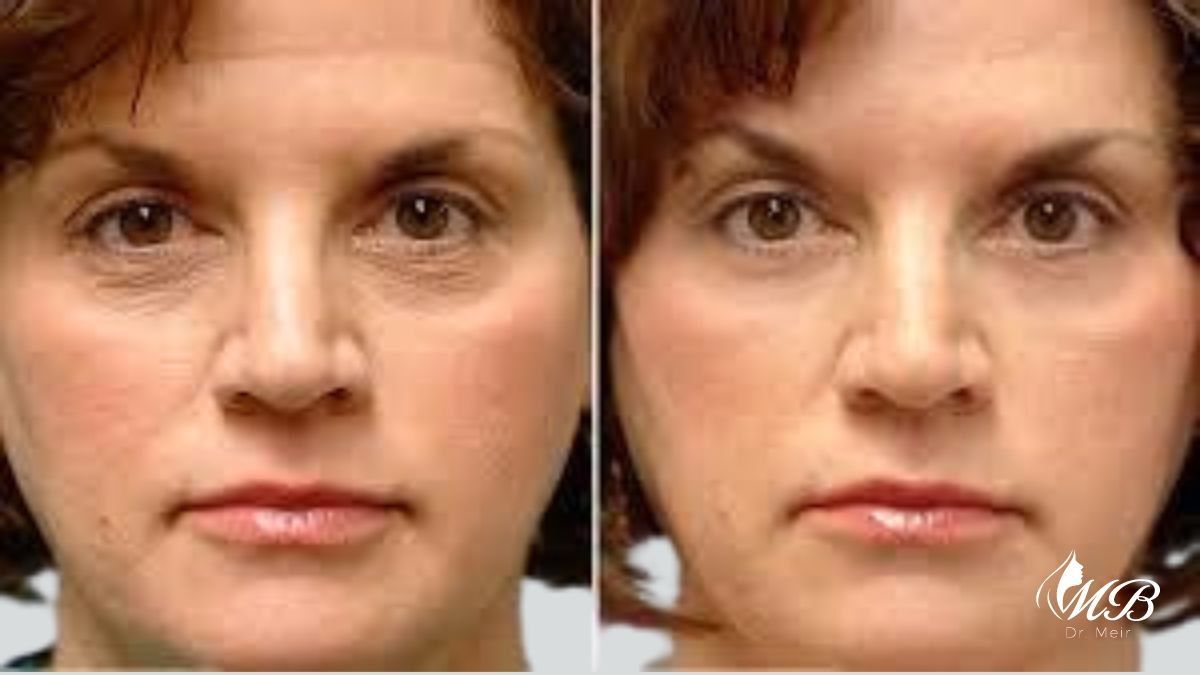
Individual results vary. Photos published with patient consent.
Questions
What is the most effective treatment for wrinkles?
It depends on the wrinkle. Expression lines on the forehead, between the brows and at the eyes respond best to botox. Lines that stay at rest need resurfacing, RF microneedling or skin boosters, and deep folds from volume loss need filler or a biostimulator.
How long does botox last for wrinkles?
About 3 to 4 months on the face. With regular treatment some patients find the interval gets longer, because the muscle is used less.
Can forehead wrinkles be removed completely?
Fine and moderate forehead lines often smooth out with botox. Deep lines etched into the skin for years usually soften rather than disappear, and they improve further with resurfacing or a superficial booster.
At what age should you start wrinkle treatment?
Sunscreen and a retinoid can start in the twenties. Botox is considered when expression lines begin to stay at rest, often in the late twenties or thirties. There is no fixed age.
Do wrinkle creams work?
Prescription retinoids such as tretinoin improve fine lines over months, and daily sunscreen prevents new damage. Most other creams moisturise and plump the surface for a short time. They do not replace botox or collagen treatments for established lines.
Are wrinkle treatments different for men?
Men have thicker skin and stronger facial muscles, so botox doses are usually higher. Men often prefer treatments with little visible downtime, and the goal is a rested look that keeps facial expression.
Related
Sources: American Academy of Dermatology: Wrinkle remedies; American Academy of Dermatology: Botulinum toxin overview; DermNet: Ageing skin