
What finasteride is and how it works
Finasteride blocks 5-alpha reductase type 2, the enzyme that turns testosterone into dihydrotestosterone (DHT). In men with a genetic tendency to pattern baldness, DHT shrinks follicles at the temples and crown. Each cycle the hairs grow back thinner and shorter until the follicle stops producing visible hair.
Lowering DHT slows that shrinkage. In most men hair loss stops progressing, and in many some thinned hairs regain thickness. The brand name is Propecia, and generic tablets are widely available. A higher-strength version of the same drug, sold as Proscar, treats an enlarged prostate.
Finasteride treats androgenetic alopecia only. It does nothing for shedding after illness or iron deficiency, for thyroid-related hair loss or for alopecia areata. A diagnosis comes before any prescription.
Who it suits
- Men with early to moderate pattern hair loss at the crown and front of the scalp.
- Men who want to slow loss before or after a hair transplant, so native hair around the grafts keeps its density.
- Men ready for a daily, long-term medicine and willing to discuss side effects openly.
Finasteride does not regrow hair on skin that has been bald and smooth for years. It works best while follicles are still alive and thinning.
Dr. Meir’s approach
At the clinic Dr. Meir usually recommends low-dose oral minoxidil before finasteride for male pattern hair loss. He has two reasons. Finasteride acts on hormones and causes sexual side effects in some men, and in his experience minoxidil tablets do more to regrow hair.
Men who prefer finasteride, or dutasteride, receive a prescription during a medical consultation after a scalp examination and a frank talk about side effects. Either way the treatment is long term. When the thinning is already obvious, Dr. Meir often combines medication with scalp treatment: exosome injections, followed by PRP one and two months later to support the result.
Note: This page does not give doses. The dose and form are set by the treating doctor for each patient, and finasteride is a prescription medicine in Israel.
Tablets, topical and dutasteride
Tablets are the approved form for hair loss. They are taken once a day, with or without food. A missed day does not need a double dose the next day.
Topical finasteride is sold as sprays and solutions, often through online services that present it as free of side effects. In April 2025 the US Food and Drug Administration warned that no topical finasteride product is approved there. It reported 32 adverse event reports between 2019 and 2024, including erectile problems, anxiety, depression and insomnia, many of which persisted after stopping. Finasteride passes through the skin into the blood, so “topical” does not mean “local only”. Topical products also raise the risk of exposing a partner.
Dutasteride blocks both types of the enzyme and lowers DHT further. Some doctors use it when finasteride did not help. It stays in the body for months after the last dose, which matters for blood donation and for couples planning a pregnancy.
Side effects, including persistent symptoms
Most men take finasteride without problems. The side effects that matter:
- Sexual effects: lower libido, erectile difficulty, less ejaculate. In the registration trials they were slightly more frequent than on placebo. Real-world studies report rates of a few percent, and most cases resolve within weeks to a few months of stopping.
- Mood: studies link finasteride with a higher rate of depressed mood. Report low mood, anxiety or thoughts of self-harm at once.
- Breast tenderness or enlargement occurs in a small number of men.
- PSA: finasteride lowers this prostate blood test by about half. Any doctor reading your PSA needs to know you take it.
A small number of men describe sexual, mental and physical symptoms that continue for months or years after stopping, known as post-finasteride syndrome. Its cause is debated and its frequency is uncertain, though reviews published in 2025 called for doctors to take these reports seriously. Men with a history of depression, anxiety or strong preoccupation with appearance should hear about this before starting and consider alternatives first.
Before a prescription Dr. Meir asks about mood, sexual health and other medicines. A baseline gives both sides a fair comparison point if something changes later.
Women and pregnancy
Finasteride can cause abnormal development of the genitals in a male fetus. Women who are pregnant, may become pregnant or are breastfeeding must not take it. Pregnant women should not touch broken or crushed tablets. Intact coated tablets are safe to handle.
The amount of finasteride in semen is very small, and a man’s use is not considered a proven risk to his partner’s pregnancy. Dutasteride requires a longer gap before trying to conceive because of its long half-life, which the doctor will discuss.
For women with pattern hair loss, minoxidil and, in women not planning pregnancy, spironolactone are the usual medicines. After menopause a doctor may consider finasteride in selected cases.
Results timeline
- Months 1 to 3: little visible change. Some men notice temporary extra shedding.
- Months 3 to 6: shedding usually slows.
- Months 6 to 12: thicker hair in many responders.
- Months 12 to 24: the peak effect. After that the goal is maintenance.
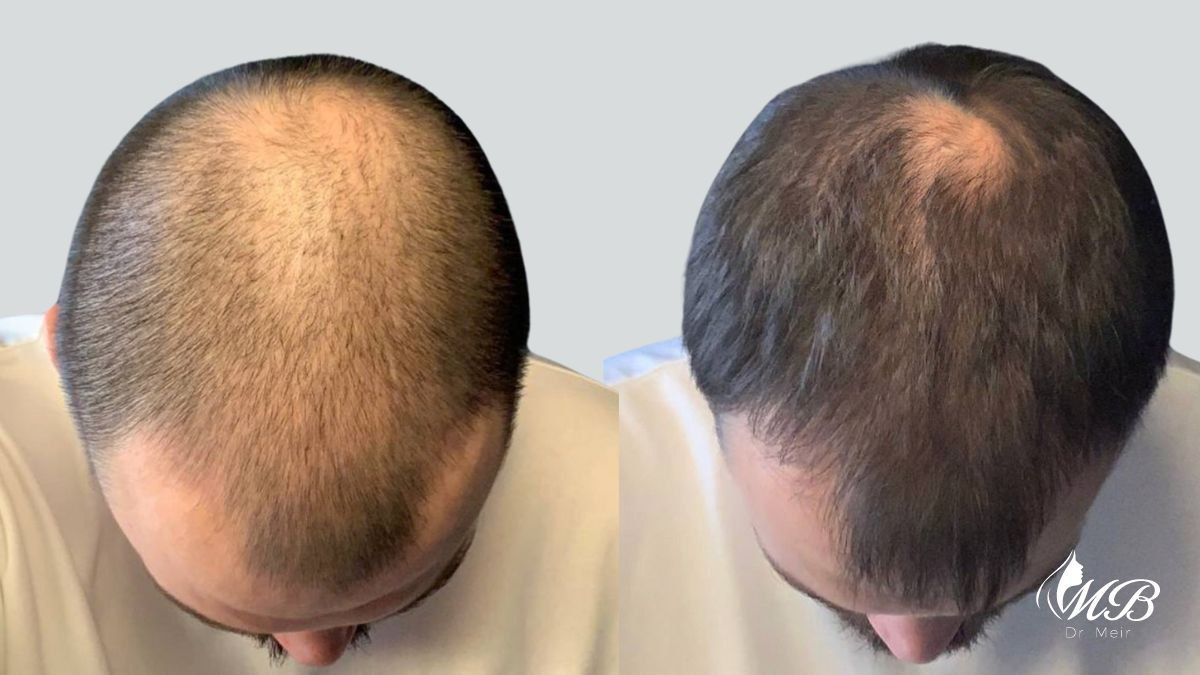
Photos of the scalp from the same angle and light at the start, at six months and at a year show progress far better than the mirror. Stopping the tablet brings the scalp back to where it would have been without treatment within six to twelve months.
Combining finasteride with other treatment
Finasteride lowers the hormone that drives loss, and minoxidil supports growth through a different route, so the two are often combined. PRP and exosome injections add growth signals in the scalp. Men planning a hair transplant usually start medication months before surgery and continue afterwards to protect the hair around the grafts.
Getting a prescription
Finasteride is prescribed after a consultation, not from a message or a photo. Dr. Meir, who has more than 20 years of experience, examines the scalp, confirms the type of hair loss, goes through side effects and the alternatives, and sets up follow-up with photos. Consultations at the Holon clinic take place in Hebrew, English and Russian. Book through WhatsApp at 053-566-2287.
Results from the clinic
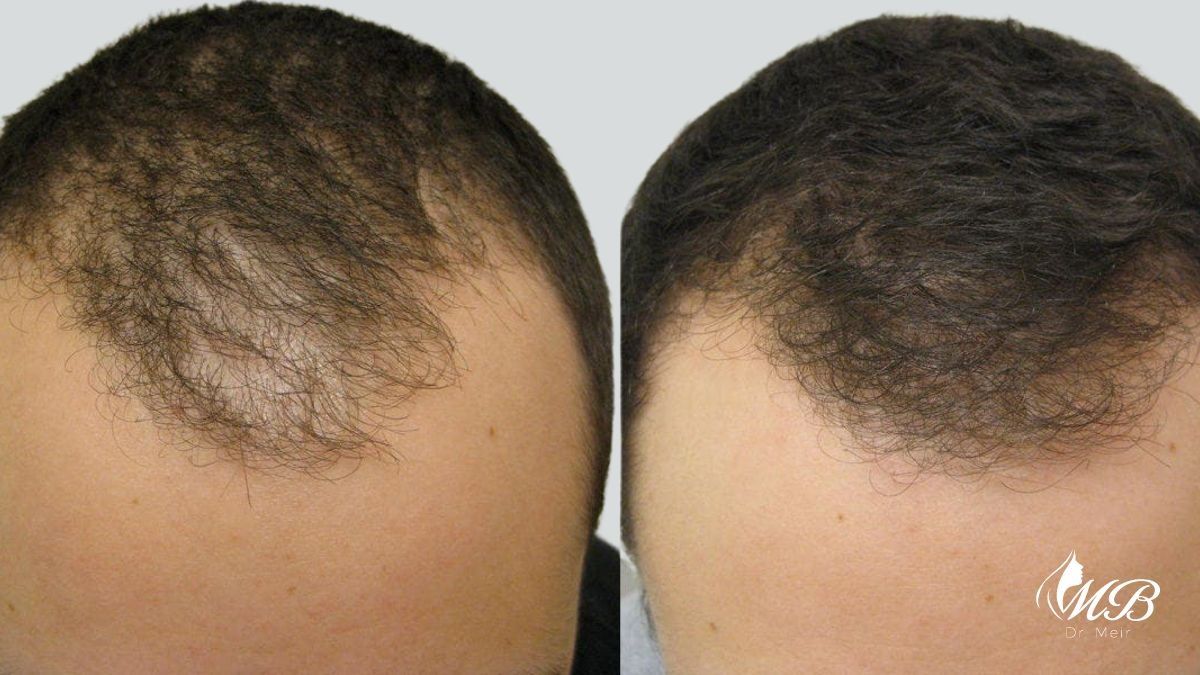
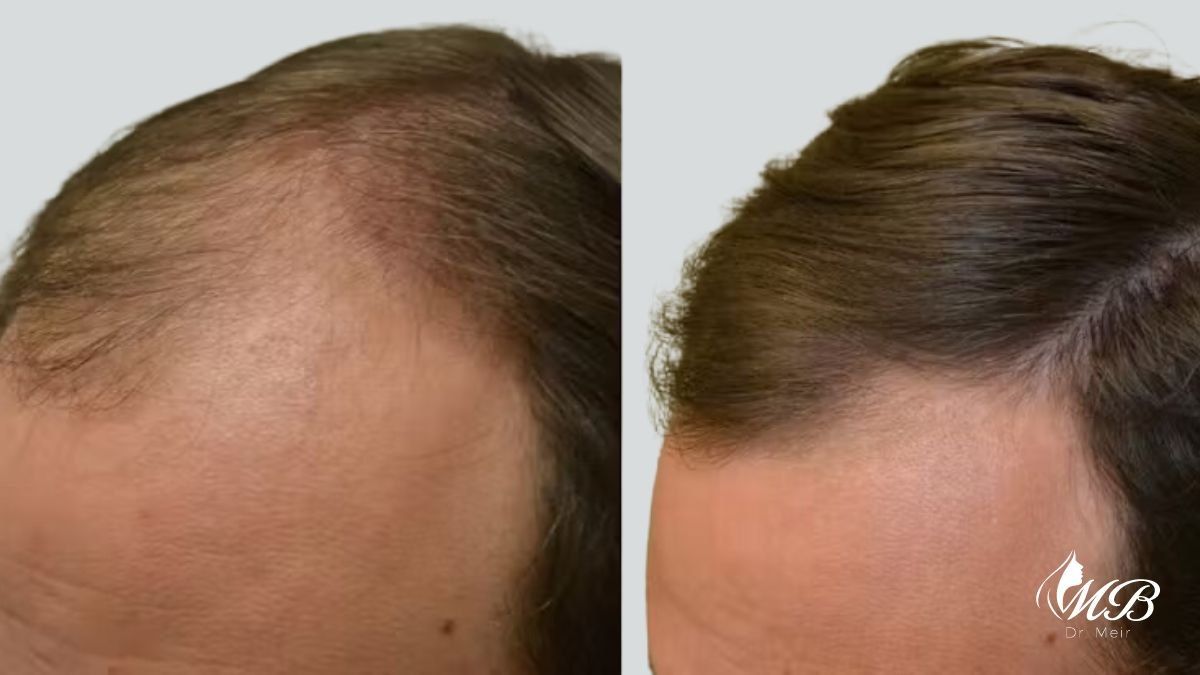
Individual results vary. Photos published with patient consent.
Questions
How long does finasteride take to work?
Shedding usually slows within three to six months. Visible thickening, when it happens, shows after about a year, and the effect peaks in the second year.
What happens if I stop finasteride?
DHT returns to its previous level and the hair kept by the medicine is gradually lost, usually over six to twelve months.
Does finasteride cause erectile problems?
In the original trials sexual side effects were slightly more common than on placebo. Real-world studies report them in a few percent of men. Most cases resolve after stopping, while a small number of men report symptoms that persist.
Is topical finasteride safer than tablets?
Not necessarily. Finasteride applied to the scalp also reaches the bloodstream. In April 2025 the FDA warned that compounded topical products are not approved and listed reports of sexual and mood side effects.
Can women take finasteride?
Women who are pregnant or may become pregnant must not take it or handle broken tablets, because it can harm a male fetus. After menopause a doctor may consider it in selected cases.
Does finasteride affect the PSA test?
Yes. It lowers PSA by about half. Tell any doctor checking your prostate that you take finasteride so the result is read correctly.
Related
Sources: American Academy of Dermatology: Male pattern hair loss treatment; DermNet: Finasteride; FDA: Compounding risk alerts (compounded topical finasteride, April 2025)