Hair loss is a symptom, so the type comes first
Thinning hair has several causes, and the same bottle of lotion will not fix all of them. A man with a receding hairline, a woman whose parting has widened over five years and a woman shedding handfuls three months after a fever all have “hair loss”, and each needs a different plan. Starting treatment without a diagnosis is the most common reason people lose a year.
At the consultation Dr. Meir looks at four things:
- The pattern. Thinning at the temples and crown, a wider central parting, diffuse thinning over the whole scalp, or round smooth patches.
- The timing. Sudden shedding that began a few months after childbirth, surgery, a high fever or a crash diet points to reactive shedding. Gradual thinning over years points to a genetic and hormonal cause.
- The scalp itself. Redness, scale, scarring and the mix of thick and thin hairs.
- Medication and health history from the last months, since some drugs trigger shedding.
Blood tests are ordered when the history calls for them: blood count, ferritin (iron stores), thyroid function and vitamins, and hormone tests for women with acne, excess body hair or irregular periods. A scalp biopsy is reserved for unclear or scarring cases.
The main types of hair loss
Androgenetic (pattern) hair loss. The most common type in both sexes. Hair follicles that are sensitive to DHT, a hormone made from testosterone, shrink over years and produce finer, shorter hairs. Men lose hair at the temples and crown. Women keep the frontal hairline and thin on top, with a wider parting.
Telogen effluvium. A sudden, diffuse shedding that starts two to three months after a trigger: childbirth, illness with high fever, surgery, rapid weight loss, stopping the contraceptive pill, severe stress or a new medication. The follicles are intact. Once the trigger is gone, shedding slows and density returns over months.
Alopecia areata. An autoimmune condition that causes round, smooth bald patches on the scalp, sometimes in the beard or eyebrows. Mild cases are treated with steroid creams or steroid injections into the patches. Severe, widespread cases may need tablets from the JAK inhibitor group, such as baricitinib, which the FDA approved for severe alopecia areata in 2022.
Scarring alopecia. In frontal fibrosing alopecia and related conditions the follicle is destroyed and replaced by scar tissue. A receding hairline in a woman after menopause, especially with thinning eyebrows, is a reason to see a doctor without waiting. The goal is to stop progression early, because lost hair does not come back.
Women often have more than one cause at once. Postpartum shedding or low iron can land on top of pattern thinning that started earlier. In that case both parts are treated together.
The treatment ladder for pattern hair loss
Minoxidil, topical or oral
Minoxidil lengthens the growth phase of the follicle and thickens hairs that have thinned. The topical solution or foam is approved for pattern hair loss in men and women and is the usual starting point. Low-dose oral minoxidil, taken as a daily tablet, suits people who cannot keep up with a lotion or did not respond to it. Oral minoxidil needs a prescription and medical follow-up, because it can lower blood pressure, raise the pulse and cause unwanted facial and body hair. Minoxidil usually does not interact with other medications, but this is not an absolute rule, so give the doctor your full medication list. The minoxidil guide on this site covers strengths, shedding and side effects in detail.
Finasteride and dutasteride for men
Finasteride 1 mg blocks the enzyme that converts testosterone to DHT. Its main job is to stop the loss from progressing, and in many men hair also thickens. It works best when started early and only while it is taken.
The side-effect discussion belongs in the consultation, before the first tablet. In trials a small minority of men reported lower libido, erection problems or a reduced volume of ejaculate, and in most of them these settled after stopping. The drug label also lists breast tenderness and mood changes, including depression. A small number of men report symptoms that persist after stopping. The evidence on this is debated, and Dr. Meir discusses it openly instead of brushing it aside. Anyone with a history of depression should mention it.
Finasteride roughly halves the PSA blood test, so men over 40 who have prostate screening should tell their doctor they take it. Topical finasteride is an option for men who want less of the drug in the bloodstream.
Dutasteride blocks both forms of the enzyme and lowers DHT further. It is not approved for hair loss in most countries and is used off-label under medical supervision, usually when finasteride has not been enough.
Women who could become pregnant never take finasteride or dutasteride and do not touch crushed or broken tablets, because both drugs can harm a male fetus.
Spironolactone for women
Spironolactone blocks the effect of male hormones on the follicle. It suits women with pattern hair loss, especially when hormonal acne or excess body hair is also present. Contraception is required during treatment, it is not used in pregnancy, and the doctor checks blood pressure and potassium as needed. Period changes and breast tenderness are common in the first two to three months.
PRP, exosomes and mesotherapy in the clinic
These treatments add growth signals to the follicle. They support medication and do not replace it. They work best on thinned areas where follicles are still alive, and they do nothing on skin that has been bald for years.
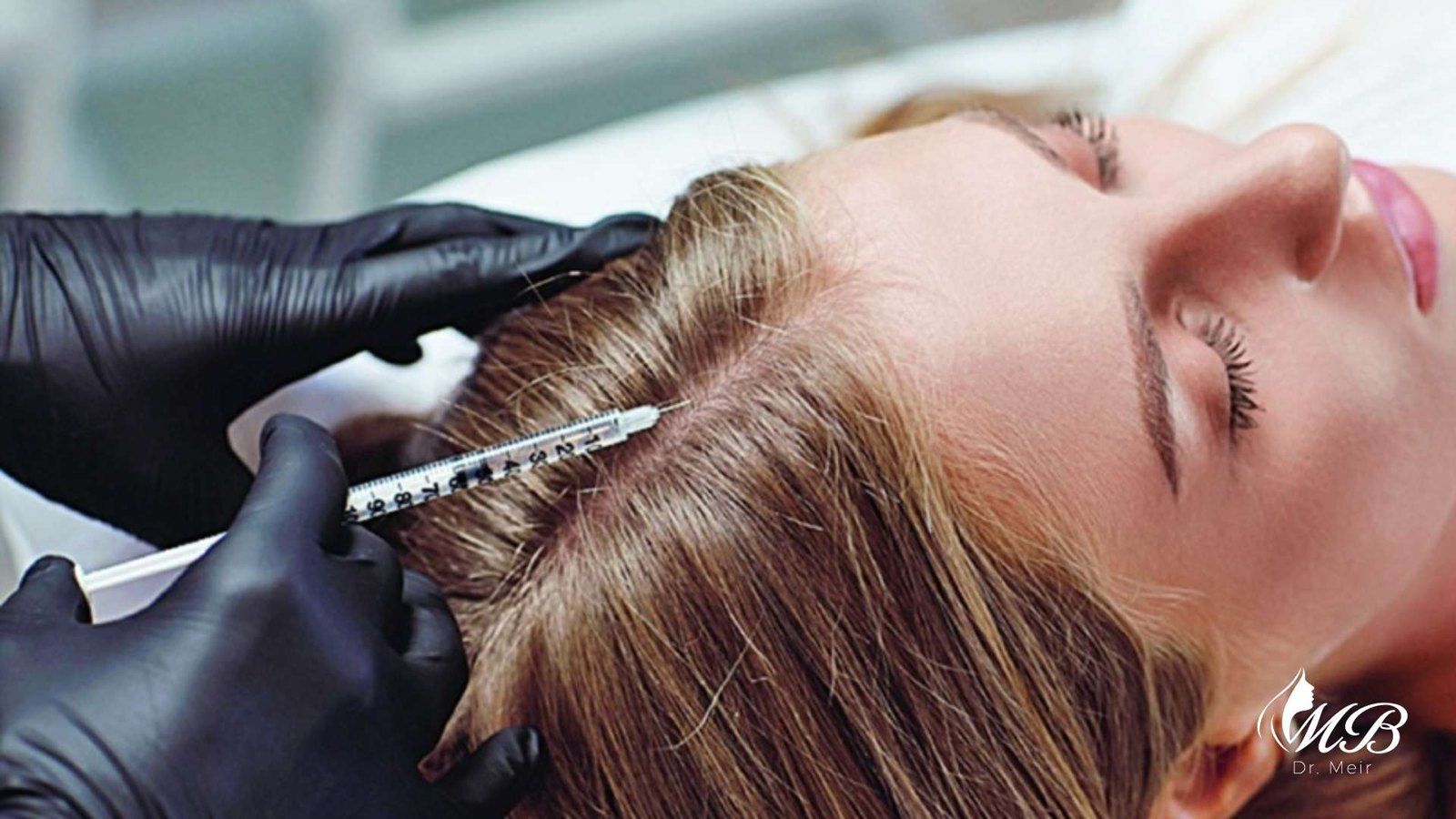
- PRP: platelet-rich plasma from the patient’s own blood, injected into the scalp in a series. The PRP page covers the protocol and evidence.
- Exosomes: tiny particles that carry growth signals between cells. At the clinic they are delivered with the NovoJet needle-free injector in a series of five sessions, with maintenance every three to six months, or as exosomes concentrated from the patient’s own blood once a year. The evidence base is still early.
- Mesotherapy: micro-injections of vitamins, amino acids and peptides into the scalp. The research is thinner than for PRP, so it sits as a supporting option.
Note: If you stop the medication, the hair you kept or regained is gradually lost over the following months. Pattern hair loss is a long-term condition and the plan is built to be kept up.
When a hair transplant fits
A transplant moves follicles from the back of the head to areas that are already bald, such as a receding temple. It cannot create new follicles and does not stop genetic thinning in the rest of the scalp. That is why medication continues after a transplant: it protects the native hair around the grafts. Dr. Meir does not perform transplants. When the hairline is already bald and stable, he says so at the consultation and explains what to look for in a transplant surgeon. PRP can also be given before and after a transplant to support the native hair.
Results and timeline
Hair grows slowly, so every hair loss treatment is judged in months.
- Weeks 2 to 8: minoxidil sometimes causes a temporary increase in shedding as old hairs make way for new ones. This is expected and no reason to stop.
- Around 3 months: daily shedding usually drops, and oral minoxidil starts to work.
- 6 to 12 months: a fair point to judge thickening and decide whether to add or change a treatment.
Standardised scalp photos at the start and at each follow-up visit show changes that the mirror hides. In telogen effluvium the picture differs: once the trigger is treated, shedding calms and density returns over months without long-term medication.
How to choose a hair loss doctor
Look for a doctor who diagnoses the type before selling a package, who explains side effects of each drug before prescribing it, and who measures progress with photos. Dr. Meir has more than 20 years of experience and builds the plan from the diagnosis: medication first, clinic treatments as add-ons where they help. Consultations take place at the clinic in Azrieli Holon Center in Hebrew, English or Russian. To book, message the clinic on WhatsApp at 053-566-2287.
Questions
What is the most effective treatment for hair loss?
No single treatment suits everyone, because the type of hair loss decides the plan. For pattern hair loss the base is minoxidil, with finasteride for men or spironolactone for women, and PRP or exosomes added when needed.
Does hair loss after childbirth need treatment?
Usually not. Diffuse shedding a few months after birth is telogen effluvium and settles on its own within months. Iron and thyroid tests are worth doing, because a deficiency prolongs the shedding.
Can women take finasteride?
Women who may become pregnant do not take finasteride and do not handle crushed tablets, because of the risk to a male fetus. After menopause a doctor may consider it in selected cases.
Can hair that has fallen out grow back?
In telogen effluvium and alopecia areata the follicle stays alive and hair can regrow. In pattern hair loss thinned hairs can thicken while follicles are still active. In scarring alopecia lost hair does not return.
Do I need blood tests?
Not always. Dr. Meir orders them when the pattern or history points to iron deficiency, a thyroid problem or a hormonal cause.
Is the consultation available in English?
Yes. Dr. Meir consults in Hebrew, English and Russian at the clinic in Holon.
Related
Sources: American Academy of Dermatology: Male pattern hair loss treatment; NHS: Hair loss