
What minoxidil is and how it works
Minoxidil started life as a blood pressure tablet. Patients taking it grew extra hair, and a topical version was developed for hair loss. Today it is the most widely used medicine for androgenetic (pattern) hair loss in men and women. It is sold as Rogaine or Regaine and under generic names.
It works on the follicle itself. Minoxidil lengthens the growth phase of the hair cycle and enlarges follicles that have shrunk, so thin, short hairs become thicker and longer. It does not touch the hormones behind pattern hair loss, which is why it pairs well with finasteride in men and spironolactone in women.
To work, topical minoxidil has to be converted into its active form by an enzyme in the scalp called sulfotransferase. Enzyme activity varies between people, which helps explain why some do not respond to the lotion. The tablet bypasses this step.
Minoxidil helps where follicles are still alive and thinning. It does not regrow hair on skin that has been smooth and bald for years, and it is the wrong tool for shedding caused by iron deficiency, thyroid problems or a recent illness. A diagnosis comes first.
Topical minoxidil: strengths and how to use it
Topical minoxidil comes as a 2% or 5% solution and as a 5% foam. The 5% products are stronger. The 5% foam is approved for women once a day, and the solution is usually applied twice a day by men. Follow the directions on your product or from your doctor.
How to apply it so it works:
- Apply to a dry scalp, onto the skin and not the hair, across the whole thinning area.
- Spread with fingertips, then wash your hands.
- Leave it on for at least four hours before washing or swimming.
- Use it every day. Skipped days are the most common reason for a weak result.
The solution contains propylene glycol, which causes most cases of itching, flaking and redness. The foam does not, so switching often solves irritation. In Israel a doctor can also prescribe an alcohol-free compounded solution for people whose hair the standard product dries out.
Low-dose oral minoxidil
Low-dose oral minoxidil uses a small fraction of the dose once given for blood pressure. It has become a common option for people who cannot keep up with daily application, whose scalp reacts to the lotion, or who did not respond to it. A 2021 review in the Journal of the American Academy of Dermatology, covering 17 studies and 634 patients, judged it effective and well tolerated in healthy patients. Larger trials comparing doses are still missing.
Oral minoxidil needs a doctor. It is a prescription medicine, it affects blood pressure and heart rate, and it is not suitable for people with certain heart conditions. The dose is set by the treating doctor for each patient. This page does not give doses, and tablets should never be split or adjusted on your own.
In Israel there is no ready-made low-dose tablet for hair, so a pharmacy compounds it from a prescription. Preparation and delivery usually take a few days to two weeks. Renewing the prescription involves a check-in with the doctor and a current photo of the scalp.
Note: Dr. Meir starts oral minoxidil at a low dose and checks blood pressure and pulse. If those stay normal, the dose stays the same. After about three months he reviews the response. If shedding continues, he changes the medication plan or adds scalp treatment such as exosomes, instead of raising the dose again and again. The tablet is a long-term treatment, and long-term safety matters more than speed.
The shedding phase
Many people notice more hair in the shower two to eight weeks after starting either form. Follicles that were resting are pushed into a new growth cycle and release their old hairs first. This shedding is a sign the medicine is acting. It usually settles within one to two months. Stopping at this point means quitting before the treatment had time to work.
Results timeline
- Weeks 2 to 8: possible temporary increase in shedding.
- Around month 3: daily shedding usually drops. Oral minoxidil starts to show an effect at about this point.
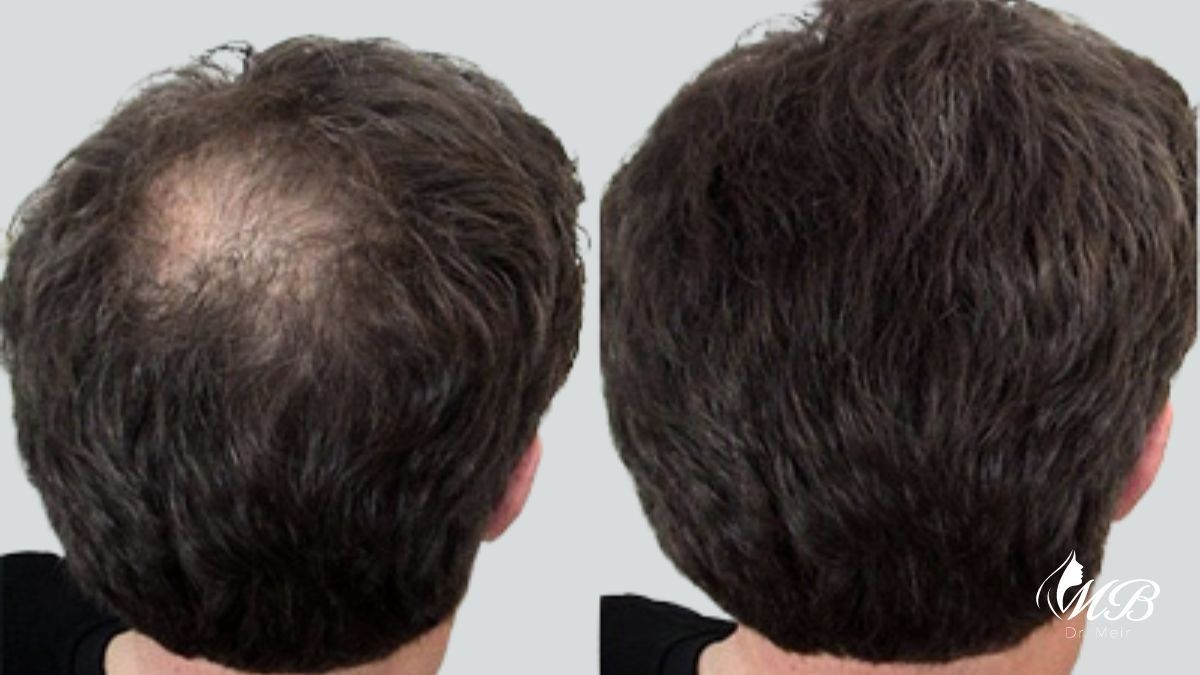
- Months 6 to 12: visible thickening in responders. This is the point to judge the result fairly, comparing standardised photos from the start.
The American Academy of Dermatology notes that results usually take six to twelve months and that the benefit is lost after stopping. Minoxidil slows loss and thickens existing hair in most users. Results are better when treatment starts at the thinning stage, before areas turn bald.
Side effects
Topical minoxidil: scalp itching, dryness, flaking or redness, mostly from propylene glycol. Unwanted hair on the forehead or cheeks can appear if the liquid runs or transfers on the pillow. Apply carefully and let it dry before lying down.
Oral minoxidil:
- Unwanted hair growth on the face and body (hypertrichosis) is the most common side effect. It depends on dose and is more frequent in women.
- Fluid retention, such as ankle swelling, and a faster pulse are less common.
- Dizziness or light-headedness from lower blood pressure.
Serious heart effects are rare at the doses used for hair, which is one reason the doctor checks blood pressure and pulse before and during treatment. Report chest pain, breathlessness, a racing heart or rapid swelling right away.
Who should not use minoxidil
- Pregnant or breastfeeding women, in either form.
- For oral minoxidil: people with ischaemic heart disease, recent heart attack, heart failure, pulmonary hypertension, a phaeochromocytoma or severe liver disease.
- Anyone with an irritated or inflamed scalp should treat that first. Seborrheic dermatitis and psoriasis of the scalp make the lotion sting and need their own treatment.
Minoxidil usually does not interact with other medications, but that is not an absolute rule, especially for the tablet alongside blood pressure medicines. Bring your full medication list to the consultation so the doctor can check it.
Combining minoxidil with other treatments
- Finasteride or dutasteride (men): they lower DHT, the hormone that shrinks follicles, while minoxidil supports growth. The combination is the standard medical approach for male pattern hair loss.
- Spironolactone (women): blocks the effect of male hormones on the follicle and is often paired with minoxidil.
- PRP and exosomes: clinic treatments that add growth signals to the scalp and suit people who want more than medication alone.
- Microneedling: can increase response to topical minoxidil. Skip the lotion on the day of the session, because damaged skin absorbs more of it.
Getting the right plan
Minoxidil is a long-term medicine, so the choice between foam, solution and tablet deserves a proper consultation. Dr. Meir, who has more than 20 years of experience, examines the scalp, confirms the type of hair loss, discusses side effects and sets up follow-up with photos. Consultations take place in Holon in Hebrew, English or Russian, and you can book on WhatsApp at 053-566-2287.
Results from the clinic
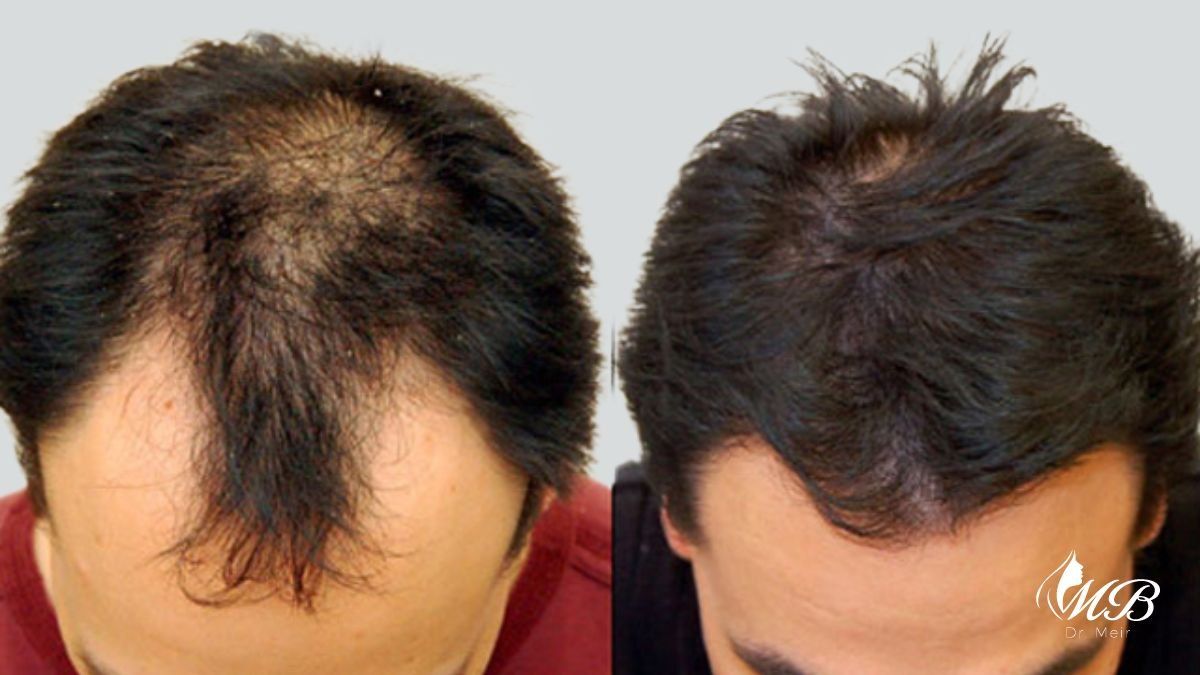
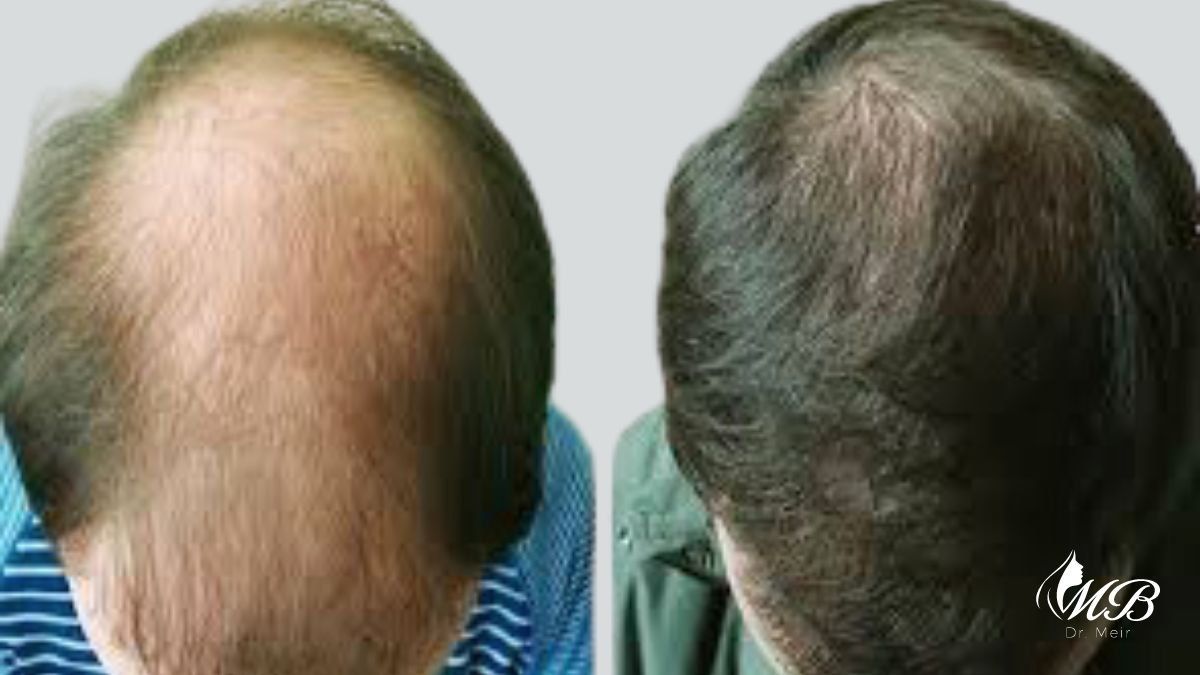
Individual results vary. Photos published with patient consent.
Questions
Is oral minoxidil better than topical?
Neither is better for everyone. In a small randomised trial in women, low-dose oral minoxidil gave results comparable to 5% topical over 24 weeks. The tablet is easier to keep up, the lotion has fewer whole-body side effects, and a doctor decides which fits.
Why is my hair falling out more after starting minoxidil?
Follicles push out old resting hairs as they enter a new growth phase. This shedding usually starts in the first weeks and settles within one to two months. It is no reason to stop.
What happens if I stop minoxidil?
The effect lasts only while you use it. After stopping, the hair gained through treatment is gradually lost over several months.
Can women use 5% minoxidil?
Yes. The 5% foam is approved for women once a day. Unwanted facial hair is more common in women, so the form and strength are chosen with that in mind.
Can I buy oral minoxidil for hair in Israel?
There is no ready-made low-dose tablet for hair in Israel. A pharmacy compounds it from a doctor's prescription, which usually takes a few days to two weeks.
Is minoxidil safe around pets?
Minoxidil is highly toxic to cats, even in small amounts. Keep it away from pets, let the scalp dry before contact and wash your hands after applying.
Related
Sources: DermNet: Minoxidil solution; Randolph M, Tosti A. Oral minoxidil treatment for hair loss: a review of efficacy and safety. J Am Acad Dermatol 2021; American Academy of Dermatology: Male pattern hair loss treatment