
What eczema is
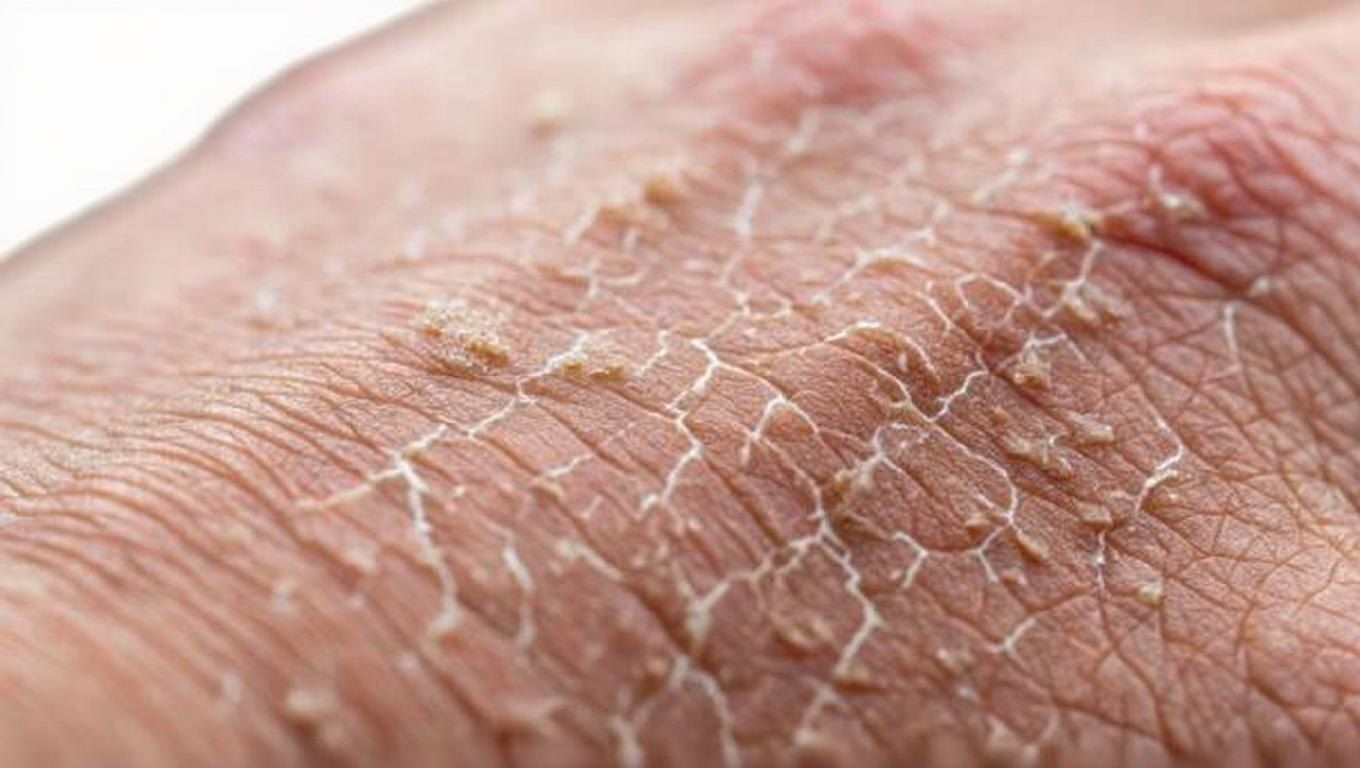
Eczema, also called dermatitis, is inflammation of the skin. It shows up as red or darker patches, dryness, scaling and itch. In a flare the skin can weep, crack or form small blisters. Scratching thickens the skin over time and opens it to infection.
The common thread in every type is a weak skin barrier. The outer layer loses fats such as ceramides, water escapes faster, and irritants and allergens get in more easily. That is why every treatment plan starts with the barrier and only then moves to the inflammation.
The main types
Atopic eczema (atopic dermatitis) usually starts in childhood and runs in families with asthma, hay fever or food allergy. In babies it appears on the cheeks and body. In older children and adults it settles in the elbow and knee creases, the neck, the hands and around the eyes.
Contact dermatitis is a reaction to something that touches the skin. Irritant contact dermatitis comes from repeated water, soap and cleaning products. Allergic contact dermatitis follows sensitisation to a specific substance: nickel in a watch strap or belt buckle, fragrance, preservatives in creams, hair dye, rubber gloves. The rash sits where the contact happened. Until the trigger is identified, the rash keeps coming back after every course of treatment, so patch testing is part of the work-up when the pattern points to an allergy.
Hand and foot eczema includes the blistering form (dyshidrotic eczema), with small itchy blisters on the sides of the fingers, palms and soles. It is common in people whose hands are often wet at work, and it often combines a contact element with an atopic tendency.
Dry skin (xerosis) is the mildest end of the spectrum. Hot showers, strong soap, dry winter air and age strip the skin of fats. It usually improves within about two weeks with a gentle washing routine and a thick moisturiser. Dryness that does not improve, or comes with redness and strong itch, has often crossed into eczema and needs an examination.
How eczema is diagnosed
Diagnosis rests on the look of the skin, where the patches sit and the history: when it started, what makes it worse, family allergies, work and hobbies, new creams or products. Dr. Meir also looks for conditions that resemble eczema, such as psoriasis, seborrhoeic dermatitis and fungal infection, because they need different treatment. If a bacterial infection is suspected (crusting, yellow weeping, sudden worsening), it is treated first.
Treatment, step by step
1. Emollients every day
Emollients are the base of treatment in every type of eczema, including during calm periods. Use a thick, fragrance-free cream or ointment at least twice a day and within a few minutes after every wash, while the skin is still damp. Short lukewarm showers and a soap substitute reduce the loss of skin fats. Many patients need a lighter product for the day and a greasier one for the night.
2. Topical steroids for flares
Steroid creams are the fastest way to calm an eczema flare. They come in four strength levels, from mild hydrocortisone up to potent and very potent preparations such as mometasone or clobetasol. The doctor matches the strength to the body area and the thickness of the patch: mild strengths for the face and folds, stronger ones for thick patches on the hands, feet and limbs.
The amount is measured in fingertip units. One fingertip unit is the line of cream squeezed from the tip of an adult index finger to the first crease, about half a gram. It covers an area the size of two adult palms. The face and neck need about two and a half units.
Used in the right strength and for the right length of time, steroid creams are safe. Skin thinning, stretch marks and visible vessels come from long, unsupervised use of strong steroids, mostly on thin skin. Stopping too early is the more common mistake: the flare returns within days.
3. Protopic and Elidel: steroid-free control
Tacrolimus (Protopic ointment) and pimecrolimus (Elidel cream) are calcineurin inhibitors. They calm the immune cells that drive eczema without thinning the skin, which makes them the standard choice for the face, eyelids, neck, armpits and groin, and for long-term use.
- Protopic comes in 0.03% (from age 2) and 0.1% (from age 16). It suits moderate to severe eczema.
- Elidel is lighter and suits mild to moderate eczema, including in children from age 2.
The first days often bring a warm or burning feeling that fades within about a week. Applying to fully dry skin helps. Once the skin is clear, many patients continue with proactive treatment: Protopic twice a week on the spots that tend to flare. This approach reduces the number of flares over a year.
Note: The boxed warning on these medicines dates from 2006 and was based on animal studies at high doses. Long-term studies in children and adults have not shown a raised risk of lymphoma or other cancers from the topical forms, and Canada has removed the warning from the label.
4. When creams are not enough
Some patients have eczema that stays widespread, disturbs sleep or keeps returning despite correct use of creams. For them, systemic treatment is the next step. Options include dupilumab and other biologic injections, JAK inhibitor tablets (upadacitinib, abrocitinib), ciclosporin, methotrexate and phototherapy. Each has its own monitoring requirements. Dr. Meir assesses whether you need this step and explains the options and their risks.
Living with eczema: what helps
- Keep nails short and treat the itch, because scratching keeps the flare going.
- Choose cotton and soft fabrics next to the skin. Wool and rough synthetics irritate.
- Wear cotton-lined gloves for wet work and cleaning.
- Bring your products to the consultation. A fragrance or preservative in a “natural” cream is a frequent hidden trigger.
- In children, a clear written plan for parents (which cream, where, how many days) prevents most repeat flares.
Diet changes help only when a food allergy has been confirmed. Removing foods without testing can harm a child’s nutrition and rarely improves the skin.
When to see a doctor
Book a consultation if eczema does not improve within one to two weeks of correct treatment, spreads, keeps you or your child awake, or appears on the face and eyelids. Seek care the same day if the skin becomes painful, crusted or weeping, or if clusters of punched-out blisters appear: these can be signs of a bacterial or herpes infection. The consultation takes place at the clinic in Holon, in Hebrew, English or Russian.
Questions
Can eczema be cured?
Atopic eczema has no one-off cure, but most people reach long calm periods with a barrier routine and early treatment of flares. Many children outgrow it. Contact dermatitis can clear for good once the trigger is found and avoided.
Is hydrocortisone cream safe on the face?
Mild hydrocortisone is used on the face for short courses, usually up to one to two weeks. For longer control on the face and eyelids, doctors switch to Protopic or Elidel, which do not thin the skin.
Does Protopic cause cancer?
The boxed warning dates from 2006 and was based on animal studies at high doses. Large follow-up studies in children and adults have not shown a raised cancer risk from the ointment. Canada has removed the warning from the label.
Why does Protopic burn at first?
A warm or burning feeling in the first days is common and usually fades within a week. Applying it to fully dry skin, or after a few days of a steroid cream, reduces it.
What is the difference between Protopic and Elidel?
Both are steroid-free calcineurin inhibitors. Protopic (tacrolimus) is an ointment and the stronger of the two. Elidel (pimecrolimus) is a lighter cream suited to mild to moderate eczema.
When does eczema need tablets or injections?
When eczema stays widespread or keeps disturbing sleep despite correct use of creams, a doctor discusses systemic options such as dupilumab, JAK inhibitor tablets or ciclosporin.
Related
Sources: NHS: Atopic eczema; American Academy of Dermatology: Atopic dermatitis treatment; NHS: Contact dermatitis